


IELTS Writing Task 2 topic Environment là chủ đề xuất hiện thường xuyên trong kỳ thi. Các đề bài thường xoay quanh những vấn đề như ô nhiễm môi trường, biến đổi khí hậu, khai thác tài nguyên hay bảo vệ động thực vật.
Trong bài viết này, IELTS The Tutors sẽ tổng hợp các dạng đề Environment Writing task 2 phổ biến, hướng dẫn cách phát triển ý tưởng cho từng dạng bài và cung cấp từ vựng, cụm từ hữu ích. Nhờ đó, bạn sẽ dễ dàng xây dựng bài viết logic, thuyết phục và đạt band điểm cao.
Các vấn đề thường gặp trong chủ đề Environment Writing task 2
Trong IELTS Writing Task 2, chủ đề Environment thường tập trung vào tác động của con người đến tự nhiên, nguyên nhân gây ô nhiễm và những giải pháp có thể thực hiện ở cấp cá nhân, doanh nghiệp hoặc chính phủ. Đề bài có thể yêu cầu thí sinh phân tích nguyên nhân – hậu quả, thảo luận hai quan điểm hoặc đánh giá mức độ hiệu quả của một chính sách môi trường.
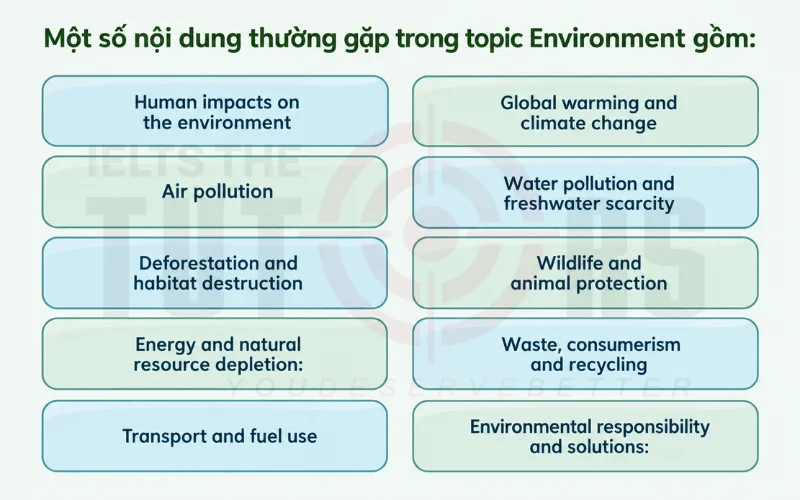
Một số vấn đề thường gặp trong topic này là:
- Human impacts on the environment: Tác động của sản xuất hàng tiêu dùng, đô thị hóa và lối sống hiện đại đến môi trường tự nhiên.
- Global warming and climate change: Nguyên nhân, hậu quả và cách con người ứng phó với biến đổi khí hậu.
- Air pollution: Khí thải từ phương tiện giao thông, nhà máy, công trình xây dựng và việc sử dụng nhiên liệu hóa thạch.
- Water pollution and freshwater scarcity: Ô nhiễm sông, hồ, biển và tình trạng thiếu nguồn nước sạch.
- Deforestation and habitat destruction: Việc chặt phá rừng và mở rộng đô thị làm mất môi trường sống của động vật.
- Wildlife and animal protection: Nguy cơ tuyệt chủng, suy giảm đa dạng sinh học và trách nhiệm bảo vệ các loài động vật.
- Energy and natural resource depletion: Sự cạn kiệt của dầu mỏ, rừng, nước ngọt và các tài nguyên thiên nhiên khác.
- Waste, consumerism and recycling: Lượng rác thải sinh hoạt, bao bì thực phẩm và sản phẩm dùng một lần ngày càng gia tăng.
- Transport and fuel use: Ảnh hưởng của phương tiện cá nhân, giá nhiên liệu và khí thải giao thông đến môi trường.
- Environmental responsibility and solutions: Vai trò của chính phủ, doanh nghiệp và cá nhân trong việc bảo vệ môi trường.
Ý tưởng triển khai chủ đề Environment trong IELTS Writing task 2
Khi lên ideas cho topic Environment, bạn nên xác định rõ đề đang hỏi về causes, effects, solutions, responsibilities hay advantages & disadvantages. Mỗi luận điểm cần được phát triển theo trình tự ý chính – giải thích – kết quả – ví dụ để bài viết có chiều sâu.
Human impacts on the environment
Đề bài: The increasing production of consumer goods is damaging the natural environment. What are the causes of this problem, and what measures can be taken to solve it?
Phân tích đề bài: Đây là dạng đề causes and solutions, bạn cần đưa ra nguyên nhân và giải pháp cho vấn đề sản xuất hàng tiêu dùng đang gây tổn hại đến môi trường tự nhiên.
- Cause cần phân tích: Vì sao ngày càng có nhiều hàng tiêu dùng được sản xuất và quá trình này gây hại cho môi trường như thế nào?
- Solution cần đề xuất: Chính phủ, doanh nghiệp và người tiêu dùng có thể làm gì để giảm thiệt hại?
- Đối tượng khai thác: Consumer goods, manufacturers, governments and consumers
Với subtopic này, bạn không nên viết chung chung về ô nhiễm mà mỗi nguyên nhân và giải pháp phải liên quan trực tiếp đến việc sản xuất hàng tiêu dùng. Dưới đây là ideas phát triển dạng đề causes and solutions trên:
| Causes | Solutions |
|
|
Hướng phát triển idea:
- Ý chính: Advertising encourages consumers to purchase more goods than they actually need.
- Nguyên nhân: Through social media, television and online advertisements, companies constantly promote new models and persuade people to replace products that are still usable.
- Hệ quả: This increases the demand for mass production, requiring manufacturers to consume more energy and raw materials. At the same time, discarded products add to the amount of waste sent to landfills.
- Ví dụ: For example, many people replace fully functioning smartphones whenever a newer model is introduced, even though their existing devices still meet their needs.
Global warming and climate change
Đề bài: Some people argue that instead of trying to prevent climate change, humans should learn how to live with it. To what extent do you agree or disagree?
Phân tích đề bài: Đây là dạng bài Agree or Disagree, vì vậy bạn cần nêu rõ mức độ đồng ý hoặc không đồng ý với quan điểm: Con người nên tập trung thích nghi với biến đổi khí hậu thay vì cố gắng ngăn chặn nó. Đồng thời, quan điểm này phải được giữ nhất quán trong suốt bài viết.
Với subtopic này, bạn có thể chọn hướng đồng ý một phần: con người cần thích nghi với những tác động của biến đổi khí hậu vì nhiều hậu quả đã và đang xảy ra.; tuy nhiên, điều đó không có nghĩa là chúng ta nên từ bỏ các biện pháp ngăn chặn biến đổi khí hậu. Cụ thể như sau:
| Reasons to adapt to climate change | Reasons to continue preventing climate change |
|
|
Dàn bài gợi ý:
- Introduction: Paraphrase the topic and state that you largely disagree.
- Body 1: Explain why adaptation is necessary for impacts that are already occurring.
- Body 2: Argue that prevention remains essential to avoid more severe and irreversible consequences.
- Conclusion: Restate that adaptation and prevention should be pursued together.
Air pollution
Đề bài: More and more cities are struggling with serious air pollution. Why is this happening, and what solutions can be introduced?
Phân tích đề bài: Với dạng đề causes and solutions, bạn cần nêu lên vấn đề chính là “tình trạng ô nhiễm không khí nghiêm trọng tại các thành phố”, sau đó đưa ra các nguyên nhân chủ yếu khiến chất lượng không khí đô thị suy giảm và đề xuất giải pháp thực tế cho các vấn đề môi trường đã nêu.
Để làm tốt subtopic này, bạn cần tập trung vào môi trường đô thị, đặc biệt là giao thông, công nghiệp và xây dựng, cụ thể:
| Causes | Solutions |
|
|
Hướng phát triển idea:
- Ý chính: The increasing use of private vehicles is a major cause of urban air pollution.
- Nguyên nhân: As cities expand and their populations grow, more residents rely on cars and motorbikes, particularly where public transport is unreliable or inconvenient.
- Hệ quả: These vehicles release exhaust fumes and fine particles, while traffic congestion causes engines to burn fuel for longer periods.
- Ví dụ: For example, during rush hour, thousands of vehicles may remain stationary on crowded roads while continuously producing harmful emissions.
Water pollution and freshwater scarcity
Đề bài: Water pollution has become an increasingly serious problem. What causes water pollution, and how can it be prevented?
Phân tích đề bài: Đối với dạng bài Causes and Solutions, hãy tập trung vào hai nội dung chính:
- Phân tích các nguyên nhân dẫn đến ô nhiễm nguồn nước.
- Đề xuất các giải pháp để giảm thiểu và ngăn chặn vấn đề này.
Dưới đây là những ý tưởng về nguyên nhân và giải pháp mà bạn có thể sử dụng để phát triển bài viết:
| Causes | Solutions |
|
|
Hướng phát triển idea:
- Ý chính: The increasing use of private vehicles is a major cause of urban air pollution.
- Nguyên nhân: As cities expand and their populations grow, more residents rely on cars and motorbikes, particularly where public transport is unreliable or inconvenient.
- Hệ quả: These vehicles release exhaust fumes and fine particles, while traffic congestion causes engines to burn fuel for longer periods.
- Ví dụ: For example, during rush hour, thousands of vehicles may remain stationary on crowded roads while continuously producing harmful emissions.
Deforestation and habitat destruction
Đề bài: Deforestation, urban development and illegal hunting are threatening many animal species with extinction. Why is animal protection important, and what measures should be taken?
Phân tích đề bài: Đây là dạng Two-part Question, đề bài yêu cầu bạn phải giải thích tại sao việc bảo vệ động vật lại quan trọng và đề xuất các biện pháp bảo vệ động vật và môi trường sống tự nhiên.
Để làm tốt subtopic này, bạn hãy tập trung khai thác 4 nguyên nhân được đề nhắc đến là phá rừng, phát triển đô thị và săn bắt trái phép. Hướng phát triển idea như sau:
| Why animal protection is important | Measures |
|
|
Gợi ý cách phát triển idea:
- Ý chính: Protecting animal species is essential for maintaining balanced ecosystems.
- Nguyên nhân: Different species depend on one another for food, pollination and population control, so the disappearance of one animal can affect the entire ecosystem.
- Hệ quả: If biodiversity continues to decline, natural systems may become less stable and less capable of providing resources such as clean water, fertile soil and food.
- Ví dụ: For example, the loss of predators can cause certain animal populations to grow uncontrollably, resulting in damage to vegetation and agricultural land.
Wildlife and animal protection
Đề bài: Some people believe that the loss of particular plant and animal species is the main environmental problem, while others think more serious problems exist. Discuss both views and give your opinion.
Phân tích đề bài: Với dạng đề Discuss Both Views and Give Your Opinion, bạn cần đưa ra ý kiến cá nhân sau khi làm rõ hai quan điểm:
- Quan điểm 1: Mất đi các loài động thực vật là mối đe dọa lớn nhất đối với môi trường.
- Quan điểm 2: Biến đổi khí hậu, ô nhiễm và sự cạn kiệt tài nguyên là những vấn đề cấp bách hơn.
Khi triển khai chủ đề này, bạn hãy nhấn mạnh rằng sự suy giảm đa dạng sinh học không phải là nguyên nhân gốc rễ, mà là hậu quả của các vấn đề như phá rừng, ô nhiễm và biến đổi khí hậu. Dưới đây là những yếu tố ảnh hưởng mà bạn có thể nhắc đến để bài Writing task 2 thêm thực tế:
| The loss of species is the main environmental problem | More serious environmental problems exist |
|
|
Dàn bài gợi ý cho vấn đề môi trường này:
- Introduction: Paraphrase both views and state your opinion
- Body 1: Explain why some people consider species loss the main environmental problem
- Body 2: Explain why climate change, pollution and habitat destruction may be more serious
- Conclusion: Restate that species protection is important, but broader environmental problems require greater priority
Energy and natural resource depletion
Đề bài: Natural resources such as oil, forests and fresh water are being consumed at an increasing rate. What dangers does this create, and what should be done?
Phân tích đề bài: Với dạng bài Problems and Solutions, trước tiên hãy phân tích những hậu quả của việc cạn kiệt tài nguyên thiên nhiên. Sau đó, trình bày các giải pháp khả thi để hạn chế việc khai thác quá mức, giảm tiêu thụ và bảo vệ tài nguyên cho tương lai.
Ý tưởng phát triển cho bài viết như sau:
| Dangers | Solutions |
|
|
Gợi ý cách phát triển idea:
- Ý chính: The excessive consumption of freshwater can create serious shortages.
- Nguyên nhân: Agriculture, industry and growing urban populations require large quantities of water, while many regions have limited renewable supplies.
- Hệ quả: Communities may lack enough clean water for drinking and sanitation, while farmers may be unable to produce sufficient food.
- Ví dụ: For example, prolonged water shortages can force farmers to reduce crop production, causing food prices to rise.
Waste, consumerism and recycling
Đề bài: In many countries, the amount of household waste, particularly food packaging, is increasing. What causes this problem, and how can it be solved?
Phân tích đề bài: Với dạng causes and solutions, trước tiên bạn nên xác định các nguyên nhân chính khiến lượng rác thải gia đình và bao bì tăng lên, sau đó đề xuất những giải pháp phù hợp để giảm lượng rác và cải thiện việc thu gom, xử lý hoặc tái chế.
Để bài viết đi đúng hướng ô nhiễm môi trường do household waste và food packaging, bạn hãy liệt kê cụ thể các nguyên nhân và giải pháp cần nêu trong bài Writing task 2. Cụ thể như sau:
| Causes | Solutions |
|
|
Gợi ý cách phát triển idea:
- Ý chính: The increasing popularity of convenience food is a major cause of household packaging waste.
- Nguyên nhân: Busy consumers frequently purchase ready-made meals, takeaway drinks and individually wrapped products because they save time.
- Hệ quả: Large quantities of plastic containers, bags and cardboard boxes are discarded after being used only once.
- Ví dụ: For example, a single takeaway meal may include a plastic box, a lid, disposable cutlery, sauce packets and a carrier bag.
Transport and fuel use
Đề bài: Some people think that increasing the cost of fuel for cars and other vehicles is one of the best ways to solve environmental problems. To what extent do you agree or disagree?
Phân tích đề bài: Với dạng bài Agree or Disagree, bạn cần nêu rõ mức độ đồng ý hoặc không đồng ý với ý kiến rằng tăng giá nhiên liệu sẽ giúp cải thiện tình trạng ô nhiễm môi trường.
Nếu bạn chọn không đồng ý, bạn có thể đưa ra các lập luận theo hướng sau:
| Reasons to agree | Reasons to disagree | Alternative solutions |
|
|
|
Dàn bài gợi ý cho quan điểm không đồng ý:
- Introduction: Paraphrase the topic and state that you partly disagree
- Body 1: Explain how higher fuel prices may reduce private vehicle use and emissions
- Body 2: Discuss the policy’s limitations and propose more effective transport measures
- Conclusion: Restate that fuel taxation should be combined with affordable alternatives and emission controls
Environmental responsibility and solutions
Đề bài: Environmental protection is the responsibility of politicians rather than individuals because individuals can do very little. To what extent do you agree or disagree?
Phân tích đề bài: Đây là dạng bài Agree or Disagree, vì vậy bạn cần nêu rõ mức độ đồng ý với quan điểm: “Các chính trị gia nên chịu trách nhiệm chính trong việc bảo vệ môi trường vì hành động của mỗi cá nhân không tạo ra nhiều khác biệt”.
Với đề này, bạn có thể chọn phần lớn không đồng ý: chính phủ có vai trò lớn hơn trong việc ban hành chính sách, nhưng mỗi cá nhân vẫn cần thay đổi hành vi và ủng hộ các biện pháp bảo vệ môi trường. Vì vậy, bài viết của bạn nên làm rõ trách nhiệm của cả hai bên., cụ thể:
| Reasons why politicians have greater responsibility | Reasons why individuals are also responsible |
|
|
Dàn bài gợi ý cho quan điểm không đồng ý:
- Introduction: Paraphrase the statement and state that you largely disagree
- Body 1: Explain why governments and politicians play the leading role
- Body 2: Show why individual behaviour remains important
- Conclusion: Restate that environmental protection requires action from both governments and citizens
Xem thêm:
Từ vựng & collocation ăn điểm chủ đề Environment
- Từ vựng hay cho topic Environment trong IELTS Writing task 2:
| Từ vựng | Loại từ | Ý nghĩa |
| pollution | Noun | Sự ô nhiễm |
| environmental degradation | Noun phrase | Sự suy thoái môi trường |
| climate crisis | Noun phrase | Cuộc khủng hoảng khí hậu |
| sustainability | Noun | Tính bền vững |
| sustainable | Adjective | Bền vững |
| reduce | Verb | Giảm, cắt giảm |
| protect | Verb | Bảo vệ (nên bổ sung) |
| conserve | Verb | Bảo tồn, sử dụng tiết kiệm |
| preserve | Verb | Bảo tồn, gìn giữ |
| recycle | Verb | Tái chế |
| regulate | Verb | Quản lý bằng quy định |
| enforce | Verb | Thực thi, bắt buộc tuân theo |
| promote | Verb | Thúc đẩy, khuyến khích |
| green technologies | Noun phrase | Công nghệ xanh |
| emission | Noun | Khí thải |
| harmful gases | Noun phrase | Khí độc hại |
| pollutant | Noun | Chất gây ô nhiễm |
| toxic chemicals | Noun phrase | Hóa chất độc hại |
| biodiversity | Noun | Đa dạng sinh học |
| ecosystem | Noun | Hệ sinh thái |
| ecological balance | Noun phrase | Cân bằng sinh thái |
| deforestation | Noun | Nạn phá rừng |
| exploit | Verb | Khai thác quá mức |
| exhaust | Verb | Làm cạn kiệt hoàn toàn |
| biodegradable | Adjective | Có khả năng phân hủy sinh học |
| dispose of | Phrasal verb | Xử lý, vứt bỏ |
| reverse | Verb | Đảo ngược, khôi phục |
| extinction | Noun | Sự tuyệt chủng |
- Collocation hay cho topic Environment trong IELTS Writing task 2:
| Collocation | Ý nghĩa |
| reduce carbon emissions | giảm lượng khí thải carbon |
| tackle climate change | giải quyết vấn đề biến đổi khí hậu |
| mitigate environmental damage | giảm thiểu thiệt hại đối với môi trường |
| conserve natural resources | bảo tồn và sử dụng tiết kiệm tài nguyên thiên nhiên |
| preserve natural habitats | bảo tồn môi trường sống tự nhiên |
| protect endangered species | bảo vệ các loài có nguy cơ tuyệt chủng |
| transition to renewable energy | chuyển đổi sang năng lượng tái tạo |
| impose stricter environmental regulations | áp dụng các quy định môi trường nghiêm ngặt hơn |
| adopt sustainable practices | áp dụng các hoạt động hoặc phương pháp bền vững |
| promote sustainable consumption | thúc đẩy thói quen tiêu dùng bền vững |
| improve waste-management systems | cải thiện hệ thống quản lý rác thải |
| raise environmental awareness | nâng cao nhận thức về môi trường |
Tóm lại, khi làm bài IELTS Writing Task 2 về Environment topic, bạn nên phân tích vấn đề một cách rõ ràng, phát triển ý bằng các ví dụ thực tế và sử dụng từ vựng phù hợp. Điều này sẽ giúp bài viết mạch lạc, thuyết phục và thể hiện tốt khả năng sử dụng tiếng Anh của bạn.
Hy vọng rằng những thông tin và ý tưởng mà IELTS The Tutors đã nêu trên sẽ giúp bạn tự tin hơn khi tham gia kỳ thi IELTS và phát triển kỹ năng Writing hiệu quả. Hãy thường xuyên luyện tập và áp dụng những kiến thức này để đạt được kết quả tốt nhất!