


Các đề bài về Economy không chỉ xoay quanh tăng trưởng kinh tế, việc làm hay thu nhập mà còn thường gắn với môi trường, chính sách của chính phủ và đời sống xã hội. Trong bài viết này, IELTS The Tutors sẽ tổng hợp những ý tưởng, từ vựng và bài mẫu IELTS Writing Task 2 topic Economy, giúp bạn hiểu rõ các vấn đề thường gặp và biết cách triển khai luận điểm phù hợp hơn.
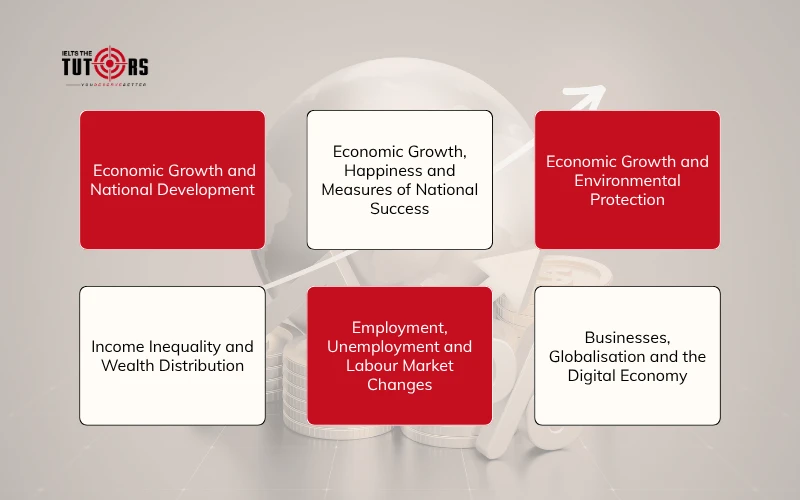
Các vấn đề thường gặp trong IELTS Writing task 2 topic Economy
Trong IELTS Writing Task 2, topic Economy thường liên quan đến tăng trưởng kinh tế, việc làm, chênh lệch thu nhập và sự phát triển của doanh nghiệp. Thí sinh không cần có kiến thức chuyên sâu về kinh tế mà chủ yếu cần hiểu tác động của các chính sách phát triển đến đời sống người dân và xã hội.
Dưới đây là những vấn đề thường gặp trong IELTS Writing Task 2 topic Economy:
- Vai trò của tăng trưởng kinh tế trong việc tạo việc làm, nâng cao thu nhập và cải thiện các dịch vụ công.
- Việc đánh giá thành công của một quốc gia dựa trên kinh tế hay những yếu tố khác như giáo dục, sức khỏe, bình đẳng và mức độ hạnh phúc.
- Mối quan hệ giữa tăng trưởng kinh tế, công nghiệp hóa và bảo vệ môi trường.
- Khoảng cách giàu nghèo, bất bình đẳng về cơ hội và vai trò của chính phủ trong việc phân phối lại thu nhập.
- Tác động của công nghệ, tự động hóa và toàn cầu hóa đến việc làm và nhu cầu đào tạo kỹ năng mới.
- Ảnh hưởng của các tập đoàn lớn, thương mại điện tử và nền tảng trực tuyến đến doanh nghiệp nhỏ và thị trường lao động.
Ý tưởng triển khai chủ đề Economy trong IELTS Writing task 2
Economic Growth and National Development
Đề bài: Many governments think that economic progress is their most important goal. Some people, however, think that other types of progress are equally important for a country. Discuss both these views and give your own opinion.
Dạng bài: Discuss Both Views and Give Your Opinion
Yêu cầu đề bài:
- Quan điểm thứ nhất: Một số chính phủ cho rằng tiến bộ kinh tế là mục tiêu quan trọng nhất vì có thể tạo việc làm, nâng cao thu nhập và cải thiện các dịch vụ công.
- Quan điểm thứ hai: Những người khác cho rằng các lĩnh vực như giáo dục, y tế, môi trường, văn hóa và phúc lợi xã hội cũng quan trọng không kém.
- Cần thảo luận cả hai quan điểm một cách cân bằng trước khi đưa ra ý kiến cá nhân.
- Làm rõ rằng other types of progress có thể bao gồm tiến bộ về xã hội, môi trường, giáo dục, sức khỏe và văn hóa.
Hướng triển khai phù hợp: Nên theo quan điểm cân bằng, vì tăng trưởng kinh tế là nền tảng quan trọng nhưng không thể phản ánh đầy đủ sự phát triển của một quốc gia. Chính phủ cần kết hợp mục tiêu kinh tế với những lĩnh vực khác để hướng đến sự phát triển bền vững và toàn diện.
Ý tưởng triển khai Writing task 2 topic Economy:
| Economic Progress Is the Most Important Goal | Other Forms of Progress Are Equally Important |
|
|
Economic Growth, Happiness and Measures of National Success
Đề bài: Economic progress is one way to measure the success of a country, while some people think there are other factors. What other factors should be considered? Among these factors, do you think any one is more important than economic progress?
Dạng bài: Two-part Question
Yêu cầu đề bài:
- Câu hỏi 1: Ngoài tăng trưởng kinh tế, những yếu tố nào nên được dùng để đánh giá mức độ thành công của một quốc gia?
- Câu hỏi 2: Trong số đó, yếu tố nào có thể quan trọng hơn tăng trưởng kinh tế?
- Cần trả lời đầy đủ cả hai câu hỏi với dung lượng tương đối cân bằng.
- Với câu hỏi 1, có thể phân tích các yếu tố như giáo dục, y tế, môi trường, mức độ hạnh phúc và bình đẳng xã hội.
- Với câu hỏi 2, cần so sánh các yếu tố trên với kinh tế và nêu rõ quan điểm cá nhân.
Hướng triển khai phù hợp: Có thể cho rằng sức khỏe, chất lượng sống hoặc sự phát triển bền vững quan trọng ngang bằng, thậm chí quan trọng hơn tăng trưởng kinh tế vì chúng phản ánh trực tiếp đời sống lâu dài của người dân.
Ý tưởng triển khai Writing task 2 topic Economy:
| Other Factors to Measure National Success | Is Any Factor More Important Than Economic Progress? |
|
|
Economic Growth and Environmental Protection
Đề bài: Economic growth is the only way to end world poverty. However, some people believe that it leads to environmental damage and should be stopped. To what extent do you agree or disagree?
Dạng bài: Agree or Disagree
Yêu cầu đề bài:
- Hai quan điểm trong đề: Tăng trưởng kinh tế là cách duy nhất để xóa đói giảm nghèo, nhưng đồng thời có thể gây tổn hại đến môi trường và vì vậy nên bị dừng lại.
- Cần thể hiện quan điểm rõ ràng đối với cả hai nhận định, thay vì chỉ tập trung phân tích một phía.
- Làm rõ vai trò của tăng trưởng kinh tế trong việc tạo việc làm, nâng cao thu nhập và giảm nghèo.
- Đồng thời, phân tích những tác động tiêu cực đến môi trường nếu quá trình phát triển thiếu kiểm soát.
- Có thể đề xuất hướng đi cân bằng giữa phát triển kinh tế, cải thiện đời sống và bảo vệ tài nguyên thiên nhiên.
Hướng triển khai phù hợp: Không nên đồng ý với cả hai quan điểm cực đoan. Tăng trưởng kinh tế vẫn cần thiết, nhưng phải được thực hiện theo hướng bền vững thay vì dừng lại hoàn toàn.
Ý tưởng triển khai Writing task 2 topic Economy:
| Agree | Disagree |
|
|
Income Inequality and Wealth Distribution
Đề bài: The gap between rich and poor is increasing. What problems does this cause? What solutions can you suggest?
Dạng bài: Problems and Solutions
Yêu cầu đề bài:
- Bối cảnh: Khoảng cách giàu nghèo ngày càng lớn, làm gia tăng bất bình đẳng về thu nhập và tài sản.
- Câu hỏi 1: Bất bình đẳng thu nhập gây ra những vấn đề gì?
- Câu hỏi 2: Có thể áp dụng những giải pháp nào để cải thiện tình trạng này?
- Cần trả lời cân bằng cả hai phần problems và solutions.
- Phân tích các hệ quả về kinh tế, xã hội và chính trị, chẳng hạn như cơ hội tiếp cận giáo dục không đồng đều, bất ổn xã hội và suy giảm niềm tin vào chính phủ.
- Đưa ra các giải pháp cụ thể từ nhiều phía, bao gồm chính phủ, doanh nghiệp và cộng đồng.
Hướng kết luận phù hợp: Khẳng định bất bình đẳng thu nhập gây ra nhiều hậu quả nghiêm trọng và cần sự phối hợp của nhiều bên để giải quyết hiệu quả.
Ý tưởng triển khai Writing task 2 topic Economy:
| Problems | Solutions |
|
|
Employment, Unemployment and Labour Market Changes
Đề bài: Some people think that having a set retirement age, such as 65, for everybody regardless of occupation is unfair. They believe that certain workers deserve to retire and receive a pension at an earlier age. Do you agree or disagree? Which types of workers should benefit from early retirement?
Dạng bài: Two-part Question
Yêu cầu đề bài:
- Bối cảnh: Một độ tuổi nghỉ hưu cố định, chẳng hạn 65 tuổi, được áp dụng cho mọi người dù tính chất công việc khác nhau.
- Câu hỏi 1: Bạn có đồng ý rằng chính sách này thiếu công bằng và một số người lao động nên được nghỉ hưu sớm hơn hay không?
- Câu hỏi 2: Những nhóm nghề nghiệp nào nên được hưởng chính sách nghỉ hưu sớm?
- Cần trả lời đầy đủ cả hai câu hỏi và đưa ra lập trường rõ ràng.
- Với câu hỏi thứ hai, nên nêu cụ thể các nghề có tính chất nặng nhọc, nguy hiểm hoặc gây tổn hại lâu dài đến sức khỏe, chẳng hạn công nhân xây dựng, thợ mỏ, lính cứu hỏa hoặc nhân viên làm việc trong môi trường độc hại.
Hướng triển khai phù hợp: Nên đồng ý rằng tuổi nghỉ hưu cần linh hoạt theo đặc thù nghề nghiệp, thay vì áp dụng một mốc tuổi giống nhau cho tất cả người lao động.
Ý tưởng triển khai Writing task 2 topic Economy:
| Why a Fixed Retirement Age Is Unfair | Workers Who Should Benefit from Early Retirement |
|
|
Businesses, Globalisation and the Digital Economy
Đề bài: Small local businesses are being threatened by large chain stores. Why is this happening? What can be done about it?
Dạng bài: Causes and Solutions
Yêu cầu đề bài:
- Vấn đề chính: Các doanh nghiệp nhỏ tại địa phương đang dần mất lợi thế trước sự phát triển của các chuỗi cửa hàng lớn.
- Câu hỏi 1: Vì sao tình trạng này xảy ra?
- Câu hỏi 2: Những giải pháp nào có thể giúp các doanh nghiệp nhỏ duy trì hoạt động và cạnh tranh tốt hơn?
- Cần trả lời cân bằng cả hai phần causes và solutions.
- Phân tích nguyên nhân từ góc độ chi phí, giá bán, quy mô kinh doanh, thói quen tiêu dùng và sức cạnh tranh trên thị trường.
- Đề xuất giải pháp từ nhiều phía, gồm chính phủ, cộng đồng địa phương và bản thân các doanh nghiệp nhỏ.
Hướng kết luận phù hợp: Tóm tắt những nguyên nhân chính và nhấn mạnh rằng vấn đề chỉ có thể được cải thiện khi chính sách hỗ trợ, sự ủng hộ của người tiêu dùng và khả năng đổi mới của doanh nghiệp nhỏ được kết hợp với nhau.
Ý tưởng triển khai Writing task 2 topic Economy:
| Causes | Solutions |
|
|
Xem thêm:
Từ vựng & collocation ăn điểm chủ đề Economy
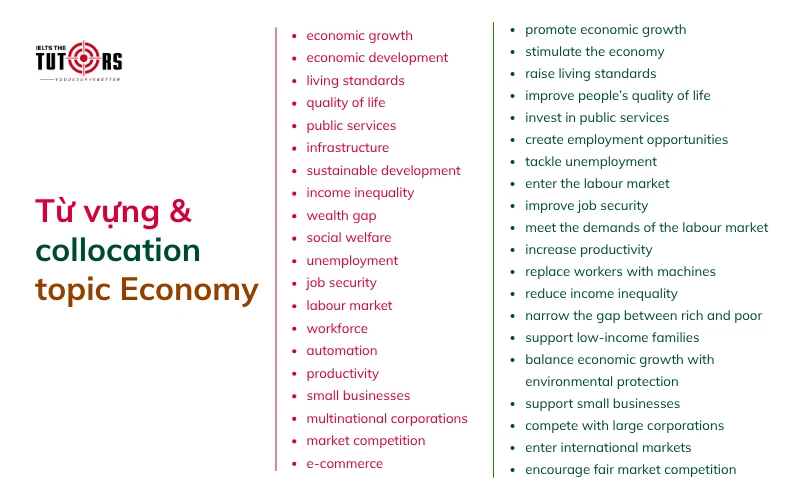
Từ vựng hay cho IELTS Writing Task 2 topic Economy
| Từ vựng | Từ loại | Ý nghĩa |
| economic growth | noun phrase | tăng trưởng kinh tế |
| economic development | noun phrase | sự phát triển kinh tế |
| living standards | noun phrase | mức sống |
| quality of life | noun phrase | chất lượng cuộc sống |
| public services | noun phrase | các dịch vụ công |
| infrastructure | noun | cơ sở hạ tầng |
| sustainable development | noun phrase | sự phát triển bền vững |
| income inequality | noun phrase | bất bình đẳng thu nhập |
| wealth gap | noun phrase | khoảng cách giàu nghèo |
| social welfare | noun phrase | phúc lợi xã hội |
| unemployment | noun | tình trạng thất nghiệp |
| job security | noun phrase | sự ổn định việc làm |
| labour market | noun phrase | thị trường lao động |
| workforce | noun | lực lượng lao động |
| automation | noun | quá trình tự động hóa |
| productivity | noun | năng suất |
| small businesses | noun phrase | các doanh nghiệp nhỏ |
| multinational corporations | noun phrase | các tập đoàn đa quốc gia |
| market competition | noun phrase | sự cạnh tranh trên thị trường |
| e-commerce | noun | thương mại điện tử |
Collocations nên học topic Economy Writing Task 2
- promote economic growth: thúc đẩy tăng trưởng kinh tế
- stimulate the economy: kích thích nền kinh tế
- raise living standards: nâng cao mức sống
- improve people’s quality of life: cải thiện chất lượng cuộc sống của người dân
- invest in public services: đầu tư vào các dịch vụ công
- create employment opportunities: tạo ra cơ hội việc làm
- tackle unemployment: giải quyết tình trạng thất nghiệp
- enter the labour market: gia nhập thị trường lao động
- improve job security: cải thiện sự ổn định việc làm
- meet the demands of the labour market: đáp ứng nhu cầu của thị trường lao động
- increase productivity: nâng cao năng suất
- replace workers with machines: thay thế người lao động bằng máy móc
- reduce income inequality: giảm bất bình đẳng thu nhập
- narrow the gap between rich and poor: thu hẹp khoảng cách giàu nghèo
- support low-income families: hỗ trợ các gia đình có thu nhập thấp
- balance economic growth with environmental protection: cân bằng tăng trưởng kinh tế với bảo vệ môi trường
- support small businesses: hỗ trợ các doanh nghiệp nhỏ
- compete with large corporations: cạnh tranh với các tập đoàn lớn
- enter international markets: gia nhập thị trường quốc tế
- encourage fair market competition: khuyến khích cạnh tranh thị trường công bằng
Bài mẫu IELTS Writing task 2 topic Economy
Đề bài: Economic growth in recent years has made people in both developed and developing countries richer. However, research shows that people in developing countries are happier, while those in developed countries do not seem happier than before. Why does this happen? What can we learn from it?
Phân tích đề bài:
- Dạng bài: Two-part Question
- Keyword chủ chốt: economic growth, developed vs. developing countries, richer but not happier, happiness paradox, wealth and well-being, life satisfaction
- Hướng phát triển: Giải thích vì sao thu nhập tăng không phải lúc nào cũng giúp con người hạnh phúc hơn, đồng thời làm rõ những yếu tố ngoài tiền bạc có thể ảnh hưởng đến mức độ hài lòng với cuộc sống.
- Kết luận phù hợp: Tăng trưởng kinh tế có thể cải thiện mức sống, nhưng hạnh phúc còn phụ thuộc vào sức khỏe, các mối quan hệ, sự cân bằng trong cuộc sống và môi trường sống.
Dàn bài gợi ý:
Introduction
- Paraphrase đề bài về nghịch lý khi tăng trưởng kinh tế không phải lúc nào cũng khiến con người hạnh phúc hơn.
- Thesis statement: Phân tích nguyên nhân của hiện tượng này và rút ra những bài học về cách xây dựng cuộc sống hạnh phúc.
Body 1 – Giải thích tại sao hiện tượng này xảy ra
- Ở các nước đang phát triển, việc thoát nghèo và cải thiện mức sống tạo ra cảm giác hạnh phúc rõ rệt.
- Ở các nước phát triển, nhu cầu cơ bản đã được đáp ứng nên thu nhập cao hơn không còn mang lại nhiều khác biệt.
- Cuộc sống hiện đại đi kèm áp lực công việc, cạnh tranh và cảm giác cô đơn.
- Việc liên tục so sánh bản thân với người khác khiến nhiều người luôn cảm thấy chưa đủ.
Body 2 – Bài học rút ra
- Tiền bạc chỉ là một trong nhiều yếu tố tạo nên hạnh phúc.
- Con người nên quan tâm hơn đến gia đình, bạn bè, sức khỏe và ý nghĩa cuộc sống.
- Cần duy trì sự cân bằng giữa công việc và thời gian cá nhân.
- Biết trân trọng những gì đang có sẽ giúp hạn chế việc chạy theo vật chất không ngừng.
Conclusion: Nghịch lý này cho thấy hạnh phúc không chỉ đến từ của cải mà còn phụ thuộc vào sự cân bằng, các mối quan hệ và thái độ sống.
Bài mẫu Writing task 2 topic Economy:
Economic growth has raised living standards around the world, but it does not always lead to greater happiness. People in developing countries often report increasing life satisfaction as their economies improve, while those in wealthier nations may feel no happier despite higher incomes. This essay will explain why this happens and what lessons can be learned.
One reason is that economic progress brings more noticeable benefits in poorer countries. When people gain better access to food, healthcare, education and secure housing, their daily lives improve significantly, creating hope and a sense of achievement. By contrast, most basic needs in developed countries have already been met, so additional income brings only limited gains in happiness. At the same time, modern life in affluent societies is often associated with long working hours, intense competition and social isolation. People may also compare themselves constantly with others through advertising and social media, which can make them feel dissatisfied even when they are financially comfortable.
Several lessons can be drawn from this pattern. First, money is important for meeting basic needs, but it is not the only source of well-being. Strong family relationships, close friendships, good health and a sense of purpose are equally valuable. Second, people should maintain a healthy work-life balance instead of sacrificing personal time for endless financial ambition. Finally, learning to appreciate what one already has can reduce the pressure to compete and consume more.
In conclusion, the contrast between richer and poorer nations shows that happiness depends on more than economic growth. A balanced life, meaningful relationships and a grateful attitude are often more important than continued material accumulation.
(269 words, band 8.0)
Kết luận
Nhìn chung, các đề bài về Economy thường yêu cầu người viết cân nhắc không chỉ lợi ích kinh tế mà còn cả những tác động lâu dài đến con người, môi trường và xã hội. Vì vậy, khi luyện IELTS Writing Task 2 topic Economy, bạn nên chuẩn bị ý tưởng theo từng nhóm vấn đề và lựa chọn từ vựng phù hợp để phát triển luận điểm rõ ràng, thuyết phục và bám sát yêu cầu đề bài.
Đừng quên theo dõi IELTS The Tutors để tham khảo thêm nhiều ý tưởng hữu ích cho các topic IELTS Writing Task 2 khác và từng bước cải thiện band điểm của mình nhé!