IELTS Writing Task 2 Media là một chủ đề khá rộng, bao gồm báo chí, mạng xã hội, tin giả, quảng cáo, nội dung bạo lực và quyền riêng tư. Để làm tốt nhóm đề này, bạn không cần ghi nhớ quá nhiều ý tưởng phức tạp mà nên hiểu rõ từng vấn đề, xác định đúng dạng bài và biết cách phát triển lập luận theo cả hai chiều.
Trong bài viết dưới đây, IELTS The Tutors sẽ giúp bạn hệ thống những chủ đề Media IELTS Writing Task 2 thường gặp, kèm theo hướng triển khai và nhóm từ vựng dễ ứng dụng.
Các vấn đề thường gặp trong chủ đề Media Writing task 2
Trong IELTS Writing Task 2 topic Media, đề bài không chỉ xoay quanh báo chí hoặc truyền hình mà còn mở rộng sang mạng xã hội, tin giả, quảng cáo, nội dung bạo lực và quyền riêng tư. Thí sinh thường được yêu cầu phân tích cách truyền thông cung cấp thông tin, tác động đến suy nghĩ và hành vi của con người, đồng thời đưa ra quan điểm về việc có nên kiểm soát các nội dung này hay không.
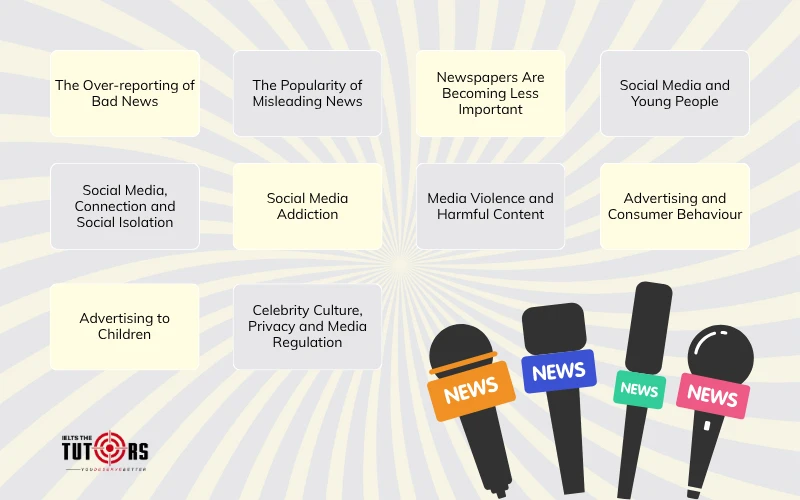
Dưới đây là những vấn đề phổ biến mà bạn nên chuẩn bị khi ôn Writing task 2 chủ đề Media:
Truyền thông đưa quá nhiều tin tiêu cực: Đề bài thường yêu cầu phân tích vì sao báo chí ưu tiên tin về chiến tranh, tội phạm hoặc thiên tai và liệu tin tức có nên được cân bằng hơn.
Sự phổ biến của tin giả và thông tin sai lệch: Nhóm đề này tập trung vào nguyên nhân khiến thông tin thiếu kiểm chứng lan truyền nhanh và cách người dùng đánh giá độ tin cậy của nguồn tin.
Báo in ngày càng mất đi vai trò: Đề bài thường bàn về sự cạnh tranh giữa báo giấy và nền tảng số, cũng như khả năng báo in tiếp tục tồn tại trong tương lai.
Ảnh hưởng của mạng xã hội đến người trẻ: Nội dung thường xoay quanh tác động của mạng xã hội đến sức khỏe tinh thần, học tập, hình ảnh bản thân và các mối quan hệ.
Mạng xã hội: Kết nối hay cô lập?: Đề bài yêu cầu đánh giá liệu mạng xã hội giúp duy trì quan hệ hay làm giảm tương tác trực tiếp và gia tăng cảm giác cô đơn.
Nghiện mạng xã hội: Nhóm đề này thường yêu cầu phân tích nguyên nhân, hậu quả và giải pháp cho việc dành quá nhiều thời gian trên các nền tảng trực tuyến.
Nội dung bạo lực và độc hại trên truyền thông: Đề bài thường xem xét liệu phim ảnh, trò chơi và video bạo lực có làm gia tăng hành vi hung hăng, đặc biệt ở trẻ em.
Quảng cáo và hành vi tiêu dùng: Nội dung tập trung vào lợi ích cung cấp thông tin của quảng cáo và nguy cơ thúc đẩy mua sắm bốc đồng hoặc lối sống vật chất.
Quảng cáo hướng đến trẻ em: Đề bài thường bàn về mức độ trẻ em bị tác động bởi quảng cáo và trách nhiệm quản lý của doanh nghiệp, phụ huynh và chính phủ.
Văn hóa người nổi tiếng, quyền riêng tư và quản lý truyền thông: Nhóm đề này yêu cầu cân bằng giữa quyền tự do báo chí, lợi ích công chúng và quyền riêng tư của người nổi tiếng.
Ý tưởng triển khai chủ đề Media trong IELTS Writing task 2
The Over-reporting of Bad News
Đề bài: Most news reports focus on negative events such as wars, famines, accidents and crime. Why does the media report so much bad news? Should there be a better balance between positive and negative news?
Dạng bài: Two-part Question
Yêu cầu đề bài:
Giải thích tại sao phương tiện truyền thông tập trung vào tin xấu (chiến tranh, nạn đói, tai nạn, tội phạm).
Đánh giá liệu có nên cân bằng hơn giữa tin tích cực và tiêu cực.
Ý tưởng phát triển bài Writing task 2:
Why does the media report so much bad news?
Should there be a better balance?
Negative stories attract attention because fear, shock and conflict encourage people to click, watch and share. This helps media companies increase ratings, advertising revenue and profits.
People naturally pay more attention to possible threats. Negative news often creates stronger emotions than positive stories, making it easier to remember.
Journalists need to report corruption, crime, injustice, disease outbreaks and natural disasters. This protects the public and holds powerful individuals or organisations accountable.
News reports often focus on events that are unusual, urgent or dramatic. Positive changes usually happen gradually, so they tend to receive less attention.
Bad news receives more coverage because it attracts audiences and serves an important public role.
Constant exposure to bad news can increase stress, anxiety and feelings of helplessness. Over time, audiences may also experience emotional exhaustion.
Too much negative coverage can make the world seem more dangerous than it really is. It may also distract people from progress in healthcare, education, technology and poverty reduction.
A constant focus on crises can make people feel powerless. Instead of encouraging action, it may lead to fear, apathy and lower participation in social issues.
The media should report problems alongside possible solutions. Successful projects, positive developments and signs of progress can inform and motivate the public.
A better balance is necessary. The media should continue covering serious problems while also highlighting solutions, progress and human achievements.
The Popularity of Misleading News
Đề bài: False and misleading news has become increasingly common, particularly on social media. Why has this problem become so widespread? What measures can be taken to help people identify reliable information?
Dạng bài: Causes and Solutions
Yêu cầu đề bài:
Giải thích nguyên nhân tại sao tin giả/sai lệch lại phổ biến, đặc biệt trên mạng xã hội.
Đề xuất các biện pháp giúp người dùng nhận diện thông tin đáng tin cậy.
Ý tưởng phát triển bài Writing task 2:
Causes
Solutions
Social media allows false information to spread quickly. Many users share posts without checking them, while algorithms often promote engaging content rather than accurate information.
Many online platforms have weak fact-checking and content moderation systems. Fake accounts and pages can also be created easily.
Some websites publish clickbait and sensational headlines to attract more views and earn advertising revenue.
Many users have limited digital literacy and find it difficult to judge whether a source is trustworthy. Emotional reactions may also prevent them from thinking carefully.
Schools should teach media literacy and critical thinking. Public campaigns can also help people recognise unreliable sources and misleading content.
Social media platforms should introduce stronger fact-checking systems, label disputed content and limit the promotion of misleading posts.
Governments can require greater transparency from online publishers and introduce penalties for deliberately spreading false information.
Individuals should verify the source before sharing, compare information from several reliable sources and report suspicious content.
Newspapers Are Becoming Less Important
Đề bài: In the future, people will no longer purchase printed newspapers or books because they will be able to read everything online without paying. To what extent do you agree or disagree?
Dạng bài: Agree or Disagree
Yêu cầu đề bài:
Đánh giá khả năng sách báo in sẽ biến mất trong tương lai do sự phát triển của nội dung trực tuyến miễn phí.
Cân nhắc các yếu tố ủng hộ và phản đối quan điểm này.
Đưa ra lập trường rõ ràng (hoàn toàn đồng ý/không đồng ý/đồng ý một phần).
Ý tưởng phát triển bài Writing task 2:
Agree
Disagree
Digital content is more convenient because people can access it anytime and anywhere. Readers can also search for information, adjust the font size and use one device instead of carrying several books.
Online content is often cheaper because there are no printing or distribution costs. Many articles are free, while digital subscriptions may cost less than buying printed books or newspapers.
E-books and online newspapers save space. A single device can store thousands of files, making it easier to organise, search and archive information.
Digital media offers useful features such as videos, audio, hyperlinks, instant updates and social sharing. These functions make online reading more flexible and interactive.
Reducing the use of paper may lower waste and limit the environmental impact of printing and distribution.
Many people still prefer the experience of reading a physical book. Printed materials are easier on the eyes, require no battery or Internet connection and may also have decorative or collectible value.
Printed media remains important for people with limited Internet access or poor digital skills. Older readers may also feel more comfortable with traditional books and newspapers.
Printed books and newspapers are often seen as more reliable because their content is usually edited and checked before publication. They also provide a permanent record that cannot be changed remotely.
The market for printed materials is still strong in areas such as textbooks, luxury books, limited editions and special prints. Many publishers are also combining print and digital formats rather than replacing one with the other.
Digital publishing also has limitations, including piracy, inconsistent quality and the growing use of paywalls. Authors and publishers still need stable sources of income to produce reliable content.
Social Media and Young People
Đề bài: Social media has a largely negative influence on the lives of children and young people. To what extent do you agree or disagree?
Dạng bài: Agree or Disagree
Yêu cầu đề bài:
Đánh giá tác động của mạng xã hội đối với trẻ em và thanh thiếu niên.
Cân nhắc các ảnh hưởng tiêu cực và tích cực.
Xác định xem ảnh hưởng tiêu cực có chiếm đa số (largely negative) hay không.
Đưa ra lập trường rõ ràng với mức độ đồng ý cụ thể.
Ý tưởng phát triển bài Writing task 2:
Agree
Disagree
Social media can harm mental health by encouraging constant comparison with others. This may lead to anxiety, low self-esteem, fear of missing out, addiction and poor sleep.
Cyberbullying can happen at any time and may involve harassment, public embarrassment or social exclusion. Harmful posts can remain online and be difficult to remove.
Sharing personal information can create privacy and safety risks. Young users may face data collection, identity theft, location tracking or contact from dangerous strangers.
Frequent notifications and endless scrolling can reduce concentration and waste study time. This may lead to procrastination, lower productivity and weaker academic results.
Young people may be exposed to violence, misinformation, unhealthy behaviour and dangerous online trends. Influencers may also promote unrealistic or harmful ideas.
Excessive use may contribute to a sedentary lifestyle, eye strain, headaches and poor posture. It can also reduce face-to-face interaction.
Social media gives young people access to tutorials, expert content and online study groups. It can also improve digital skills and support international learning.
Social media helps users stay in contact with friends and family, maintain long-distance relationships and find supportive communities with similar experiences.
These platforms provide space for creativity and self-expression. Users can share art, music or writing, learn from other creators and gain recognition for their work.
Social media can support career development through professional networking, job information and opportunities to build a portfolio, promote skills or start a business.
Social media raises awareness of global issues and allows users to support social campaigns, charitable causes and cultural exchange.
Regular online communication can improve writing, presentation and cross-cultural communication skills. It may also help users become more confident when expressing their opinions.
Social Media, Connection and Social Isolation
Đề bài: Many people use social media every day to keep in contact with others and follow current events. Do the advantages of this development outweigh the disadvantages?
Dạng bài: Advantages Outweigh Disadvantages
Yêu cầu đề bài:
Xác định các lợi ích của việc sử dụng mạng xã hội hàng ngày (giữ liên lạc, cập nhật tin tức).
Phân tích các bất lợi/tác hại đi kèm.
So sánh và đánh giá xem ưu điểm có vượt trội hơn nhược điểm không.
Đưa ra quan điểm rõ ràng với lập luận thuyết phục.
Ý tưởng phát triển bài Writing task 2:
Advantages
Disadvantages
Social media helps people maintain relationships across long distances, reconnect with friends and family, communicate instantly and share important moments. It can also provide quick access to emotional support.
Users can receive real-time updates on local and global events, follow breaking news and access different viewpoints. Eyewitness reports can also provide useful information during major events.
Online communities allow people with similar interests or experiences to connect. They can exchange ideas, support one another and organise campaigns for social causes.
Social media supports professional networking by helping users find jobs, build business connections, follow industry trends and develop a professional profile.
Most platforms are easy to use, available at any time and accessible through mobile devices. They combine communication, entertainment, news and other services in one place.
Social media provides educational videos, tutorials and expert advice. Users can learn new skills, find quick answers and discover different ideas and perspectives.
During emergencies, social media can spread warnings quickly, coordinate relief efforts, share safety updates and help locate missing people.
Heavy use may reduce face-to-face interaction and replace meaningful friendships with shallow online connections. Some users may still feel lonely despite having many online friends.
False information can spread quickly and may be difficult to verify. Algorithms can also create echo chambers, while biased or sensational content may be used for manipulation.
Constant comparison with others can cause anxiety, fear of missing out, low self-esteem and depression. Some users may also become addicted to checking social media.
Platforms may collect and use personal data without users fully understanding how it is handled. Other risks include hacking, identity theft, tracking and data leaks.
Endless scrolling can waste time, reduce productivity and distract users from work, study or daily responsibilities. Late-night use may also disrupt sleep.
Online harassment, trolling and hate speech can cause serious emotional harm. Harmful posts may remain online permanently and can be difficult to remove or report.
Excessive screen time can lead to a sedentary lifestyle, eye strain, poor posture, sleep deprivation and less time spent outdoors.
Social Media Addiction
Đề bài: Social media addiction is becoming a serious problem among teenagers. What problems does excessive social media use cause, and what measures can be taken to address them?
Dạng bài: Problems and Solutions
Yêu cầu đề bài:
Xác định và phân tích các vấn đề do nghiện mạng xã hội gây ra cho thanh thiếu niên.
Đề xuất các biện pháp cụ thể và khả thi để giải quyết từng vấn đề.
Cần đảm bảo sự tương ứng logic giữa problems và solutions.
Phân tích đa chiều: ảnh hưởng về sức khỏe, học tập, xã hội, tâm lý.
Ý tưởng phát triển bài Writing task 2:
Problems
Solutions
Excessive social media use can increase anxiety, depression, stress and low self-esteem. Constant comparison may also contribute to body image concerns, sleep problems and emotional instability.
Spending too much time online can reduce concentration, study time and motivation. This may lead to procrastination, incomplete assignments and lower academic results.
Long periods of screen use encourage a sedentary lifestyle and may cause eye strain, poor posture, headaches, fatigue and disrupted sleep.
Heavy reliance on social media can reduce face-to-face communication and make it harder to understand social cues, build close relationships or develop empathy.
Some users develop compulsive habits such as constant checking and scrolling. They may become irritated when access is restricted and neglect other responsibilities or interests.
Young users may encounter cyberbullying, misleading information, inappropriate material, dangerous online challenges or contact with strangers.
Sharing too much personal information can increase the risk of identity theft, scams, hacking, location tracking and misuse of personal data.
Frequent device use can reduce quality family time and cause arguments, poor communication, weak supervision and trust issues.
Schools and communities should provide counselling, mental health education, stress-management workshops and access to professional support. Mindfulness activities and peer support groups may also help.
Schools can teach digital literacy and time-management skills. Parents can support clear study schedules, monitor homework and create device-free study areas at home.
Young people should be encouraged to exercise regularly, join sports clubs and take part in outdoor family activities. Schools can also provide health education and regular check-ups.
Schools and families should create more opportunities for real-life interaction through group projects, social events, volunteering, family meals and public-speaking activities.
Parents should set reasonable screen-time limits, introduce device-free periods and keep phones out of bedrooms at night. Usage can also be reduced gradually through agreed family rules.
Online safety and digital citizenship should be taught at school. Young people also need guidance on privacy settings, reporting tools and how to evaluate online content carefully.
Users should review privacy settings and limit the information they share. Tracking tools, website blockers, scheduled notifications and platform safety features can also support healthier use.
Parents should model healthy technology habits, discuss concerns openly and create household rules together with their children. Regular conversations and device-free family time can strengthen relationships.
Media Violence and Harmful Content
Đề bài: Violence in the media encourages violent behaviour in society. To what extent do you agree or disagree?
Dạng bài: Agree or Disagree
Yêu cầu đề bài:
Đánh giá mối liên hệ giữa bạo lực trên truyền thông và hành vi bạo lực trong xã hội.
Xem xét các bằng chứng ủng hộ và phản bác quan điểm này.
Phân tích các yếu tố khác có thể ảnh hưởng đến hành vi bạo lực.
Đưa ra lập trường rõ ràng với mức độ đồng ý hợp lý.
Ý tưởng phát triển bài Writing task 2:
Agree
Disagree
Repeated exposure to violent content may make viewers less sensitive to brutality. Over time, violence can appear more normal, while empathy for victims may decrease.
Children and teenagers may copy aggressive behaviour shown in films, television programmes or video games. Some may begin to see violence as a way to solve problems.
Violent content can increase aggressive thoughts, hostile emotions and short-term excitement. This may lower a person’s self-control in certain situations.
Young people and those with psychological or family problems may be more affected because they are less able to judge or process violent images.
Films and games sometimes present violent characters as powerful, attractive or successful. Revenge and the use of weapons may also be shown as acceptable or justified.
Violent images are now widely available across television, games and social media. Frequent and increasingly realistic content makes exposure difficult to avoid.
Some studies have found higher levels of aggressive thoughts or behaviour after exposure to violent content. These findings suggest that media may influence certain viewers.
A link between violent media and aggressive behaviour does not prove that one directly causes the other. Many people regularly watch violent content without becoming violent.
Personal factors often have a stronger influence, including family background, mental health, education, upbringing and individual personality.
Violent media can also provide a safe form of entertainment. Most viewers understand the difference between fiction and reality and do not treat it as a guide for real behaviour.
Wider social problems such as poverty, inequality, substance abuse, gang culture and a lack of opportunities may contribute more directly to real-world violence.
Violence existed long before modern media. War, crime and conflict have always been part of human society, which suggests that media cannot be the main cause.
Media can also have positive effects by teaching moral lessons, showing the consequences of crime and encouraging helpful or responsible behaviour.
Age ratings, parental controls, warning labels and media literacy can reduce possible harm and help audiences consume content more responsibly.
Advertising and Consumer Behaviour
Đề bài: Some people believe advertising is highly effective at persuading consumers to buy products. Others argue that advertising is now so widespread that people largely ignore it. Discuss both views and give your opinion.
Dạng bài: Discussion Essay and Opinion
Yêu cầu đề bài:
Thảo luận quan điểm 1: Quảng cáo rất hiệu quả trong việc thuyết phục người tiêu dùng mua sản phẩm.
Thảo luận quan điểm 2: Quảng cáo quá phổ biến nên người ta thường bỏ qua.
Đưa ra ý kiến cá nhân: lựa chọn một trong hai quan điểm hoặc đưa ra góc nhìn cân bằng.
Ý tưởng phát triển bài Writing task 2:
Advertising Is Highly Effective
People Largely Ignore Advertising
Advertisements use colour, emotion, celebrity endorsements and fear of missing out to influence consumers. These techniques can create new wants and connect products with personal goals or insecurities.
Repetition helps consumers remember brand names, logos, slogans and jingles. Familiar brands are often easier to recognise and may be chosen over less familiar competitors.
Data allows companies to show advertisements based on users’ interests, location and online behaviour. Personalised recommendations and retargeting can make products appear more relevant.
Influencers, testimonials and social media engagement can create social proof. Consumers may be more willing to buy a product when it is recommended by people they follow or trust.
Limited-time offers, flash sales and low-stock messages create urgency. These strategies can encourage impulse buying by making consumers fear that they will miss an opportunity.
Advertising across television, websites, social media and print gives consumers repeated contact with the same brand. This increases familiarity and may influence later purchasing decisions.
Emotional stories can make advertisements memorable and encourage people to share them. Brands often connect products with values, relationships and desirable lifestyles.
Companies can measure clicks, sales, conversions and returns from advertising campaigns. They can also use A/B testing to improve messages and identify what works.
People are exposed to so many advertisements that they often stop noticing them. Repeated exposure can lead to banner blindness, information overload and lower interest in marketing messages.
Ad-blockers, skip buttons, premium subscriptions and browser filters allow users to avoid many advertisements. This reduces the number of marketing messages they actually watch.
Many consumers distrust advertising claims and recognise common persuasion techniques. They may rely more on customer reviews, personal recommendations and independent opinions.
Modern consumers often research products before making a purchase. They compare prices, read reviews and look for authentic information rather than depending only on advertisements.
Intrusive, repetitive or disruptive advertisements can cause irritation. Pop-ups, auto-play videos and constant retargeting may even damage a consumer’s view of a brand.
Generic or poorly targeted advertisements are easy to ignore. Campaigns are less effective when they do not match consumers’ interests, needs or cultural background.
Consumers now have many other sources of information, including comparison websites, video reviews, online forums and expert opinions. These sources may appear more trustworthy than paid advertising.
Concerns about tracking and personal data can reduce trust. Cookie rejection, privacy laws and discomfort with personalised targeting may make consumers less willing to engage with advertisements.
Advertising to Children
Đề bài: Advertisements aimed at children should not be allowed because children are easily influenced by commercial messages. To what extent do you agree or disagree?
Dạng bài: Agree or Disagree
Yêu cầu đề bài:
Đánh giá đề xuất cấm quảng cáo hướng đến trẻ em.
Xem xét lý do: trẻ em dễ bị ảnh hưởng bởi thông điệp thương mại.
Cân nhắc tác động tiêu cực và vai trò bảo vệ trẻ em.
Xem xét các quan điểm phản đối: giáo dục tiêu dùng, quyền tự do kinh doanh.
Đưa ra lập trường rõ ràng với mức độ đồng ý hợp lý.
Ý tưởng phát triển bài Writing task 2:
Agree
Disagree
Children often cannot distinguish advertising from ordinary content or understand persuasive intent. Their limited critical thinking makes it difficult to evaluate product claims.
Advertisers may deliberately target children’s weaknesses by using cartoon characters, emotional appeals and attractive images to create unnecessary wants.
Advertising can encourage children to repeatedly ask their parents for products, creating family conflict and placing financial pressure on households.
Promotions for fast food, sugary drinks and other unhealthy products may influence children’s eating habits and contribute to obesity.
Advertising can encourage materialism by teaching children to connect happiness, popularity and self-worth with brands and possessions.
Unrealistic images and stereotypes may damage children’s confidence, affect body image and increase anxiety or peer pressure.
Constant promotion of toys, games and new products may distract children from learning and encourage them to value shopping over education.
Restrictions in countries such as Sweden and Norway show that stronger protection for children can be introduced successfully.
Digital advertising may expose children to hidden costs, in-app purchases, addictive game design and the collection of personal data.
Parents should supervise what children watch, explain how advertising works and use parental controls when necessary. Family guidance may be more influential than advertising.
Advertising can help children learn about products, choices and marketing techniques. With proper guidance, it can also improve media literacy.
A ban may restrict commercial freedom and create concerns about censorship. It may also be difficult to decide which advertisements are specifically aimed at children.
Existing advertising standards, time restrictions and industry guidelines can reduce harmful content without banning all advertisements.
A total ban could reduce business revenue, affect jobs in advertising and limit funding for children’s television programmes and online content.
Enforcing a complete ban would be difficult because children also watch general content, use international websites and access social media across borders.
Not all advertising is harmful. Campaigns for books, educational toys, healthy food and public safety can provide useful information.
A balanced approach may be more practical. Governments could restrict advertising for unhealthy products, require clearer labels and apply age-based rules.
Children gradually need to develop independence and make informed choices. Controlled exposure to advertising can prepare them for life in a consumer society.
Celebrity Culture, Privacy and Media Regulation
Đề bài: Famous people are frequently pursued by journalists and photographers. Some believe that celebrities have no right to privacy. To what extent do you agree or disagree?
Dạng bài: Agree or Disagree
Yêu cầu đề bài:
Đánh giá quan điểm: người nổi tiếng không có quyền riêng tư.
Cân nhắc mối quan hệ giữa danh tiếng và quyền riêng tư.
Xem xét giới hạn hợp lý của sự theo dõi truyền thông.
Phân biệt giữa cuộc sống công khai và cuộc sống riêng tư.
Đưa ra lập trường rõ ràng về quyền cơ bản của con người.
Ý tưởng phát triển bài Writing task 2:
Agree
Disagree
Celebrities choose careers that place them in the public eye. Fame brings attention, and some loss of privacy may be part of that choice. Privacy is a basic human right. Becoming famous does not remove a person’s right to dignity, personal space and a private life.
Public figures can influence social values, consumer behaviour and public opinion. Their actions may therefore deserve greater scrutiny.
Celebrities often benefit from media coverage because publicity supports their careers, personal brands and commercial partnerships.
Some public figures actively share personal stories, family photos and private moments online to attract attention and remain relevant.
Celebrities are often seen as role models, especially by younger audiences. Irresponsible or dishonest behaviour may need to be exposed.
Fame can generate large financial rewards through endorsements, appearances and media exposure. Greater public interest may be viewed as part of this business model.
Politicians and other influential public figures must be transparent when their private actions affect public duties, laws or the use of public money.
Public figures cannot always seek positive coverage while rejecting all unwanted attention. Selective use of publicity may appear inconsistent.
Public curiosity creates strong demand for celebrity news, and the media responds by producing more of this content.
Greater media attention may be justified when it reveals corruption, dishonesty, abuse of power or behaviour that directly affects the public.
Privacy is a basic human right. Becoming famous does not remove a person’s right to dignity, personal space and a private life.
A clear line should be drawn between professional conduct and private matters. Public appearances are different from moments at home with family.
Constant media attention can cause stress, anxiety and emotional exhaustion. Invasive reporting may seriously damage a person’s mental health.
Publishing private details can create serious safety risks, including stalking, harassment and threats from obsessive fans.
Family members should not lose their privacy because one person is famous. Children, partners and relatives may never have chosen public attention.
Paparazzi may use aggressive or illegal methods, such as trespassing, following cars or photographing people in private places. This crosses the line from reporting into harassment.
Responsible journalism should focus on matters that genuinely affect the public. Medical records, grief, relationships and family disputes are usually private matters.
Privacy and anti-harassment laws apply to celebrities as well as ordinary citizens. Courts have also recognised that famous people can reasonably expect privacy in certain situations.
Public interest is not the same as what interests the public. Gossip and entertainment do not automatically justify invading someone’s personal life.
Invasive coverage can have severe consequences, including trauma, damaged relationships, danger to children and, in extreme cases, loss of life.
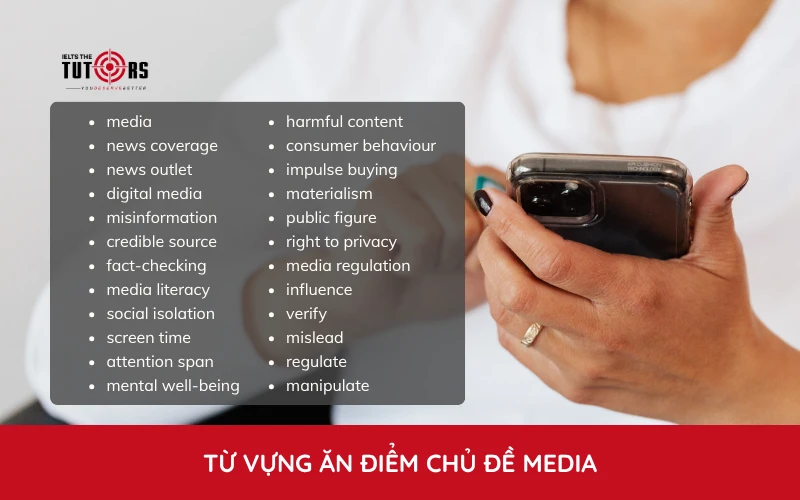
Từ vựng chủ đề Media IELTS Writing task 2 phổ biến
Từ vựng
Từ loại
Ý nghĩa
media
noun
truyền thông
news coverage
noun phrase
hoạt động đưa tin
news outlet
noun phrase
cơ quan hoặc kênh truyền thông
digital media
noun phrase
truyền thông kỹ thuật số
misinformation
noun
thông tin sai lệch
credible source
noun phrase
nguồn tin đáng tin cậy
fact-checking
noun
hoạt động kiểm chứng thông tin
media literacy
noun phrase
khả năng hiểu và đánh giá thông tin truyền thông
social isolation
noun phrase
sự cô lập xã hội
screen time
noun phrase
thời gian sử dụng thiết bị điện tử
attention span
noun phrase
khả năng duy trì sự tập trung
mental well-being
noun phrase
sức khỏe tinh thần
harmful content
noun phrase
nội dung có hại
consumer behaviour
noun phrase
hành vi tiêu dùng
impulse buying
noun phrase
hành vi mua sắm bốc đồng
materialism
noun
lối sống coi trọng vật chất
public figure
noun phrase
nhân vật của công chúng
right to privacy
noun phrase
quyền riêng tư
media regulation
noun phrase
sự quản lý truyền thông
influence
verb
ảnh hưởng, tác động
verify
verb
xác minh
mislead
verb
khiến người khác hiểu sai
regulate
verb
quản lý bằng quy định
manipulate
verb
thao túng
Collocations IELTS Writing Task 2 chủ đề Media nên học
Collocations
Ý nghĩa
attract a larger audience
thu hút lượng khán giả lớn hơn
focus heavily on negative news
tập trung quá nhiều vào tin tức tiêu cực
shape public opinion
định hình dư luận
provide balanced news coverage
cung cấp nội dung tin tức cân bằng
spread false information
lan truyền thông tin sai lệch
share unverified information
chia sẻ thông tin chưa được kiểm chứng
consult reliable news sources
tham khảo các nguồn tin đáng tin cậy
verify the accuracy of information
xác minh độ chính xác của thông tin
access news instantly online
tiếp cận tin tức ngay lập tức trên mạng
stay connected with friends and family
giữ liên lạc với bạn bè và gia đình
reduce face-to-face interaction
làm giảm giao tiếp trực tiếp
become dependent on social media
trở nên phụ thuộc vào mạng xã hội
spend too much time online
dành quá nhiều thời gian trên mạng
affect academic performance
ảnh hưởng đến kết quả học tập
negatively affect mental well-being
ảnh hưởng tiêu cực đến sức khỏe tinh thần
expose children to harmful content
khiến trẻ tiếp xúc với nội dung có hại
restrict access to violent content
hạn chế khả năng tiếp cận nội dung bạo lực
influence purchasing decisions
tác động đến quyết định mua hàng
encourage impulse buying
thúc đẩy hành vi mua sắm bốc đồng
promote a materialistic lifestyle
cổ súy lối sống coi trọng vật chất
target advertisements at children
hướng quảng cáo đến trẻ em
invade a celebrity’s private life
xâm phạm đời tư của người nổi tiếng
protect the right to privacy
bảo vệ quyền riêng tư
introduce stricter media regulations
ban hành các quy định truyền thông nghiêm ngặt hơn
Nhìn chung, chủ đề Media có thể xuất hiện dưới nhiều dạng bài khác nhau. Vì vậy, khi ôn IELTS Writing Task 2 Media, bạn nên tập trung vào cách phân tích đề, xây dựng lập trường rõ ràng và phát triển mỗi luận điểm bằng lời giải thích hợp lý.
Hy vọng phần tổng hợp về topic Media trong IELTS Writing Task 2 trên đây sẽ giúp bạn có thêm ý tưởng, từ vựng và sự tự tin khi luyện viết tại nhà. Đừng quên theo dõi IELTS The Tutors để cập nhật thêm nhiều chủ đề Writing khác nhé!
Mai Minh Châu
Giáo viên tại IELTS The Tutors
Mình hiện đang giảng dạy tại IELTS The Tutors và từng bắt đầu với vai trò IELTS Coach. Trong quá trình dạy, mình nhận ra nhiều bạn chưa hiểu bản chất kiến thức, nên mình xây dựng các bài viết học thuật theo hướng dễ hiểu, sát thực tế, dựa trên trải nghiệm giảng dạy và sửa bài mỗi ngày.
Bạn còn thắc mắc về bài viết này?
Bấm đăng ký tư vấn ngay để được đội ngũ cố vấn giải đáp sâu hơn về kiến thức bạn đang đọc
Bài viết này từ IELTS The Tutors sẽ giúp bạn hệ thống các dạng đề IELTS Writing Task 2 Food thường gặp, kèm ý tưởng, từ vựng và collocation hữu ích để phát triển bài luận tự tin hơn tại nhà.
Bài viết từ IELTS The Tutors sẽ giúp bạn hệ thống các Science and Technology topics thường gặp, kèm theo ý tưởng và từ vựng hữu ích để tự tin phát triển bài luận ngay tại nhà.
Trong bài viết này, IELTS The Tutors sẽ tổng hợp những ý tưởng, từ vựng và bài mẫu IELTS Writing Task 2 topic Economy, giúp bạn hiểu rõ các vấn đề thường gặp và biết cách triển khai luận điểm phù hợp hơn.
Nếu bạn thường bí ý khi gặp đề IELTS Writing Task 2 Culture, hãy cùng IELTS The Tutors chuẩn bị các ý tưởng cho luận điểm, từ vựng và collocation cần thiết để phát triển bài luận mạch lạc hơn.