


Animal Rights là chủ đề khá quen thuộc nhưng dễ bí ý tưởng vì liên quan đến nhiều khía cạnh như thí nghiệm trên động vật, sở thú, bảo tồn hay săn bắt. Trong bài viết này, IELTS The Tutors sẽ cùng bạn khám phá ideas hay, dễ triển khai, từ vựng ghi điểm và bài mẫu tham khảo cho IELTS Writing Task 2 topic Animal Rights, từ đó xây dựng lập luận rõ ràng và tự tin hơn khi tự luyện viết tại nhà.
Các vấn đề thường gặp trong IELTS Writing task 2 Animal rights topics
Trong IELTS Writing Task 2, Animal Rights thường xoay quanh cách con người sử dụng, bảo vệ và đối xử với động vật. Đề bài có thể đặt lợi ích của con người bên cạnh quyền được sống tự do và không bị đối xử tàn nhẫn của các loài vật.
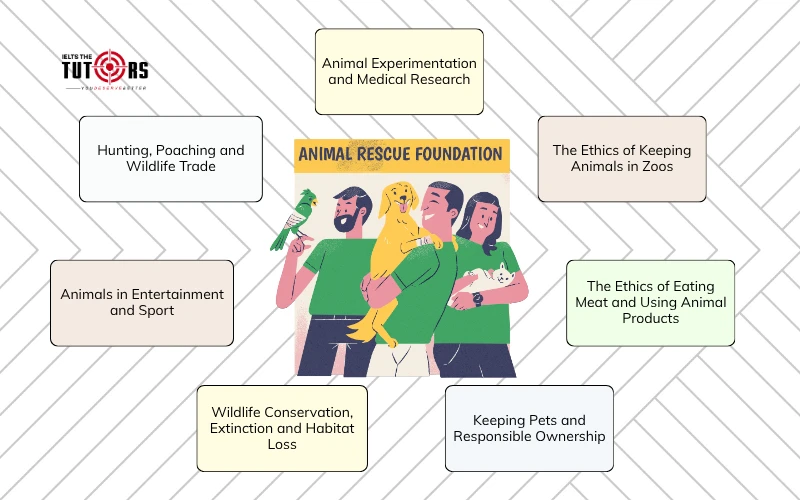
Dưới đây là những vấn đề thường gặp trong chủ đề Animal Rights:
- Việc sử dụng động vật để thử nghiệm thuốc và phục vụ nghiên cứu y học có thể được chấp nhận hay không.
- Vai trò của sở thú trong bảo tồn, nhân giống, nghiên cứu và giáo dục so với quyền tự do của động vật.
- Việc sử dụng động vật để sản xuất thịt, sữa, thuốc, da hoặc lông và các vấn đề liên quan đến chăn nuôi, giết mổ.
- Tình trạng mua thú cưng theo cảm hứng, bỏ rơi động vật và nuôi động vật hoang dã trong gia đình.
- Nguyên nhân khiến động vật hoang dã suy giảm số lượng hoặc đứng trước nguy cơ tuyệt chủng.
- Việc sử dụng động vật trong rạp xiếc, du lịch, đua thú và các môn thể thao có thể gây thương tích.
- Hoạt động săn bắt, săn trộm và buôn bán động vật hoang dã.
Ý tưởng triển khai chủ đề Animal rights Writing task 2
Để tránh lạc đề trong IELTS Writing Task 2 Animal Rights topics, bạn cần xác định đề đang tập trung vào quyền của động vật, lợi ích của con người, trách nhiệm bảo tồn hay cách quản lý một hoạt động cụ thể. Dưới đây là một số ideas hữu ích giúp bạn phát triển bài viết đúng trọng tâm và mạch lạc hơn.
Animal Experimentation and Medical Research
Đề bài: Some people argue that all experimentation on animals is bad and should be outlawed. However, others believe that important scientific discoveries can be made from animal experiments. Can experimentation on animals be justified? Are there any alternatives?
Dạng bài: Two-part Question
Phân tích đề bài:
- Phần 1: Đánh giá liệu việc thí nghiệm trên động vật có thể được biện minh hay không.
- Phần 2: Xác định những phương pháp thay thế khả thi cho thí nghiệm trên động vật.
- Cần trả lời đầy đủ cả hai câu hỏi với dung lượng tương đối cân bằng.
- Cân nhắc các khía cạnh về đạo đức, khoa học, y học và tính khả thi trong thực tế.
Ý tưởng triển khai bài Writing task 2:
| Can animal testing be justified? | Alternatives to animal testing |
|
|
The Ethics of Keeping Animals in Zoos
Đề bài: Many people think that zoos are cruel. Others think they are helpful in protecting rare animals. Discuss both sides and give your own opinion.
Dạng bài: Discussion Essay
Phân tích đề bài:
- Thảo luận quan điểm 1: Sở thú gây đau đớn và hạn chế hành vi tự nhiên của động vật.
- Thảo luận quan điểm 2: Sở thú góp phần bảo tồn, nhân giống và bảo vệ các loài quý hiếm.
- Đưa ra ý kiến cá nhân về vai trò và tính đạo đức của sở thú.
- Cần thảo luận cân bằng cả hai quan điểm trước khi trình bày lập trường cá nhân.
Ý tưởng triển khai bài Writing task 2:
| Zoos are cruel | Zoos protect animals |
|
|
The Ethics of Eating Meat and Using Animal Products
Đề bài: In the modern world, it is no longer necessary to use animals as food or other products, such as medicines and clothing. Do you agree or disagree?
Dạng bài: Agree or Disagree
Phân tích đề bài:
- Đánh giá mức độ cần thiết của việc sử dụng động vật để sản xuất thực phẩm và các sản phẩm khác trong xã hội hiện đại.
- Xem xét những phương án thay thế khả thi như thực phẩm có nguồn gốc thực vật, vật liệu tổng hợp và phương pháp nghiên cứu không sử dụng động vật.
- Cân nhắc các yếu tố như dinh dưỡng, kinh tế, văn hóa, điều kiện địa lý và sự phát triển của công nghệ.
- Đưa ra lập trường rõ ràng về mức độ đồng ý với quan điểm trong đề bài.
Ý tưởng triển khai bài Writing task 2:
| Agree | Disagree |
|
|
Keeping Pets and Responsible Ownership
Đề bài: Many people buy pets without fully understanding the responsibility involved, and some later abandon them. Why does this happen? What measures could encourage responsible pet ownership?
Dạng bài: Causes and Solutions
Phân tích đề bài:
- Phần 1: Giải thích vì sao nhiều người mua thú cưng khi chưa hiểu rõ trách nhiệm và sau đó bỏ rơi chúng.
- Phần 2: Đề xuất các biện pháp khuyến khích việc nuôi thú cưng có trách nhiệm.
- Cần trả lời đầy đủ cả hai câu hỏi với độ dài tương đối cân bằng.
- Đảm bảo các giải pháp tương ứng với những nguyên nhân đã phân tích.
Ý tưởng triển khai bài Writing task 2:
| Causes | Solutions |
|
|
Wildlife Conservation, Extinction and Habitat Loss
Đề bài: It is a natural process for animal species to become extinct, for example dinosaurs and dodos. There is no reason why people should try to prevent this from happening. To what extent do you agree or disagree?
Dạng bài: Agree or Disagree
Phân tích đề bài:
- Đánh giá quan điểm cho rằng tuyệt chủng là một quá trình tự nhiên và con người không cần can thiệp.
- Phân biệt sự tuyệt chủng tự nhiên với tình trạng tuyệt chủng do hoạt động của con người gây ra.
- Xem xét trách nhiệm của con người trong việc bảo vệ các loài động vật và duy trì hệ sinh thái.
- Đưa ra lập trường rõ ràng về nghĩa vụ bảo tồn động vật hoang dã.
Ý tưởng triển khai bài Writing task 2:
| Agree | Disagree |
|
|
Animals in Entertainment and Sport
Đề bài: Blood sports have become a controversial issue in recent years. As society develops, they are increasingly regarded as uncivilised activities that are cruel to animals. All blood sports should be banned. Discuss the main arguments for this statement and give your own opinion.
Dạng bài: Discussion with Opinion
Phân tích đề bài:
- Phần 1: Thảo luận các lập luận chính ủng hộ việc cấm các môn thể thao gây thương tích hoặc giết động vật.
- Phần 2: Đưa ra ý kiến cá nhân về việc có nên cấm các hoạt động này hay không.
- Có thể đề cập ngắn gọn đến các lập luận phản đối để bài viết cân bằng hơn.
- Cần thể hiện lập trường rõ ràng và nhất quán trong toàn bài.
Ý tưởng triển khai bài Writing task 2:
| Arguments for banning | Arguments against banning |
|
|
Hunting, Poaching and Wildlife Trade
Đề bài: Some people believe that all forms of hunting should be banned, while others argue that controlled hunting can help manage wildlife populations and support conservation. Discuss both views and give your own opinion.
Dạng bài: Discussion Essay
Phân tích đề bài:
- Thảo luận quan điểm 1: Mọi hình thức săn bắn nên bị cấm để bảo vệ động vật.
- Thảo luận quan điểm 2: Săn bắn có kiểm soát có thể hỗ trợ quản lý số lượng động vật và hoạt động bảo tồn.
- Đưa ra ý kiến cá nhân về vai trò và giới hạn phù hợp của săn bắn.
- Cần thảo luận cân bằng cả hai quan điểm trước khi trình bày lập trường cá nhân.
Ý tưởng triển khai bài Writing task 2:
| Ban All Hunting | Controlled Hunting Can Help |
|
|
Xem thêm:
Từ vựng & collocation ăn điểm chủ đề Animal rights
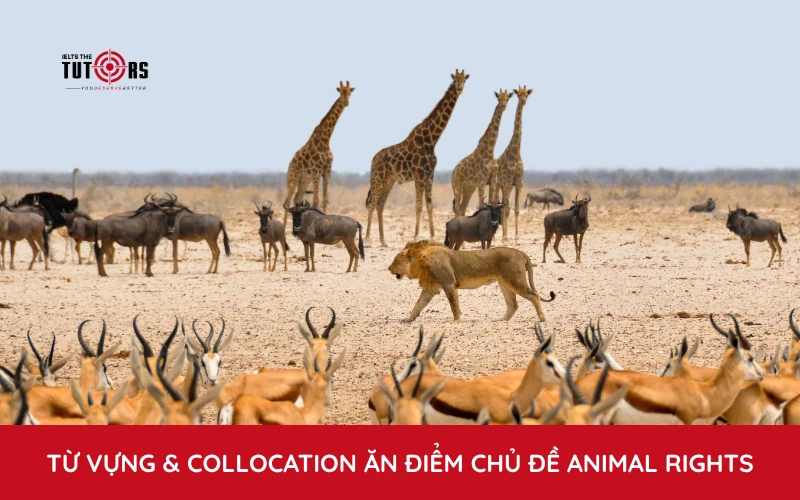
Từ vựng IELTS Writing Task 2 chủ đề Animal Rights
| Từ vựng | Từ loại | Ý nghĩa |
| animal rights | noun phrase | quyền động vật |
| animal welfare | noun phrase | phúc lợi động vật |
| animal cruelty | noun phrase | hành vi ngược đãi động vật |
| humane treatment | noun phrase | cách đối xử nhân đạo |
| unnecessary suffering | noun phrase | sự đau đớn không cần thiết |
| animal experimentation | noun phrase | hoạt động thí nghiệm trên động vật |
| medical research | noun phrase | nghiên cứu y học |
| alternative testing method | noun phrase | phương pháp thử nghiệm thay thế |
| captivity | noun | tình trạng bị nuôi nhốt |
| natural habitat | noun phrase | môi trường sống tự nhiên |
| natural behaviour | noun phrase | hành vi tự nhiên của động vật |
| wildlife conservation | noun phrase | hoạt động bảo tồn động vật hoang dã |
| endangered species | noun phrase | loài có nguy cơ tuyệt chủng |
| species extinction | noun phrase | sự tuyệt chủng của một loài |
| biodiversity | noun | đa dạng sinh học |
| habitat loss | noun phrase | sự mất môi trường sống |
| meat consumption | noun phrase | việc tiêu thụ thịt |
| intensive farming | noun phrase | chăn nuôi công nghiệp |
| pet ownership | noun phrase | việc sở hữu và nuôi thú cưng |
| pet abandonment | noun phrase | tình trạng bỏ rơi thú cưng |
| poaching | noun | hoạt động săn trộm |
| illegal wildlife trade | noun phrase | hoạt động buôn bán động vật hoang dã trái phép |
| regulate | verb | quản lý bằng quy định |
| prohibit | verb | nghiêm cấm |
| exploit | verb | khai thác, lợi dụng |
| abandon | verb | bỏ rơi |
| conserve | verb | bảo tồn |
| humane | adjective | nhân đạo |
| endangered | adjective | có nguy cơ tuyệt chủng |
| unethical | adjective | trái đạo đức |
Collocations IELTS Writing Task 2 chủ đề Animal Rights
| Collocations | Ý nghĩa |
| conduct experiments on animals | tiến hành thí nghiệm trên động vật |
| use animals for medical research | sử dụng động vật cho nghiên cứu y học |
| develop alternatives to animal testing | phát triển phương pháp thay thế thí nghiệm động vật |
| minimise animal suffering | giảm thiểu sự đau đớn của động vật |
| keep wild animals in captivity | nuôi nhốt động vật hoang dã |
| restrict animals’ natural behaviour | hạn chế hành vi tự nhiên của động vật |
| provide suitable living conditions | cung cấp điều kiện sống phù hợp |
| reintroduce animals into the wild | đưa động vật trở lại môi trường hoang dã |
| educate the public about wildlife | nâng cao hiểu biết của công chúng về động vật hoang dã |
| reduce meat consumption | giảm lượng thịt tiêu thụ |
| adopt a plant-based diet | áp dụng chế độ ăn có nguồn gốc thực vật |
| improve farm animal welfare | cải thiện phúc lợi vật nuôi trong trang trại |
| use humane slaughter methods | sử dụng phương pháp giết mổ nhân đạo |
| balance human needs with animal welfare | cân bằng nhu cầu của con người với phúc lợi động vật |
| take long-term responsibility for a pet | chịu trách nhiệm lâu dài đối với thú cưng |
| meet an animal’s basic needs | đáp ứng các nhu cầu cơ bản của động vật |
| abandon unwanted pets | bỏ rơi những thú cưng không còn được mong muốn |
| protect endangered species | bảo vệ các loài có nguy cơ tuyệt chủng |
| prevent species from becoming extinct | ngăn các loài bị tuyệt chủng |
| preserve biodiversity | bảo tồn đa dạng sinh học |
| restore damaged habitats | phục hồi môi trường sống bị tổn hại |
| establish protected areas | thành lập các khu bảo tồn |
| use animals for entertainment | sử dụng động vật cho mục đích giải trí |
| exploit animals for commercial gain | khai thác động vật vì lợi ích thương mại |
| ban animal performances | cấm các tiết mục biểu diễn sử dụng động vật |
| tackle illegal wildlife trade | giải quyết hoạt động buôn bán động vật hoang dã trái phép |
| enforce anti-poaching laws | thực thi luật chống săn trộm |
| impose harsher penalties on poachers | áp dụng hình phạt nghiêm khắc hơn với người săn trộm |
| reduce demand for wildlife products | giảm nhu cầu đối với sản phẩm từ động vật hoang dã |
| introduce stronger animal protection laws | ban hành luật bảo vệ động vật nghiêm ngặt hơn |
Bài mẫu tham khảo chủ đề Animal rights trong IELTS Writing Task 2
Đề bài: Some people say that it is necessary to use animals for testing medicines intended for human use. Others, however, think it is cruel and unnecessary. Discuss both views and give your own opinion.
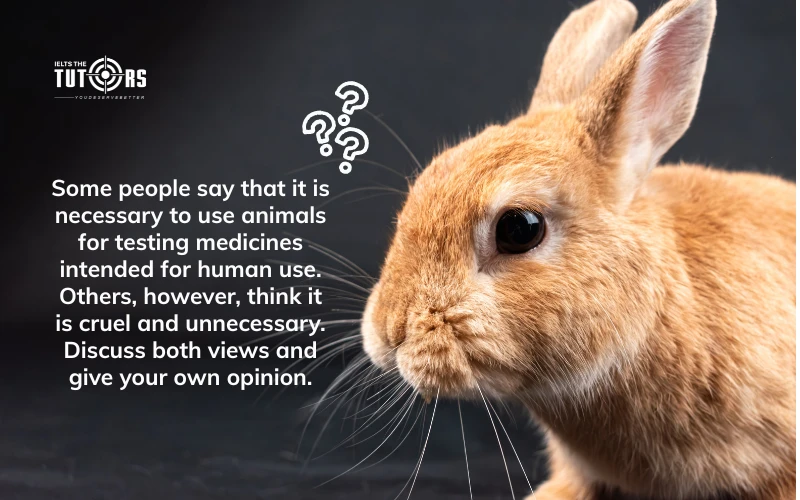
Phân tích đề bài:
- Dạng bài: Discussion Essay
- Keyword chủ chốt: use animals for testing, medicines intended for human use, necessary vs. cruel and unnecessary, animal testing/experimentation, medical research
- Hướng phát triển: Bài viết cần thảo luận cả hai quan điểm trước khi đưa ra ý kiến cá nhân: một bên cho rằng thử nghiệm trên động vật cần thiết cho y học, trong khi bên còn lại phản đối vì vấn đề đạo đức. Bạn nên nêu lập trường rõ ràng nhưng vẫn nhìn nhận đây là vấn đề phức tạp.
Dàn bài gợi ý:
Introduction:
- Paraphrase đề bài về tranh cãi xoay quanh việc thử nghiệm trên động vật.
- Thesis statement: Thảo luận cả hai quan điểm và nghiêng về ý kiến ủng hộ vì những lợi ích đối với y học.
Body 1 – Quan điểm phản đối thử nghiệm động vật
- Trình bày quan điểm phản đối vì thử nghiệm động vật có thể gây đau đớn, khiến chúng bị đối xử tàn nhẫn, thậm chí thiếu thức ăn và nước uống.
- Phương pháp này cũng tốn nhiều chi phí cho cơ sở nghiên cứu và nhân lực, gây áp lực lên ngân sách quốc gia. Nguồn tiền đó có thể được đầu tư vào những lĩnh vực quan trọng khác.
Body 2 – Quan điểm ủng hộ (bao gồm ý kiến cá nhân)
- Giải thích rằng thử nghiệm trên động vật vẫn cần thiết để phát triển thuốc mới và kiểm tra mức độ an toàn trước khi sử dụng cho con người.
- Công nghệ hiện nay, kể cả siêu máy tính, vẫn chưa thể mô phỏng đầy đủ phản ứng của một cơ thể sống.
- Một số loài động vật có đặc điểm sinh học tương đồng với con người, chẳng hạn như tinh tinh, nên có thể mang lại kết quả nghiên cứu đáng tin cậy hơn.
- Hiện vẫn chưa có phương pháp thay thế nào hiệu quả hoàn toàn, vì vậy thử nghiệm động vật vẫn cần thiết dù còn nhiều hạn chế.
Conclusion: Khẳng định rằng mặc dù thử nghiệm trên động vật có thể tàn nhẫn và tốn kém, phương pháp này vẫn mang lại những lợi ích quan trọng cho nghiên cứu và phát triển y học.
Bài mẫu IELTS Writing task 2 Animal rights topic:
People hold different opinions about whether animals should be used in medical research. While some regard this practice as unethical and excessively costly, others argue that it is essential for scientific progress. I believe animal testing should continue, but only under strict ethical regulations.
On the one hand, opponents point out that laboratory animals may experience severe pain, prolonged confinement and poor living conditions. Subjecting living creatures to harmful procedures is therefore considered cruel and inhumane. Animal-based research can also require substantial expenditure on specialised facilities, equipment and trained personnel. This may place pressure on public finances, especially in developing countries where limited funds could instead be allocated to hospitals, schools or affordable housing. From this perspective, governments should invest more heavily in alternative research methods.
On the other hand, animal experimentation still plays a vital role in medical advancement. Before a new drug can be tested on humans, researchers must evaluate its effectiveness, toxicity and possible side effects. Computer simulations and laboratory-grown cells are increasingly useful, but they cannot yet replicate the complex interactions that occur within a complete living organism. Moreover, certain animals share important biological characteristics with humans, allowing scientists to obtain relatively reliable findings. Such research has contributed to the development of vaccines, surgical procedures and treatments for life-threatening diseases. Until a fully effective substitute becomes available, banning animal testing entirely could slow medical breakthroughs and expose human volunteers to unacceptable risks.
In conclusion, animal testing raises legitimate ethical and financial concerns, but its contribution to medical science remains difficult to replace. It should therefore be permitted when strictly necessary, while researchers minimise suffering and continue developing humane alternatives.
(272 words, band 7.5)
Từ vựng ghi điểm:
- medical research (n): nghiên cứu y học
- unethical and excessively costly (adj): thiếu đạo đức và quá tốn kém
- strict ethical regulations (n): các quy định đạo đức nghiêm ngặt
- prolonged confinement (n): tình trạng bị giam giữ kéo dài
- cruel and inhumane (adj): tàn nhẫn và vô nhân đạo
- place pressure on public finances (v): gây áp lực lên ngân sách công
- medical advancement (n): sự tiến bộ của y học
- possible side effects (n): các tác dụng phụ có thể xảy ra
- biological characteristics (n): đặc điểm sinh học
- life-threatening diseases (n): các căn bệnh đe dọa tính mạng
- humane alternatives (n): những phương pháp thay thế nhân đạo
Kết luận
Hy vọng những ý tưởng và từ vựng được IELTS The Tutors tổng hợp trong bài đã giúp bạn hiểu rõ hơn cách xử lý các dạng đề thường gặp của IELTS Writing Task 2 Animal Rights. Hãy thử chọn một đề bài, tập lập dàn ý và viết từng đoạn ngắn để tiến bộ đều đặn mỗi ngày. Chúc bạn sớm đạt band mơ ước!