Trong IELTS Writing Task 2 Sports topic, các câu hỏi không chỉ xoay quanh lợi ích của việc tập luyện thể thao mà còn mở rộng sang nhiều khía cạnh khác. Trong bài viết này, IELTS The Tutors sẽ giúp bạn hệ thống những dạng đề thường gặp, gợi ý cách phát triển ý, đồng thời cung cấp bài mẫu cùng bộ từ vựng và collocation hữu ích để bạn luyện viết hiệu quả hơn.
Các vấn đề thường gặp trong chủ đề Sports Writing task 2
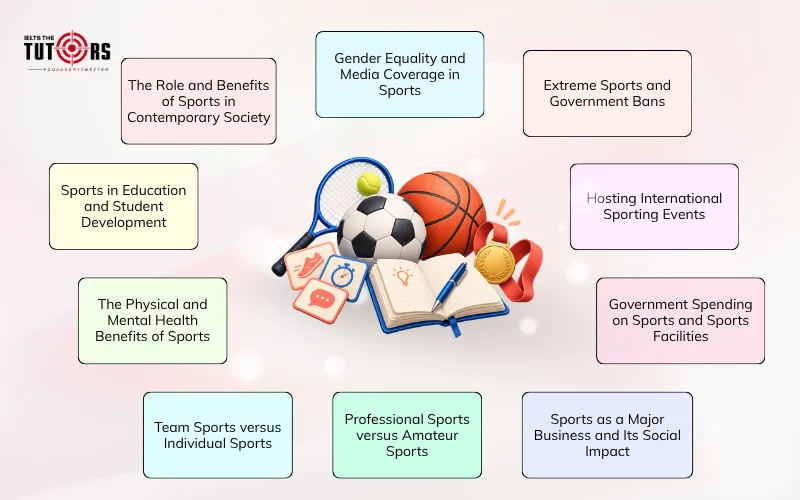
Chủ đề Thể thao (IELTS Writing Task 2 Sports topic) thường xoay quanh các vấn đề như chơi thể thao rèn luyện sức khỏe, vai trò của thể thao trong giáo dục, các hoạt động kinh doanh về thể thao hay chính sách đầu tư của chính phủ và bình đẳng giới.
Với topic này, bạn cũng có thể gặp những đề bài yêu cầu thảo luận về việc đăng cai các sự kiện thể thao quốc tế hoặc đưa ra quan điểm đối với các môn thể thao có tính mạo hiểm và cách quản lý chúng.
Dưới đây là những vấn đề thường gặp trong chủ đề Sports Writing Task 2:
- Vai trò của thể thao trong việc cải thiện chất lượng cuộc sống, tăng sự gắn kết cộng đồng và tạo ra những giá trị tích cực cho xã hội.
- Ảnh hưởng của giáo dục thể chất đến sức khỏe, tính kỷ luật, sự tự tin và quá trình phát triển toàn diện của học sinh.
- Lợi ích của việc vận động đối với thể lực, sức khỏe tim mạch, cân nặng và trạng thái tinh thần; đồng thời phân tích nguyên nhân khiến nhiều người ít tập thể dục.
- So sánh thể thao đồng đội và thể thao cá nhân về khả năng phát triển tinh thần hợp tác, tính tự lập, trách nhiệm và sự cạnh tranh.
- Sự khác biệt giữa thể thao chuyên nghiệp và thể thao nghiệp dư về mục tiêu, thu nhập, áp lực thi đấu cũng như lợi ích mang lại cho xã hội.
- Ảnh hưởng của quảng cáo, tài trợ doanh nghiệp, bản quyền truyền hình và mức lương cao đến các giá trị cốt lõi của thể thao.
- Chính phủ nên ưu tiên đầu tư cho vận động viên thành tích cao hay xây dựng cơ sở thể thao phục vụ đông đảo người dân.
- Lợi ích và hạn chế của việc đăng cai Olympic, World Cup hoặc các giải đấu lớn đối với kinh tế, du lịch, cơ sở hạ tầng và hình ảnh quốc gia.
- Tranh luận về việc nên cấm, hạn chế hay chỉ tăng cường các quy định an toàn đối với những môn thể thao mạo hiểm.
- Nguyên nhân thể thao nam thường nhận được nhiều sự quan tâm hơn và liệu truyền thông có nên dành thời lượng bình đẳng cho thể thao nữ hay không.

Ý tưởng triển khai chủ đề Sports trong IELTS Writing task 2
Khi làm IELTS Writing Task 2 Sports Topic, trước tiên bạn nên xác định đề bài đang hướng đến đối tượng nào để đưa ra các lập luận phù hợp và tránh đưa ra những ý quá chung chung. Khi lập luận rõ ràng và gắn với từng đối tượng, bài Writing task 2 sẽ mạch lạc, thuyết phục hơn và đáp ứng tốt tiêu chí Task Response của IELTS Writing task 2.
Dưới đây là một số ý tưởng triển khai chủ đề thể thao có thể xuất hiện trong đề thi:
The Role and Benefits of Sports in Contemporary Society
Đề bài: Some people think that sports play an important role in society, while others believe that they are nothing more than a leisure activity. Discuss both views and give your own opinion.
Ý tưởng triển khai bài Writing task 2:
| Sports Play Important Role in Society |
Sports Are Just Leisure Activity |
- Public health improvement; regular sports participation reduces obesity, diabetes, heart disease; healthcare costs decrease dramatically.
- Social cohesion strengthened; sports bring diverse communities together; shared passion transcends race, class, religion creating unity.
- Youth development crucial; sports teach discipline, teamwork, resilience, leadership; character formation beyond academic education.
- Economic contribution massive; sports industry employs millions; tourism, broadcasting, merchandising generate billions; GDP growth significant.
- National pride and identity; international sporting success unites populations; shared celebration strengthens national consciousness.
- Educational values transmission; fair play, respect, perseverance learned through sports; moral lessons applicable throughout life.
- Mental health benefits; exercise reduces depression, anxiety, stress; sports provide healthy coping mechanisms and community support.
- Crime prevention; youth sports programs reduce juvenile delinquency; positive outlet for energy; mentorship opportunities.
|
- Entertainment fundamentally; sports exist primarily for enjoyment; spectator sports are passive entertainment like movies or television.
- Excessive focus problematic; society overvalues athletic achievement; academic, artistic pursuits deserve equal attention and resources.
- Economic benefits overstated; subsidies for stadiums waste taxpayer money; profits concentrated among wealthy team owners, athletes.
- Social division created; intense sports rivalry fuels violence, hooliganism, nationalism; tribal mentality damages social harmony.
- Health claims exaggerated; professional sports entertainment not same as personal exercise; watching sports provides no health benefit.
- Time and resource misallocation; billions spent on elite athletes while schools lack basic resources; priority imbalance harmful.
- Distraction from serious issues; sports media coverage diverts attention from politics, social problems, environmental crises.
- Individual leisure choice; sports participation optional personal hobby; government and society shouldn't treat as essential infrastructure.
|
Sports in Education and Student Development
Đề bài: The amount of time spent on sport and exercise should be increased in schools in order to tackle the problem of overweight children. Do you think this is the best way to deal with the problem? What other solutions can you suggest?
Ý tưởng triển khai bài Writing task 2:
| Problem |
Solutions |
- Direct calorie burning; increased physical activity creates energy deficit; weight loss naturally follows with regular exercise.
- Habit formation young; establishing exercise routines early creates lifelong healthy behaviors; prevention more effective than later intervention.
- Supervised activity ensures participation; all students exercising prevents exclusion; equality of opportunity regardless of family resources.
- Mental health benefits; exercise reduces stress, improves mood, increases concentration; addresses emotional eating triggers.
- Social benefits; team sports build friendships, reduce isolation; positive peer influence encourages healthy lifestyle.
- Insufficient alone; exercise cannot outpace poor diet; consuming sugary drinks, fast food negates exercise benefits.
- Time trade-offs; increasing sport means reducing academic instruction; educational outcomes may suffer.
- Not addressing root causes; family eating patterns, food environment, marketing remain unchanged.
- Implementation challenges; schools lack facilities, qualified teachers, funding for expanded programs.
- Individual variation; some children have medical, physical, psychological barriers to exercise.
|
- Nutrition education mandatory; teach children about healthy eating, food labels, portion control; empower informed choices.
- School meal programs reformed; eliminate junk food, sugary drinks from cafeterias; provide healthy, appealing meals.
- Marketing restrictions; ban junk food advertising targeting children on TV, social media, schools; reduce commercial pressure.
- Parental education and involvement; family cooking classes, nutrition counseling; address home eating environment.
- Food industry regulation; sugar, salt, fat content limits; clear labeling; taxes on unhealthy products.
- Built environment; safe parks, playgrounds, cycling paths; enable active lifestyles beyond school hours.
- Healthcare screening; regular weight, health checks; early intervention for at-risk children; medical support.
- Socioeconomic support; subsidize healthy food for poor families; address inequality enabling obesity.
- Screen time limits; reduce sedentary behavior; encourage active play over television, gaming.
- Community programs; after-school sports clubs, summer camps; extended opportunities beyond school time.
|
The Physical and Mental Health Benefits of Sports
Đề bài: Doctors in many countries say that people do not do enough physical exercise. What are the causes of this trend? How can the situation be improved?
Ý tưởng triển khai bài Writing task 2:
| Causes |
Solutions |
- Modern work demands; long hours sitting at desks, commuting eliminates time and energy for exercise; exhaustion prevents motivation.
- Technology and sedentary lifestyles; entertainment through screens replaces active recreation; convenience reduces physical necessity.
- Urban environment barriers; lack of safe parks, cycling infrastructure, sidewalks; car-dependent cities prevent active transport.
- Financial constraints; gym memberships, sports equipment, classes expensive; low-income populations excluded from organized exercise.
- Lack of motivation and discipline; immediate gratification prioritized; exercise delayed indefinitely; habit formation difficult.
- Time poverty; family responsibilities, childcare, eldercare leave no time; exercise seen as luxury not necessity.
- Health literacy gaps; don't understand exercise benefits or proper techniques; misconceptions about requirements prevent starting.
- Social isolation; no exercise partners or community support; lack of accountability enables inactivity.
- Physical limitations; chronic pain, disabilities, obesity create barriers; intimidation prevents gym attendance.
- Cultural factors; sedentary lifestyles normalized; physical labor devalued; convenience culturally prioritized.
|
- Government policy initiatives; subsidize gym memberships, sports programs; tax incentives for active commuting; public health campaigns.
- Infrastructure investment; build parks, cycling lanes, pedestrian paths; urban planning prioritizing walkability and active transport.
- Workplace interventions; mandatory break times for movement; standing desks, office gyms; flexible schedules enabling exercise.
- Education and awareness; school programs teaching exercise importance; public campaigns demonstrating accessibility and benefits.
- Community programs; free outdoor fitness classes; walking groups; social support and accountability partners.
- Healthcare integration; doctors prescribe exercise; subsidized fitness programs through insurance; regular activity monitoring.
- Technology leverage; fitness apps, wearables tracking activity; gamification motivating movement; online workout communities.
- Affordable access; free public facilities; subsidized programs for low-income families; equipment lending libraries.
- Cultural shift; normalize active transport; workplace wellness cultures; social media fitness influencers; celebrate movement.
- Inclusive programs; adaptive sports for disabilities; senior fitness classes; beginner-friendly options reducing intimidation.
|
Team Sports versus Individual Sports
Đề bài: Some people think that it is more beneficial to take part in team sports, such as football, while others believe that individual sports, such as tennis or swimming, are better. Discuss both views and give your own opinion.
Ý tưởng triển khai bài Writing task 2:
| Team Sports More Beneficial |
Individual Sports Better |
- Teamwork skills developed; collaboration, communication, coordination essential; workplace preparation invaluable.
- Social connections formed; teammates become friends; sense of belonging reduces isolation; community support network built.
- Leadership opportunities; captains, senior players mentor younger; responsibility and management skills cultivated.
- Shared responsibility reduces pressure; individual mistakes buffered by team; less performance anxiety than solo competition.
- Strategic thinking enhanced; understanding team tactics, positioning, cooperation requires complex cognitive processing.
- Conflict resolution learned; disputes with teammates teach negotiation, compromise, empathy; interpersonal skills develop.
- Motivation from peers; teammates encourage during difficulty; collective energy sustains effort; accountability to others.
- Diverse role appreciation; different positions require different strengths; valuing others' contributions builds respect.
|
- Personal responsibility cultivated; success depends entirely on own effort; accountability clear; cannot blame teammates.
- Self-reliance strengthened; problem-solving, decision-making independently; builds confidence and autonomy.
- Flexible scheduling; train when convenient; no coordinating with team; accommodates busy schedules easily.
- Progress clarity; individual improvement measurable; no confusion about personal contribution; clear feedback on development.
- Mental strength focus; overcoming pressure, managing nerves, maintaining focus entirely self-directed; psychological resilience.
- Customized training; tailor workouts to personal needs, pace, goals; no compromising for team requirements.
- Lower logistical barriers; no need to assemble team; facilities more accessible; can practice alone anytime.
- Intrinsic motivation developed; driven by personal goals not external team pressure; sustainable long-term commitment.
- Competition transparency; win or lose based purely on merit; no politics, favoritism, or team selection issues.
|
Professional Sports versus Amateur Sports
Đề bài: Some people believe that professional sports bring greater benefits to society, while others think that governments should focus more on supporting amateur and community sports. Discuss both views and give your opinion.
Ý tưởng triển khai bài Writing task 2:
| Professional Sports Greater Benefits |
Support Amateur/Community Sports |
- Economic impact massive; professional leagues generate billions; employment, tourism, broadcasting, merchandising; GDP contribution significant.
- Inspiration and role models; elite athletes motivate youth participation; aspirational figures encourage exercise and dedication.
- National pride and unity; international sporting success unites populations; shared celebration strengthens national identity.
- Entertainment value; professional sports provide high-quality spectacle; cultural phenomenon bringing communities together.
- Excellence and achievement; pushing human limits demonstrates potential; scientific advancement through sports research.
- Investment returns; successful professional teams attract tourism, business investment; city development and global recognition.
- Media coverage spreads awareness; high-profile athletes promote causes; social influence enables positive change.
- Charitable contributions; wealthy athletes fund community programs; foundations support disadvantaged youth.
|
- Public health priority; grassroots sports increase population-wide physical activity; obesity, disease prevention more important than entertainment.
- Equality and accessibility; amateur sports reach everyone regardless of talent; democratic participation versus elite exclusivity.
- Community cohesion; local clubs build neighborhood bonds; social integration across demographics; belonging and identity.
- Youth development; amateur sports teach values, discipline, teamwork to all children; character formation not reserved for talented.
- Cost-effectiveness; limited government resources better spent benefiting many than subsidizing millionaire athletes and corporations.
- Long-term health investment; preventing chronic disease through population exercise reduces healthcare costs dramatically.
- Social inclusion; amateur sports accessible to poor, disabled, marginalized; professional sports entertainment for wealthy spectators.
- Sustainable participation; amateur sports create lifelong habits; professional sports passive spectating doesn't improve health.
- Local economic circulation; community sports keep spending local; professional sports profits extracted by corporations.
|
Sports as a Major Business and Its Social Impact
Đề bài: Nowadays, sport is a big business, with high earnings for professional sportspeople and companies involved financially and in other ways. Is this a positive or negative development for sport?
Ý tưởng triển khai bài Writing task 2:
| Positive |
Negative |
- Quality improvement; massive investment enhances facilities, training, equipment; athletic performance reaches new heights.
- Career opportunities; talented athletes earn substantial livings; sports viable profession not just hobby; economic mobility.
- Infrastructure development; commercial funding builds stadiums, training centers benefiting broader community beyond professionals.
- Global reach expanded; financial investment spreads sports worldwide; increased participation and interest across cultures.
- Innovation driven; corporate research and development advances sports science, injury prevention, performance enhancement.
- Entertainment value; high production quality broadcasts attract audiences; sporting events become cultural phenomena.
- Economic benefits; jobs created in broadcasting, marketing, management, facilities; industries developed around sports.
- Charitable capacity; wealthy athletes and corporations fund community programs, youth development, social causes.
|
- Corruption and doping; financial pressures drive cheating; performance-enhancing drugs; match-fixing scandals; integrity destroyed.
- Inequality exacerbated; wealth concentrated among elite athletes, owners, corporations; grassroots sports underfunded.
- Youth pressure harmful; children pushed beyond limits chasing wealth; childhood lost; mental health sacrificed for success.
- Pure sport values lost; commercialization prioritizes profit over fair play, respect, enjoyment; meaning eroded.
- Access barriers; expensive tickets, merchandise exclude working-class fans; sports become entertainment for wealthy.
- Athlete exploitation; young players treated as commodities; discarded when injured or performance declines; no long-term security.
- Gambling problems; betting industry integration encourages addiction; vulnerable populations harmed; sports integrity questioned.
- Short-term thinking; decisions based on immediate profit not long-term sport health; unsustainable practices.
- Cultural homogenization; commercial sports dominate; traditional local sports disappear; diversity lost to profitable global brands.
|
Government Spending on Sports and Sports Facilities
Đề bài: Some people think that governments should spend more money on sports facilities for top athletes. Others argue that this money should be spent on sports facilities for ordinary people. Discuss both views and give your own opinion.
Ý tưởng triển khai bài Writing task 2:
| Spend on Facilities for Top Athletes |
Spend on Facilities for Ordinary People |
- International success; elite facilities enable competitive advantage; medals bring national pride and global recognition.
- Inspiration multiplier; Olympic champions motivate mass participation; visible success encourages youth sports engagement.
- Economic returns; international sporting success attracts tourism, investment; positive country image generates business opportunities.
- Excellence development; concentrated resources maximize talent potential; efficient use of limited budgets for measurable outcomes.
- Technology advancement; elite training centers pioneer innovations benefiting all sports levels eventually; research and development.
- Role model creation; successful athletes become ambassadors; cultural influence promotes healthy lifestyles nationwide.
- Legacy utilization; facilities built for elite initially later converted for public use; long-term community benefit.
|
- Public health priority; population-wide exercise access reduces obesity, disease; healthcare cost savings benefit entire society.
- Democratic fairness; tax money should serve all citizens not tiny elite; ordinary people fund facilities through taxes deserve access.
- Broader participation; community facilities reach thousands versus elite centers serving dozens; maximizes social impact.
- Social inclusion; accessible local facilities integrate disadvantaged communities; reduce inequality; opportunity regardless of talent.
- Sustainable impact; grassroots participation creates lifelong habits; elite success temporary and passive spectating doesn't improve health.
- Cost-effectiveness; community facilities serve more people per dollar invested; efficient allocation of limited government resources.
- Local economic benefits; neighborhood facilities support local employment, businesses; wealth circulates within communities.
- Talent identification; broad participation base increases likelihood of discovering future champions; elite development requires mass foundation.
|
Hosting International Sporting Events
Đề bài: Some people think that hosting an international sporting event is good for a country, while others believe that it is bad. Discuss both views and give your own opinion.
Ý tưởng triển khai bài Writing task 2:
| Hosting International Events Is Good |
Hosting International Events Is Bad |
- Economic boost short-term; tourism, hotel, restaurant spending during event; employment spike in hospitality, construction sectors.
- Global visibility; hosting showcases country to world; positive image attracts future tourism, business investment, trade.
- Infrastructure legacy; stadiums, transportation, telecommunications upgraded; long-term community benefit from improved facilities.
- National pride and unity; hosting inspires collective celebration; population united in shared purpose; morale boost.
- outh inspiration; watching live international sport motivates young athletes; increased participation following events.
- Urban regeneration catalyst; events drive neighborhood improvement; derelict areas redeveloped; accelerates city modernization.
- Diplomatic soft power; hosting demonstrates organizational capability; international cooperation; relationships strengthened.
- Cultural exchange; diverse visitors bring global perspectives; local residents exposed to different cultures; mutual understanding.
|
- Massive cost overruns; budgets routinely exceeded by billions; taxpayers burden debt for decades; opportunity cost enormous.
- White elephant infrastructure; stadiums, venues unused after event; maintenance costs drain budgets; facilities deteriorate unused.
- Forced displacement; residents evicted for construction; communities destroyed; homeless populations cleared for image reasons.
- Economic benefits overstated; short-term tourism spike followed by long-term decline; debt exceeds temporary revenue.
- Corruption and waste; construction contracts awarded through favoritism; quality compromised; public money stolen.
- Environmental damage; massive construction disrupts ecosystems; carbon footprint enormous; sustainability ignored for deadlines.
- Increased inequality; wealthy benefit from contracts; poor lose homes and jobs; gentrification prices locals out permanently.
- Opportunity cost massive; billions could fund hospitals, schools, social programs benefiting citizens long-term.
- Post-event depression; infrastructure decays; no sustainable legacy; cities struggle with maintenance burden indefinitely.
|
Extreme Sports and Government Bans
Đề bài: Some people think that dangerous sports should be banned, while others believe that people should be free to choose the sports they want to participate in. Discuss both views and give your opinion.
Ý tưởng triển khai bài Writing task 2:
| Dangerous Sports Should Be Banned |
People Should Be Free to Choose |
- Life and safety paramount; government duty to protect citizens; preventable deaths morally unacceptable; human life invaluable.
- Public healthcare burden; treating extreme sports injuries costs taxpayers; limited medical resources consumed; unfair to others.
- Family impact devastating; deaths, disabilities destroy families; children lose parents; emotional trauma widespread.
- Youth influence problematic; glorification encourages risky behavior; impressionable young people endangered by examples.
- No social benefit; extreme sports serve individual thrill-seeking; contribute nothing to society justifying risk.
- Insufficient informed consent; participants underestimate dangers; adrenaline clouds judgment; cannot truly consent.
- Rescue service burden; dangerous sports require expensive emergency responses; divert resources from legitimate emergencies.
|
- Personal autonomy fundamental; adults have right to make own risk decisions; government paternalism inappropriate in free society.
- Risk inherent to life; driving, swimming, skiing all carry risks; cannot ban everything potentially dangerous; illogical selectivity.
- Benefits underestimated; extreme sports provide mental health benefits, stress relief, personal growth; psychological value significant.
- Regulation better than prohibition; safety standards, training requirements, protective equipment reduce risk without eliminating freedom.
- Economic contribution; extreme sports tourism, equipment sales, instruction create jobs; economic activity benefits communities.
- Prohibition impossible; ban drives activity underground; no oversight, increased danger; counterproductive outcome.
- Informed consent possible; adults capable understanding risks; choosing to participate knowing dangers; respecting autonomy essential.
- Precedent dangerous; banning based on risk leads to ever-expanding prohibitions; slippery slope threatens many freedoms.
|
Gender Equality and Media Coverage in Sports
Đề bài: Today, television channels show more men’s sports than women’s sports. Why is this the case? Should television channels give equal coverage to men’s and women’s sports?
Ý tưởng triển khai bài Writing task 2:
| Reasons |
Equal Coverage Should Be Provided |
Market Should Determine |
- Viewer demand higher; men's sports historically attract larger audiences; television companies maximize advertising revenue.
- Commercial viability; men's leagues generate more ticket sales, sponsorship, merchandise; financial sustainability clear.
- Historical development; men's professional sports established earlier; decades-long head start created entrenched audience habits.
- Investment disparity; men's sports receive more funding, better facilities, higher salaries attracting top talent; quality gap perpetuates.
- Athletic performance differences; physical strength, speed differences create perception of superior competition quality.
- Cultural factors; traditional gender roles normalized men's sports as mainstream; women's sports viewed as secondary.
- Media perpetuation; lack of coverage reduces visibility; women's sports cannot build audience without exposure; self-fulfilling cycle.
|
- Break vicious cycle; women's sports cannot grow without media exposure; equal coverage creates opportunity to build audiences.
- Gender equality principle; discrimination unjust; female athletes deserve same platform, recognition, opportunities as male counterparts.
- Talent and quality equal; many women's sports demonstrate exceptional skill, competition; quality judgments often reflect bias not reality.
- Youth role models; girls need visible female athlete heroes; equal coverage inspires next generation participation.
- Commercial potential; women's sports audiences growing rapidly when given exposure; untapped market significant.
- Social progress; equal coverage reflects modern gender equality values; media shapes culture; leadership important.
- Legal obligations; public broadcasters funded by all taxpayers should serve all populations equally.
- Investment justification; equal coverage attracts sponsors; financial ecosystem develops; self-sustaining growth possible.
|
- Artificial forcing ineffective; cannot mandate audience interest; forcing equal coverage wastes resources on unwatched programming.
- Quality differences real; denying physical performance gaps dishonest; viewers naturally prefer highest competition level.
- Freedom of choice; audiences entitled to watch what interests them; government/media interference inappropriate.
|
Xem thêm:
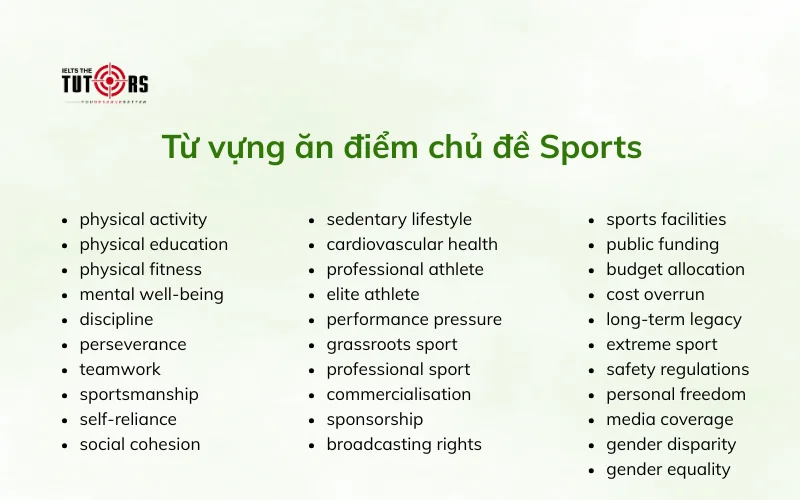
Từ vựng & collocation ăn điểm chủ đề Sports
Từ vựng hữu ích trong Sports topic IELTS Writing task 2
| Từ vựng |
Từ loại |
Ý nghĩa |
| physical activity |
noun phrase |
hoạt động thể chất |
| physical education |
noun phrase |
môn giáo dục thể chất |
| physical fitness |
noun phrase |
thể lực, tình trạng khỏe mạnh |
| mental well-being |
noun phrase |
sức khỏe tinh thần |
| discipline |
noun |
tính kỷ luật |
| perseverance |
noun |
sự kiên trì |
| teamwork |
noun |
khả năng làm việc nhóm |
| sportsmanship |
noun |
tinh thần thể thao cao thượng |
| self-reliance |
noun |
tính tự lập |
| social cohesion |
noun phrase |
sự gắn kết xã hội |
| sedentary lifestyle |
noun phrase |
lối sống ít vận động |
| cardiovascular health |
noun phrase |
sức khỏe tim mạch |
| professional athlete |
noun phrase |
vận động viên chuyên nghiệp |
| elite athlete |
noun phrase |
vận động viên thành tích cao |
| performance pressure |
noun phrase |
áp lực thành tích |
| grassroots sport |
noun phrase |
thể thao phong trào, thể thao cơ sở |
| professional sport |
noun phrase |
thể thao chuyên nghiệp |
| commercialisation |
noun |
sự thương mại hóa |
| sponsorship |
noun |
hoạt động tài trợ |
| broadcasting rights |
noun phrase |
bản quyền phát sóng |
| sports facilities |
noun phrase |
cơ sở vật chất thể thao |
| public funding |
noun phrase |
ngân sách công |
| budget allocation |
noun phrase |
sự phân bổ ngân sách |
| cost overrun |
noun phrase |
tình trạng chi phí vượt ngân sách |
| long-term legacy |
noun phrase |
lợi ích hoặc di sản lâu dài |
| extreme sport |
noun phrase |
môn thể thao mạo hiểm |
| safety regulations |
noun phrase |
các quy định an toàn |
| personal freedom |
noun phrase |
quyền tự do cá nhân |
| media coverage |
noun phrase |
mức độ đưa tin của truyền thông |
| gender disparity |
noun phrase |
sự chênh lệch giới |
| gender equality |
noun phrase |
bình đẳng giới |
Collocation nên học thuộc trong IELTS Writing Task 2 về Sports
| Collocation |
Ý nghĩa |
| engage in regular physical activity |
thường xuyên vận động thể chất |
| combat a sedentary lifestyle |
hạn chế lối sống ít vận động |
| improve mental well-being |
cải thiện sức khỏe tinh thần |
| develop healthy lifelong habits |
hình thành thói quen lành mạnh lâu dài |
| include physical education in the curriculum |
đưa giáo dục thể chất vào chương trình |
| contribute to students’ overall development |
góp phần phát triển toàn diện học sinh |
| develop discipline and perseverance |
rèn luyện tính kỷ luật và kiên trì |
| develop teamwork skills |
phát triển kỹ năng làm việc nhóm |
| foster self-reliance |
nuôi dưỡng tính tự lập |
| face intense performance pressure |
chịu áp lực thành tích lớn |
| promote grassroots sport |
thúc đẩy thể thao phong trào |
| generate substantial revenue |
tạo ra doanh thu đáng kể |
| attract corporate sponsorship |
thu hút tài trợ doanh nghiệp |
| prioritise profit over sporting values |
đặt lợi nhuận lên trên giá trị thể thao |
| invest in public sports facilities |
đầu tư vào cơ sở thể thao công cộng |
| host an international sporting event |
đăng cai sự kiện thể thao quốc tế |
| require enormous public expenditure |
đòi hỏi khoản chi công rất lớn |
| leave behind underused facilities |
để lại công trình ít được sử dụng |
| introduce stricter safety regulations |
áp dụng quy định an toàn nghiêm ngặt |
| reduce gender disparities in sport |
giảm chênh lệch giới trong thể thao |
Bài mẫu IELTS Writing task 2 Sports topic
Đề bài: Schools should increase the number of sports and exercise classes to help children develop into healthy adults. To what extent do you agree or disagree?
(Trường học nên tăng số lượng tiết học thể dục và các hoạt động thể thao để giúp trẻ em phát triển thành những người trưởng thành khỏe mạnh. Bạn đồng ý hay không đồng ý với quan điểm này ở mức độ nào?)
Phân tích đề bài:
- Subtopic: Sports in Education and Student Development
- Dạng bài: Agree/Disagree – Nêu rõ mức độ đồng ý hoặc không đồng ý với quan điểm rằng trường học nên tăng thời lượng các giờ học thể dục và thể thao để giúp trẻ em phát triển khỏe mạnh khi trưởng thành
- Hướng phát triển bài viết: Bạn có thể lựa chọn đồng ý một phần bằng cách mang các luận điểm liên quan đến việc vận động là rất quan trọng, nhưng nhà trường vẫn cần đảm bảo sự cân bằng với các môn học khác.
Gợi ý dàn bài IELTS Writing Sports topic:
Introduction
- Hook and background about childhood health concerns (Nêu thực trạng sức khỏe của trẻ em ngày càng đáng lo ngại)
- Thesis: Increased sports classes are beneficial but should be part of a comprehensive approach (Tăng số tiết học thể dục mang lại nhiều lợi ích nhưng không phải là giải pháp tối ưu nhất)
- Preview main points
Body 1: Benefits of Increased Sports Classes
- Improves physical health (Cải thiện sức khỏe thể chất): reduces obesity, builds fitness, prevents lifestyle diseases
- Enhances mental wellbeing (Nâng cao sức khỏe tinh thần): reduces stress, improves concentration and self-esteem
- Develops social skills (Phát triển kỹ năng xã hội): teamwork, communication, leadership through group activities
- Creates lifelong healthy habits that extend beyond school years
Body 2: Limitations and Balanced Approach
- Root causes lie beyond school (Nguyên nhân của vấn đề không chỉ nằm ở trường học): poor home diet, excessive screen time, lack of safe play spaces
- Academic concerns (Ảnh hưởng đến việc học): risk reducing time for core subjects, not all children enjoy sports
- Implementation challenges (Thử thách khi triển khai): requires resources, trained staff, and differentiated programs for varied abilities
- Comprehensive solution needed: combine PE with nutrition education and community support
Conclusion
- Restate position: sports classes valuable but not standalone solution
- Summary of key benefits and limitations
- Final thought: schools should expand quality PE alongside broader health initiatives (Trường học nên phát triển chương trình giáo dục thể chất chất lượng, đồng thời kết hợp với các chính sách chăm sóc sức khỏe toàn diện để mang lại hiệu quả bền vững.)
Bài mẫu IELTS Writing task 2:
Childhood obesity and sedentary lifestyles have become pressing concerns in many countries, prompting debates about the role schools should play in promoting physical health. While I agree that increasing sports and exercise classes offers significant benefits, I believe this approach must be part of a broader strategy to truly address health issues among young people.
Expanding physical education in schools provides multiple advantages for children's development. Regular exercise helps combat obesity, builds cardiovascular fitness, and reduces the risk of lifestyle-related diseases such as diabetes and heart conditions. Beyond physical health, sports classes improve mental wellbeing by reducing stress and enhancing concentration, which often translates into better academic performance. Additionally, team sports teach valuable social skills like cooperation, communication, and leadership, while fostering friendships across diverse groups. These combined benefits make physical education an essential component of holistic child development.
However, simply adding more sports lessons may not fully resolve health problems if other factors remain unaddressed. Many root causes lie beyond school walls, including poor dietary habits at home, excessive screen time, and lack of safe outdoor spaces for recreation. Schools must also maintain balance, as reducing time for core academic subjects could disadvantage students who need support in mathematics, science, or languages. Furthermore, implementing quality sports programs requires substantial investment in facilities and trained staff, while programs must accommodate children with varying abilities and interests.
In conclusion, while increased sports classes can significantly contribute to developing healthier adults, schools should adopt a comprehensive approach. This means combining expanded physical education with nutrition education and working alongside families and communities to create environments that genuinely support children's long-term health and wellbeing.
(271 words)
Đề bài: Some people think that it is a waste of money for countries to host major sporting events such as the World Cup and the Olympic Games, while others believe these events have a positive impact on the host country. Discuss both views and give your opinion.
(Một số người cho rằng việc các quốc gia chi tiền để đăng cai những sự kiện thể thao lớn như World Cup hay Thế vận hội Olympic là một sự lãng phí. Tuy nhiên, những người khác lại tin rằng các sự kiện này mang lại nhiều lợi ích cho quốc gia đăng cai. Hãy thảo luận cả hai quan điểm và đưa ra ý kiến của bạn.)
Phân tích đề bài:
- Subtopic: Hosting International Sporting Events
- Dạng bài: Discuss both views and give your opinion – yêu cầu thảo luận hai quan điểm trái ngược về việc tổ chức các sự kiện thể thao lớn như World Cup hay Olympic. Sau đó đưa ra quan điểm cá nhân.
- Hướng phát triển bài viết: Bạn có thể chọn thừa nhận cả hai ý kiến, rằng các sự kiện này vừa mang lại nhiều lợi ích, vừa tồn tại những hạn chế; tuy nhiên, những bất lợi có thể được giảm thiểu nếu chính phủ lập kế hoạch cẩn thận, kiểm soát ngân sách hiệu quả và bảo đảm các công trình tiếp tục được khai thác sau khi sự kiện kết thúc.
Gợi ý dàn bài IELTS Writing Sports topic:
Introduction
- Brief context about major sporting events and their costs
- Acknowledge the debate between critics and supporters
- Thesis: While expensive, these events can provide significant value if managed well (Mặc dù tốn kém, các sự kiện thể thao quốc tế vẫn có thể mang lại giá trị lớn nếu được quy hoạch và quản lý hiệu quả.)
- Preview both perspectives
Body 1: Arguments Against Hosting (Waste of Money)
- Enormous infrastructure costs (Chi phí đầu tư rất lớn): billions spent on stadiums, facilities, and transport networks that often exceed budgets
- Opportunity cost concerns (Chi phí cơ hội): funds diverted from essential services like healthcare, education, and social welfare programs
- Post-event problems (Các vấn đề sau sự kiện): many venues become underused “white elephants” with ongoing maintenance costs
- Limited long-term returns (Lợi ích kinh tế ngắn hạn): economic benefits often temporary, with countries facing debt burdens for years afterward
- Example: Greece's Olympic debt crisis showing financial risks (Cuộc khủng hoảng nợ của Hy Lạp sau Thế vận hội Olympic.)
Body 2: Arguments For Hosting (Positive Impact)
- Economic benefits (Thúc đẩy nền kinh tế): tourism boom, job creation in construction and hospitality, increased business activity
- Infrastructure legacy (Để lại cơ sở hạ tầng lâu dài): upgraded transport systems, airports, and roads that continue serving citizens long-term
- Global reputation boost (Nâng cao hình ảnh quốc gia): enhanced international profile attracts future investment and tourism
- Social benefits (Lợi ích xã hội): fosters national pride, unity, and cultural exchange among diverse communities
- Urban development (Thúc đẩy phát triển đô thị)t: revitalizes neglected areas and transforms cities
- Example: Barcelona 1992 Olympics creating lasting tourism destination (Olympic Barcelona 1992 đã góp phần đưa thành phố này trở thành một trong những điểm đến du lịch nổi tiếng của thế giới.)
Conclusion
- Restate position: high costs can be justified through multiple benefits (Mặc dù chi phí tổ chức rất lớn, những sự kiện thể thao quốc tế vẫn có thể mang lại nhiều lợi ích xứng đáng.)
- Acknowledge both valid concerns and potential advantages
- Final thought: success depends on careful planning, realistic budgeting, and ensuring facilities serve communities beyond the event
Bài mẫu IELTS Writing task 2:
Hosting prestigious sporting events like the World Cup or Olympics generates considerable debate, with critics viewing it as financial waste while supporters highlight numerous benefits. Although these events involve substantial expenditure, I believe they can deliver significant value when managed responsibly.
Those who oppose hosting major tournaments raise valid concerns about financial burden. Building stadiums, transport networks, and accommodation facilities requires enormous investment, often running billions over initial budgets. These funds could arguably address more pressing needs like healthcare, education, or poverty reduction. Furthermore, many purpose-built venues become expensive white elephants after events conclude, with maintenance costs draining public resources for years. Countries like Greece struggled with Olympic debt long after the games ended, demonstrating how financial risks can outweigh short-term gains.
However, well-executed events can generate substantial returns for host nations. The influx of tourists boosts local businesses, hotels, and restaurants while creating thousands of jobs in construction, hospitality, and services. Beyond immediate economic activity, improved infrastructure like upgraded airports, metro systems, and roads continues benefiting residents long after athletes depart. Hosting also elevates a country's international profile, attracting future investment and tourism. Perhaps most importantly, these occasions foster national pride and unity, bringing diverse communities together through shared celebration. Barcelona's 1992 Olympics transformed the city into a thriving tourist destination, proving lasting positive impacts are achievable.
In conclusion, while hosting costs are undeniably high, major sporting events can justify the investment through economic growth, infrastructure development, and enhanced global standing. Success depends on careful planning, realistic budgeting, and ensuring facilities serve communities beyond the event itself.
(258 words)
Kết luận
Tóm lại, để viết tốt các đề trong IELTS Writing Task 2 Sports topic, bạn cần hiểu đúng yêu cầu đề bài, lựa chọn luận điểm phù hợp và triển khai ý theo trình tự rõ ràng. Kiến thức về thể thao sẽ giúp bạn có nội dung để viết, nhưng cách phân tích và sắp xếp ý mới là yếu tố quyết định bài viết có thuyết phục hay không.
IELTS The Tutors hy vọng những gợi ý trong bài sẽ giúp bạn tự tin hơn khi gặp chủ đề này. Hãy luyện viết thường xuyên và áp dụng linh hoạt từ vựng, cấu trúc cũng như cách phát triển ý để từng bước cải thiện band điểm nhé.