
Chủ đề Family IELTS Writing Task 2 thường xuyên xuất hiện trong đề thi và nhắc đến nhiều vấn đề gần gũi với cuộc sống. Nắm vững các nhóm chủ đề này sẽ giúp bạn phân tích đề nhanh hơn và phát triển ý mạch lạc. Trong bài viết dưới đây, IELTS The Tutors sẽ tổng hợp những chủ đề Family phổ biến nhất, kèm theo ý tưởng triển khai và từ vựng hữu ích để bạn tự tin chinh phục IELTS Writing Task 2.
Các vấn đề thường gặp trong chủ đề Family Writing task 2
Trong IELTS Writing Task 2, Family là một chủ đề quen thuộc nhưng có phạm vi khá rộng. Do đó, bạn nên chia chủ đề này thành từng nhóm nhỏ để chuẩn bị ý tưởng, từ vựng và ví dụ phù hợp.
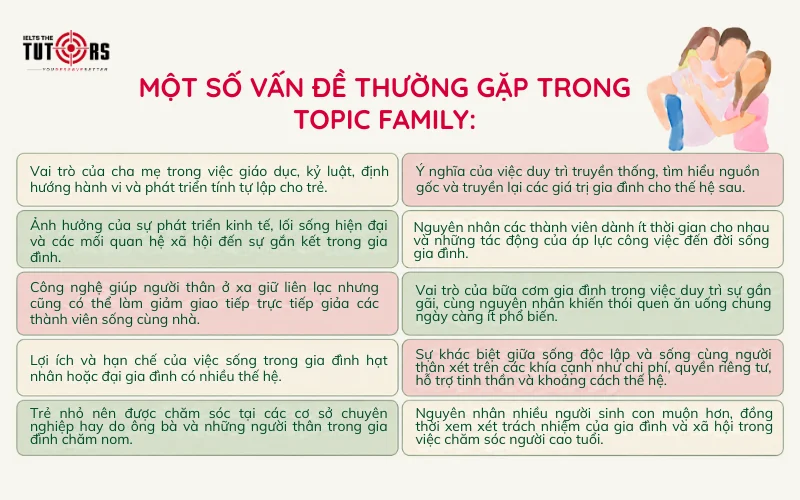
Một số vấn đề thường gặp trong chủ đề Family Writing Task 2:
- Vai trò của cha mẹ trong việc giáo dục, kỷ luật, định hướng hành vi và phát triển tính tự lập cho trẻ.
- Ý nghĩa của việc duy trì truyền thống, tìm hiểu nguồn gốc và truyền lại các giá trị gia đình cho thế hệ sau.
- Ảnh hưởng của sự phát triển kinh tế, lối sống hiện đại và các mối quan hệ xã hội đến sự gắn kết trong gia đình.
- Nguyên nhân các thành viên dành ít thời gian cho nhau và những tác động của áp lực công việc đến đời sống gia đình.
- Công nghệ giúp người thân ở xa giữ liên lạc nhưng cũng có thể làm giảm giao tiếp trực tiếp giữa các thành viên sống cùng nhà.
- Vai trò của bữa cơm gia đình trong việc duy trì sự gần gũi, cùng nguyên nhân khiến thói quen ăn uống chung ngày càng ít phổ biến.
- Lợi ích và hạn chế của việc sống trong gia đình hạt nhân hoặc đại gia đình có nhiều thế hệ.
- Sự khác biệt giữa sống độc lập và sống cùng người thân xét trên các khía cạnh như chi phí, quyền riêng tư, hỗ trợ tinh thần và khoảng cách thế hệ.
- Trẻ nhỏ nên được chăm sóc tại các cơ sở chuyên nghiệp hay do ông bà và những người thân trong gia đình chăm nom.
- Nguyên nhân nhiều người sinh con muộn hơn, đồng thời xem xét trách nhiệm của gia đình và xã hội trong việc chăm sóc người cao tuổi.
Ý tưởng triển khai chủ đề Family trong IELTS Writing task 2
Khi lên ý tưởng cho chủ đề Family, bạn cần xác định đề đang tập trung vào nguyên nhân, tác động, lợi ích, hạn chế hay trách nhiệm của từng thành viên trong gia đình. Từ đó, phát triển thân bà theo từng luận điểm chính, rồi nêu lên những ảnh hưởng của vấn đề đối với trẻ em, cha mẹ, người cao tuổi hoặc sự gắn kết chung của gia đình.
Dưới đây là các ý tưởng để bạn phát triển luận điểm theo từng dạng đề Family topic trong IELTS Writing task 2:
Parenting Skills and Child Development
Đề bài: Some people believe parents should discipline children and teach them right from wrong, while others think parents should mainly provide care and a safe environment. Discuss both views and give your opinion.
Phân tích đề bài: Đây là dạng bài Discussion Essay with Opinion, yêu cầu bạn trình bày cả hai quan điểm trước khi nêu rõ ý kiến cá nhân.
- Ở góc nhìn thứ nhất, bạn cần phân tích quan điểm cho rằng cha mẹ nên rèn luyện kỷ luật và dạy con phân biệt đúng – sai.
- Góc nhìn thứ hai nhấn mạnh vai trò của cha mẹ trong việc chăm sóc và tạo môi trường an toàn để con phát triển.
- Sau khi thảo luận cả hai ý kiến, hãy đưa ra quan điểm của bản thân.
Bạn có thể lựa chọn ủng hộ sự cân bằng giữa kỷ luật và chăm sóc, hoặc nghiêng về một quan điểm nhưng vẫn thừa nhận vai trò của quan điểm còn lại. Dưới đây là những ý tưởng bạn có thể triển khai cho bài Writing task 2:
| Discipline & Moral Teaching | Care & Safe Environment |
|
|
Dàn ý mẫu:
- Introduction: Parenting approaches differ; some emphasize discipline and moral teaching; others prioritize care and safety both matter for child development.
- Body 1: Discipline and moral guidance provide structure, teach responsibility, prevent harmful behaviors, and prepare children for society.
- Body 2: Care and safe environment build emotional security, enable authentic expression, develop confidence, and foster healthy relationships.
- Conclusion: Most effective parenting balances firm boundaries with unconditional love; children need both structure and security to develop into confident, responsible adults.
Family Traditions and Family History
Đề bài: Some people believe researching previous generations is useful, whereas others think people should focus on present and future generations. Discuss both views and give your opinion.
Phân tích đề bài: Đây là dạng bài Discussion Essay with Opinion, yêu cầu bạn trình bày cả hai quan điểm trước khi nêu rõ ý kiến cá nhân.
- Ở góc nhìn thứ nhất, bạn cần phân tích quan điểm cho rằng việc nghiên cứu các thế hệ trước mang lại nhiều giá trị, giúp con người hiểu hơn về bản sắc văn hóa và rút ra bài học từ lịch sử.
- Ở góc nhìn thứ hai cho rằng mọi người nên tập trung vào hiện tại và các thế hệ tương lai để thúc đẩy sự phát triển.
- Sau khi thảo luận cả hai ý kiến, hãy đưa ra quan điểm của bản thân.
Bạn có thể lựa chọn ủng hộ việc học hỏi từ quá khứ vì những giá trị lâu dài mà nó mang lại, hoặc nghiêng về việc tập trung vào hiện tại nhưng vẫn thừa nhận nghiên cứu quá khứ là cần thiết. Dưới đây là những ý tưởng bạn có thể triển khai cho bài Writing task 2:
| Researching Previous Generations Is Useful | Should Focus on Present & Future |
|
|
Dàn ý mẫu:
- Introduction: Some people value researching family history for cultural identity, while others believe that focusing on the present and future is more practical. Both approaches have merit.
- Body 1: Researching family history preserves cultural identity, provides valuable lessons from past mistakes, strengthens family bonds, and offers practical insights for present challenges.
- Body 2: Focusing on the present and future allows people to address current problems, invest in children's opportunities, embrace necessary changes, and build their identities based on personal choices.
- Conclusion: While both matter, understanding family history enriches identity and provides wisdom, while still allowing people to shape their own future independently.
Family Relationships in a Changing Society
Đề bài: Different generations within families now spend less time doing activities together. Why is this happening? Is it a positive or negative development?
Phân tích đề bài: Đây là dạng bài Causes & Opinion, bạn cần giải thích nguyên nhân của vấn đề trước khi đưa ra quan điểm đánh giá. Cụ thể như sau:
- Phân tích những lý do khiến các thành viên trong gia đình ngày càng dành ít thời gian cho nhau, chẳng hạn như lịch trình bận rộn, sự phát triển của công nghệ, khoảng cách địa lý hay lối sống hiện đại.
- Trình bày ý kiến cá nhân về việc đây là một xu hướng tích cực hay tiêu cực.
Bạn có thể thừa nhận một số lợi ích như tăng tính độc lập và tự do cá nhân, nhưng nên kết luận đây là một sự phát triển tiêu cực. Nhìn chung, vấn đề này làm giảm sự gắn kết và ảnh hưởng đến các mối quan hệ gia đình.
Dưới đây là ideas bạn có thể triển khai trong bài Writing task 2t:
| Reasons | Negative aspects | Positive aspects |
|
|
|
Dàn ý mẫu:
- Introduction: Modern life increasingly separates family members; generations spend less time together due to work, technology, and mobility. This represents a predominantly negative development.
- Body 1: Modern work demands, geographic mobility, technology, and busy lifestyles reduce opportunities for family interaction; cultural shift prioritizes individual pursuits over family bonding.
- Body 2: Weakened family relationships harm emotional wellbeing, tradition transmission, intergenerational support, and social cohesion; while individual autonomy increases, the loss of family connection creates isolation and vulnerability.
- Conclusion: Trend of generations spending less time together is largely negative; modern society must consciously prioritize family time to maintain relationships and cultural continuity.
Work Commitments and Family Time
Đề bài: In many modern families, both parents work, so children spend less time with them. Why is this happening, and what problems can it cause?
Phân tích đề bài: Đây là dạng bài Causes & Problems, do đó bạn cần giải thích nguyên nhân của vấn đề trước khi phân tích những hệ quả mà nó gây ra.
- Làm rõ lý do vì sao cả cha và mẹ đều phải đi làm, chẳng hạn như chi phí sinh hoạt ngày càng tăng, nhu cầu đảm bảo tài chính hoặc áp lực kinh tế.
- Phân tích những vấn đề phát sinh từ thực trạng này, bao gồm ảnh hưởng đến tâm lý và sự phát triển của trẻ; sự gắn kết gia đình suy giảm; áp lực về sức khỏe tinh thần; trẻ phải phụ thuộc vào các hình thức chăm sóc thay thế.
Dưới đây là những ý tưởng bạn có thể triển khai cho bài Writing task 2:
| Reasons | Problems for children | Problems for family |
|
|
|
Dàn ý mẫu:
- Introduction: Most modern families require both parents working due to economic pressures, rising costs of living, career demands, and financial insecurity force dual-income necessity.
- Body 1: Economic forces drive both parents into the workforce; rising living costs, inflation, and desire for financial security make single income insufficient for family survival and aspirations.
- Body 2: Dual-working parents create serious problems: children suffer emotional neglect and weaker relationships, families lack quality time and communication, marriages strain from exhaustion, and parental stress harms everyone's wellbeing.
- Conclusion: While economic necessity forces both parents to work, society must address this by supporting work-life balance policies, affordable childcare, and economic restructuring to protect family wellbeing.
Technology and Family Relationships
Đề bài: Technology has changed the way people interact. How has it affected the relationships people form, and is this a positive or negative development?
Phân tích đề bài: Với dạng bài Essay with Opinion, bạn cần phân tích tác động của một vấn đề trước khi đưa ra quan điểm đánh giá.
- Trình bày cách công nghệ đã thay đổi cách mọi người tương tác, chẳng hạn như giúp duy trì liên lạc dù ở xa, thúc đẩy giao tiếp trực tuyến, làm giảm tương tác trực tiếp…
- Nêu lên ý kiến cá nhân về việc những thay đổi này là tích cực hay tiêu cực.
Bạn có thể thừa nhận công nghệ mang lại lợi ích trong việc kết nối giữa người với người, nhưng vẫn mang đến nhiều tiêu cực hơn vì làm khiến con người lười tương tác trực tiếp, và điều đó ảnh hưởng đến các mối quan hệ.
Dưới đây là những ý tưởng bạn có thể triển khai cho bài Writing task 2:
| Positive | Negative |
|
|
Dàn ý mẫu:
- Introduction: Technology transformed how families communicate, enabling long-distance connection but also replacing face-to-face interaction, creating both opportunities and serious challenges for relationships.
- Body 1: Technology enables long-distance family maintenance, instant emergency contact, shared digital experiences, and accessibility for isolated members; maintains connection despite geographic separation.
- Body 2: Technology fundamentally damages relationships by replacing meaningful face-to-face interaction with shallow digital communication, disrupting family time, creating addiction and distraction, and preventing resolution of serious issues.
- Conclusion: While technology offers connectivity benefits for distant families, its negative impact on present, in-person relationships is more significant; families must consciously limit technology to protect genuine connection.
Family Meals and Family Bonding
Đề bài: Family members now eat fewer meals together. Why is this happening? Is it a positive or negative trend?
Phân tích đề bài: Đây là dạng bài Causes & Opinion, bạn cần giải thích nguyên nhân của vấn đề trước khi đưa ra quan điểm đánh giá.
- Phân tích những lý do khiến các gia đình ngày càng ít ăn cơm cùng nhau, chẳng hạn như lịch trình bận rộn, sự phát triển của công nghệ và thời gian sinh hoạt không đồng nhất giữa các thành viên.
- Nêu ý kiến cá nhân về việc đây là một xu hướng tích cực hay tiêu cực.
Bạn có thể kết luận rằng đây chủ yếu là một sự phát triển tiêu cực vì làm giảm sự gắn kết gia đình, hạn chế giao tiếp giữa các thành viên và giảm sức khỏe.
Dưới đây là những ý tưởng bạn có thể triển khai cho bài Writing task 2:
| Reasons | Negative | Positive |
|
|
|
Dàn ý mẫu:
- Introduction: Modern families increasingly eat separately due to busy schedules, work demands, technology, and competing commitments. This represents a predominantly negative trend with serious consequences.
- Body 1: Work pressures, children's activities, technology, and individual convenience drive families toward separate meals; both parents working and fragmented schedules make synchronized dining difficult.
- Body 2: Family meals eaten separately causes weakened relationships, poor communication, behavioral problems in children, deteriorated mental health, loss of cultural traditions, and worse nutrition outcomes.
- Conclusion: Decline in family meals is largely negative; families should prioritize regular shared meals as foundational to emotional connection, health, and transmission of values.
Family Size and Living Arrangements
Đề bài: In many cities, people increasingly live alone or in small family units instead of large extended families. Is this a positive or negative trend?
Phân tích đề bài: Đây là dạng bài Positive/Negative Development, do đó bạn cần phân tích một xu hướng và đánh giá liệu đó là sự phát triển tích cực hay tiêu cực.
- Trình bày xu hướng ngày càng nhiều người lựa chọn sống một mình hoặc trong gia đình nhỏ thay vì gia đình nhiều thế hệ.
- Đánh giá tác động của xu hướng này bằng cách cân nhắc cả ưu điểm và nhược điểm.
Bạn có thể thừa nhận những lợi ích như tăng tính độc lập, tự do và giảm một số chi phí sinh hoạt, nhưng chủ yếu vẫn là các xu hướng tiêu cực vì có thể làm gia tăng sự cô đơn, giảm sự gắn kết giữa các thành viên và mất đi sự hỗ trợ từ gia đình.
Dưới đây là những ý tưởng bạn có thể triển khai cho bài viết.
| Positive | Negative |
|
|
Dàn ý mẫu:
- Introduction: Cities increasingly feature people living alone or in small nuclear families rather than large extended families. This trend has both advantages and significant disadvantages.
- Body 1: Living independently offers personal autonomy, privacy, career flexibility, and freedom from family conflict; represents modern social progress and individual independence achievement.
- Body 2: Small family living creates severe isolation, eliminates practical support systems for childcare and eldercare, increases financial vulnerability, erases cultural traditions, and fundamentally weakens social cohesion and intergenerational relationships.
- Conclusion: While individual autonomy has value, the loss of extended family structure is largely negative; modern society should reconsider importance of family networks for psychological and practical wellbeing.
Living Alone or Living with Family
Đề bài: In some countries, more adults continue living with their parents after completing their education and finding employment. Do the advantages outweigh the disadvantages?
Phân tích đề bài: Với dạng bài Advantages/Disadvantages, bạn cần phân tích cả lợi ích và bất lợi của một xu hướng, sau đó đưa ra đánh giá xem mặt nào nổi trội hơn. Trong bài viết, bạn cần trình bày nội dung như sau:
- Những lợi ích của việc người trưởng thành tiếp tục sống cùng cha mẹ sau khi học xong và có việc làm.
- Phân tích các bất lợi.
- Đưa ra quan điểm cá nhân về việc lợi ích nhiều hơn hay bất lợi nhiều hơn.
Dưới đây là những ý tưởng bạn có thể triển khai cho bài Writing task 2:
| Advantages | Disadvantages |
|
|
Dàn ý mẫu:
- Introduction: In some countries, many adults continue living with parents after completing education and securing employment. This trend offers financial benefits but serious disadvantages regarding independence and development.
- Body 1: Living with parents provides financial security, reduced expenses, family support, practical household help, and cultural continuity; enables saving while maintaining emotional connection to family.
- Body 2: Extended residence with parents severely hampers independence development, romantic relationships, social maturity, career mobility, and mental health; creates ongoing parental control and infantilization preventing adult autonomy.
- Conclusion: While financial benefits exist, disadvantages outweigh advantages; adults living with parents sacrifice crucial independence and psychological development; financial solutions should enable separate living rather than prolonged dependence.
Childcare Centres versus Family Members
Đề bài: Some people think childcare centres offer the best care for preschool children, while others prefer relatives such as grandparents. Discuss both views and give your opinion.
Phân tích đề bài: Đây là dạng bài Discussion Essay with Opinion, bạn cần trình bày cả hai quan điểm trước khi nêu ý kiến cá nhân.
- Phân tích quan điểm cho rằng trung tâm chăm sóc trẻ mang lại môi trường chuyên nghiệp và an toàn cho trẻ mầm non.
- Nêu quan điểm ủng hộ việc ông bà hoặc người thân chăm sóc vì đem lại sự gắn kết và quan tâm gần gũi.
- Đưa ra lập trường của bản thân.
Bạn có thể lựa chọn ủng hộ một trong hai quan điểm hoặc cho rằng mỗi hình thức đều phù hợp tùy từng hoàn cảnh.
Dưới đây là những ý tưởng bạn có thể triển khai cho bài Writing task 2:
| Childcare Centres Best for Preschoolers | Family Members Preferable (Grandparents) |
|
|
Dàn ý mẫu:
- Introduction: Childcare options vary significantly; some advocate professional centres, others prefer family members like grandparents each approach has distinct advantages and limitations.
- Body 1: Professional childcare centres provide structured education, trained staff, peer socialization, safety regulations, and developmental support; institutional benefits ensure professional quality care and early learning opportunities.
- Body 2: Family care, especially grandparents, provides irreplaceable emotional security, unconditional love, cultural value transmission, flexible personalized attention, and intergenerational bonding; relational benefits exceed institutional advantages.
- Conclusion: While both approaches offer value, family care better serves young children's emotional needs; however, combination approach part-time centre for socialization plus family care for security optimally serves preschoolers.
Delayed Parenthood and Elderly Care
Đề bài: When elderly people can no longer care for themselves, younger relatives should be legally required to support them. To what extent do you agree or disagree?
Phân tích đề bài: Với dạng bài Agree/Disagree, bạn cần thể hiện mức độ đồng ý hoặc không đồng ý với quan điểm được đưa ra.
- Phân tích trách nhiệm của con cái đối với cha mẹ già và vai trò của nhà nước trong việc chăm sóc người cao tuổi.
- Trình bày lập trường của bản thân.
Bạn có thể hoàn toàn đồng ý, hoàn toàn không đồng ý hoặc lựa chọn quan điểm cân bằng, miễn là lập luận được triển khai rõ ràng và nhất quán.
Dưới đây là những ý tưởng bạn có thể triển khai cho bài Writing task 2:
| Agree | Disagree |
|
|
Dàn ý mẫu:
- Introduction: Elderly care responsibilities raise questions about whether adult children should face legal obligation to support aging parents balancing filial duty against individual rights.
- Body 1: Legal obligation reflects reciprocal family responsibility; parents sacrificed for children; obligation ensures elderly not abandoned; reduces state burden while maintaining intergenerational care and family values.
- Body 2: Mandatory legal obligation violates individual autonomy, ignores variable family circumstances, shifts state responsibility unfairly, perpetuates gender inequality, and creates poor care outcomes from resentment; government should provide social programs instead.
- Conclusion: While filial responsibility has merit, legal obligation is excessive; combination approach – social support systems plus voluntary family involvement – better serves elderly while respecting individual rights and family autonomy.
Xem thêm:
Từ vựng & collocation ăn điểm chủ đề Family

- Từ vựng IELTS Writing Task 2 chủ đề Family:
| Từ vựng | Từ loại | Ý nghĩa |
| parenting | noun | việc nuôi dạy con |
| discipline | noun | sự kỷ luật |
| independence | noun | tính tự lập |
| guidance | noun | sự hướng dẫn, định hướng |
| supervision | noun | sự giám sát |
| family values | noun phrase | các giá trị gia đình |
| family tradition | noun phrase | truyền thống gia đình |
| ancestry | noun | nguồn gốc, tổ tiên |
| household | noun | hộ gia đình |
| nuclear family | noun phrase | gia đình hạt nhân |
| extended family | noun phrase | đại gia đình nhiều thế hệ |
| single-parent family | noun phrase | gia đình đơn thân |
| generation gap | noun phrase | khoảng cách thế hệ |
| family conflict | noun phrase | mâu thuẫn gia đình |
| sibling | noun | anh, chị hoặc em ruột |
| financial independence | noun phrase | sự độc lập về tài chính |
| parenthood | noun | vai trò, quá trình làm cha mẹ |
| delayed parenthood | noun phrase | việc trì hoãn sinh con |
| elderly care | noun phrase | việc chăm sóc người cao tuổi |
| intergenerational | adjective | liên quan đến nhiều thế hệ |
| socialise | verb | giao tiếp và hòa nhập xã hội |
- Collocation hữu ích chủ đề Family:
| Collocation | Ý nghĩa |
| adopt an appropriate parenting style | áp dụng phương pháp nuôi dạy con phù hợp |
| set clear boundaries | đặt ra những giới hạn rõ ràng |
| impose strict discipline | áp dụng kỷ luật nghiêm khắc |
| give children greater freedom | trao cho trẻ nhiều quyền tự do hơn |
| instil good values in children | hình thành những giá trị tốt đẹp ở trẻ |
| foster children’s independence | nuôi dưỡng tính tự lập của trẻ |
| provide emotional support | hỗ trợ về mặt tinh thần |
| maintain close family relationships | duy trì các mối quan hệ gia đình gần gũi |
| spend quality time together | dành thời gian ý nghĩa bên nhau |
| achieve a healthy work–life balance | đạt được sự cân bằng hợp lý giữa công việc và cuộc sống |
| prioritise work over family | ưu tiên công việc hơn gia đình |
| disrupt family communication | cản trở việc giao tiếp trong gia đình |
| become overly dependent on digital devices | trở nên quá phụ thuộc vào thiết bị kỹ thuật số |
| stay connected with distant relatives | giữ liên lạc với người thân ở xa |
| grow up in a nuclear family | lớn lên trong một gia đình hạt nhân |
| live in an extended family | sống trong một đại gia đình |
| share household responsibilities | chia sẻ trách nhiệm trong gia đình |
| gain financial independence | đạt được sự độc lập về tài chính |
| rely on family support | dựa vào sự hỗ trợ của gia đình |
| bridge the generation gap | thu hẹp khoảng cách thế hệ |
| respect individual privacy | tôn trọng quyền riêng tư của mỗi người |
| receive professional childcare | được chăm sóc bởi nhân viên chuyên môn |
| have children later in life | sinh con ở độ tuổi muộn hơn |
| assume responsibility for elderly care | đảm nhận trách nhiệm chăm sóc người cao tuổi |
| reduce the burden on family caregivers | giảm gánh nặng cho người chăm sóc trong gia đình |
Tóm lại, để làm tốt các chủ đề Family trong IELTS Writing Task 2 bạn cần xác định đúng dạng bài, lựa chọn luận điểm phù hợp và triển khai ý theo trình tự rõ ràng. Bên cạnh đó, việc sử dụng từ vựng đúng ngữ cảnh, kết hợp với ví dụ thực tế sẽ giúp bài viết thuyết phục và tự nhiên hơn.
IELTS The Tutors hy vọng những kiến thức trong bài sẽ giúp bạn xây dựng dàn ý nhanh hơn và tự tin xử lý các đề liên quan đến gia đình. Hãy duy trì thói quen luyện viết, kiểm tra lỗi và áp dụng linh hoạt các ý tưởng đã học để từng bước cải thiện band điểm nhé.