Science and Technology là chủ đề khá quen thuộc với những bạn đang ôn luyện IELTS Writing Task 2 trong những năm gần đây. Khi gặp nhóm đề này, thí sinh cần hiểu và phân tích được vai trò của thiết bị số, trí tuệ nhân tạo, năng lượng sạch cũng như quyền riêng tư trên Internet.
Nếu chưa biết bắt đầu từ đâu, bài viết từ IELTS The Tutors sẽ giúp bạn hệ thống các Science and Technology topics thường gặp, kèm theo ý tưởng và từ vựng hữu ích để tự tin phát triển bài luận ngay tại nhà.
Các vấn đề thường gặp trong Science and Technology topics
Với chủ đề Science and Technology trong IELTS Writing Task 2, thí sinh không cần có kiến thức kỹ thuật chuyên sâu mà chủ yếu phải phân tích được lợi ích, hạn chế và trách nhiệm đi kèm với sự phát triển của khoa học, công nghệ hiện nay.
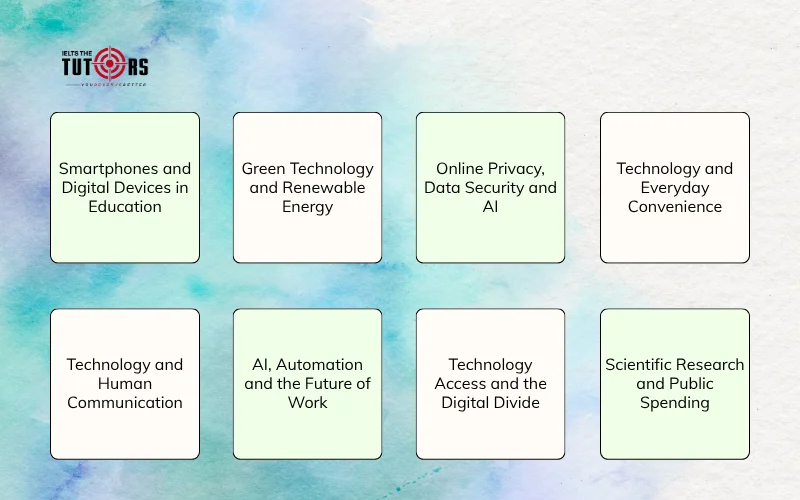
Dưới đây là những vấn đề thường gặp trong chủ đề Science and Technology topics:
Vai trò của điện thoại thông minh, máy tính bảng và thiết bị số trong việc hỗ trợ học tập.
Vai trò của năng lượng mặt trời, năng lượng gió và công nghệ xanh trong việc giảm ô nhiễm, khí thải và biến đổi khí hậu.
Nguy cơ rò rỉ dữ liệu, đánh cắp danh tính và xâm phạm quyền riêng tư khi các công ty thu thập thông tin người dùng.
Sự phụ thuộc vào máy móc, lối sống ít vận động và nguy cơ mất đi một số kỹ năng thực tế.
Tác động của Internet và giao tiếp trực tuyến đến tương tác trực tiếp, kỹ năng xã hội và chất lượng các mối quan hệ.
Khả năng trí tuệ nhân tạo và robot thay thế việc làm, đồng thời tạo áp lực học thêm kỹ năng mới cho người lao động.
Bất bình đẳng trong giáo dục, việc làm và khả năng tiếp cận dịch vụ do thiếu thiết bị, Internet ổn định hoặc kỹ năng số.
Vai trò của chính phủ và doanh nghiệp tư nhân trong nghiên cứu khoa học và phân bổ ngân sách.
Ý tưởng triển khai chủ đề Science and Technology trong IELTS Writing task 2
Trước khi làm bài IELTS Writing Task 2, bạn nên chuẩn bị các luận điểm phù hợp với yêu cầu đề và hiểu cách phát triển ý để bài viết mạch lạc, tránh lan man. Dưới đây là một số ideas hữu ích giúp bạn triển khai các Science and Technology topics hiệu quả hơn.
Smartphones and Digital Devices in Education
Đề bài: Smartphones and other digital devices are increasingly being used in classrooms. Do the advantages of this development outweigh the disadvantages?
Dạng bài: Advantages Outweigh Disadvantages
Yêu cầu bài viết:
Xác định những lợi ích của việc sử dụng điện thoại thông minh và thiết bị số trong lớp học.
Phân tích các hạn chế và rủi ro có thể phát sinh.
So sánh hai mặt và đánh giá liệu lợi ích có vượt trội hơn bất lợi hay không.
Đưa ra quan điểm rõ ràng và bảo vệ bằng những lập luận thuyết phục.
Ý tưởng phát triển bài Writing task 2:
Advantages
Disadvantages
Students can access online libraries, search engines, educational videos and other learning materials within seconds. This makes research faster and allows them to check information during lessons.
Educational apps, quizzes, multimedia presentations and virtual simulations can make lessons more interactive and enjoyable.
Technology supports personalised learning by allowing students to study at their own pace and use materials suited to their level.
Regular use of technology helps students develop digital skills that are useful for further education and future employment.
Shared documents, online forums and communication tools make group work easier and allow students to collaborate beyond the classroom.
Digital notes, cloud storage, calendars and automatic backups help students organise their work and reduce the risk of losing important files.
Technology connects classroom learning with current events and real workplace tools, making lessons more practical and relevant.
Online quizzes and learning platforms can provide immediate feedback, track progress and help teachers identify areas that need improvement.
Assistive tools such as text-to-speech, speech-to-text and adjustable displays can support students with disabilities or learning difficulties.
Digital textbooks and online documents can reduce paper use, printing costs and physical waste.
Students can study from different locations, access homework support and continue learning when they cannot attend school in person.
Smartphones and tablets can easily distract students. Social media, games, messages and videos may reduce concentration and participation in class.
Digital devices can make cheating and plagiarism easier. Students may search for answers, share test content or submit work that is not their own.
Not every student can afford a suitable device or reliable Internet connection. This may widen the gap between students from different economic backgrounds.
Long periods of screen use may cause eye strain, poor posture, sleep problems and lower levels of physical activity.
Too much digital communication may reduce face-to-face interaction and limit the development of social and emotional skills.
Technical problems such as weak Wi-Fi, software errors, broken devices and low battery levels can interrupt lessons.
Some teachers may lack the skills or confidence to use new technology effectively. Schools must invest time and resources in regular training.
Devices, software, repairs and IT infrastructure can be expensive. Regular upgrades may also place pressure on school budgets.
Overdependence on technology may weaken basic skills such as handwriting, spelling, mental calculation and independent problem-solving.
Online learning platforms may collect personal data and expose students to cyberbullying, harmful content, hacking or other security risks.
Excessive screen time may shorten attention spans, cause cognitive overload and affect the development of younger learners.
Green Technology and Renewable Energy
Đề bài: Fossil fuels are the main source of energy around the world. However, in some countries, the use of alternative sources of energy is replacing fossil fuels. Is this a positive or negative development?
Dạng bài: Positive or Negative Development
Yêu cầu bài viết:
Đánh giá xu hướng chuyển từ nhiên liệu hóa thạch sang các nguồn năng lượng thay thế.
Phân tích những tác động tích cực của năng lượng tái tạo.
Xem xét các thách thức và bất lợi có thể phát sinh.
Đưa ra quan điểm rõ ràng về việc đây là xu hướng tích cực hay tiêu cực.
Ý tưởng phát triển bài Writing task 2:
Positive
Negative
Renewable energy reduces carbon emissions, improves air quality and helps limit climate change. It can also protect ecosystems and reduce the health problems caused by pollution.
Sources such as sunlight, wind and water are renewable and will not run out like fossil fuels. They can improve long-term energy security and reduce dependence on imported fuel.
Investment in clean energy encourages research in battery storage, hydrogen fuel and smart-grid technology. As these technologies improve, renewable energy may become more efficient and affordable.
The green energy sector creates jobs in manufacturing, installation, maintenance, engineering and research. It can also support the growth of a low-carbon economy.
Renewable energy can reduce reliance on foreign oil and gas. A stable domestic energy supply may strengthen national security and protect countries from changes in global fuel prices.
Cleaner energy can reduce respiratory diseases, pollution-related deaths and healthcare costs. This can improve living conditions and public health over time.
Although installation is costly, operating expenses are usually lower because sunlight and wind are free. Renewable energy can therefore reduce electricity costs in the long term.
Businesses can reduce their carbon footprint and improve their public image by using clean energy. Sustainable practices may also attract investors and environmentally conscious customers.
International cooperation can support technology sharing, cross-border energy projects and global climate targets. It also allows countries to respond to climate change together.
Moving towards clean energy is a responsibility to future generations. It can help prevent severe environmental damage and support more sustainable development.
Building renewable energy systems requires major investment. Solar panels, wind farms, power grids and storage facilities can be expensive, especially for developing countries.
Renewable energy is not always reliable. Solar power depends on daylight, while wind energy changes with weather conditions, so backup systems may still be needed.
Current storage technology remains costly and limited. Large batteries also require minerals such as lithium, whose extraction can cause environmental damage.
The transition may lead to job losses in coal, oil and gas industries. Workers and communities that depend on these sectors may face serious economic difficulties.
Solar farms, wind farms and hydroelectric projects require large areas of land. They may damage habitats, change natural landscapes or displace local communities.
Renewable sources often produce less energy per unit of land than fossil fuels. More infrastructure may therefore be required to meet current energy demand.
Many developing countries still depend on cheap fossil fuels for industrial growth and poverty reduction. A rapid transition may place pressure on limited public budgets.
Producing solar panels, batteries and wind turbines requires rare minerals and complex supply chains. Mining, manufacturing and recycling can still create pollution.
Replacing fossil-fuel infrastructure is a long and disruptive process. It requires large investments and may face resistance from industries, workers and political groups.
Renewable energy cannot yet fully replace fossil fuels in aviation, shipping, heavy industry and chemical production. Hospitals and other essential services also require a constant and reliable power supply.
Online Privacy, Data Security and AI
Đề bài: The personal information of many individuals is held by large Internet companies and organisations. Do the advantages of this outweigh the disadvantages?
Dạng bài: Advantages Outweigh Disadvantages
Yêu cầu bài viết:
Xác định những lợi ích khi các công ty Internet lớn thu thập và lưu trữ thông tin cá nhân của người dùng.
Phân tích các rủi ro nghiêm trọng liên quan đến quyền riêng tư và an toàn dữ liệu.
So sánh để đánh giá liệu lợi ích có vượt trội hơn những bất lợi hay không.
Đưa ra quan điểm rõ ràng, trong đó cân nhắc đầy đủ quyền riêng tư của cá nhân.
Ý tưởng phát triển bài Writing task 2:
Advantages
Disadvantages
Personal data allows platforms to provide tailored recommendations, relevant search results, location-based services and a smoother user experience.
Companies can use customer data to understand user needs, improve product quality and develop more useful features.
Data analysis can help detect suspicious transactions, block fraudulent activity and protect online accounts.
Saved preferences, automatic form completion and single sign-on services can make online activities faster and more convenient.
Data collection supports free access to platforms, communication tools, educational resources and entertainment services.
Health data can support medical research, track diseases, improve public health and provide more personalised treatment.
Data can help cities manage traffic, reduce energy use, improve public services and allocate resources more effectively.
Location and medical data can support emergency services, help find missing people and improve disaster response.
The digital economy creates jobs, supports innovation and helps businesses improve efficiency and competitiveness.
Online platforms help people maintain relationships, build communities and communicate across countries.
Learning platforms can provide personalised study plans, suitable resources and automatic progress tracking.
Constant data collection can invade privacy, reduce online anonymity and make users feel that their activities are always being monitored.
Data breaches may expose passwords, financial details and other personal information, leading to identity theft, fraud and financial loss.
Companies may sell or use personal information for targeted advertising and commercial gain without giving users a fair share of the benefits.
Algorithms may make unfair decisions about employment, insurance or credit based on biased or incomplete data.
Users often have little control over how their data is collected because terms are unclear and refusing consent may prevent access to the service.
Platforms may use addictive design, personalised content and emotional targeting to influence behaviour and limit exposure to different viewpoints.
Governments may misuse personal data to monitor citizens, track political opponents and restrict freedom of speech.
Online information may remain accessible for years, meaning past mistakes can continue to damage a person’s reputation.
Large technology companies may gain too much control over markets, reduce competition and avoid proper accountability.
Personal data can be exploited for scams, phishing, harassment, stalking, blackmail and other forms of cybercrime.
People without reliable internet access, digital devices or technical skills may be excluded, which can widen social inequality.
Technology and Everyday Convenience
Đề bài: Many things that used to be done in the home by hand are now being done by machines. Does this development bring more advantages or disadvantages?
Dạng bài: Advantages or Disadvantages
Yêu cầu bài viết:
Xác định những lợi ích của việc sử dụng máy móc để thay thế các công việc thủ công trong gia đình.
Phân tích những bất lợi và tác động tiêu cực khi con người phụ thuộc quá nhiều vào máy móc.
So sánh hai mặt và đánh giá liệu ưu điểm có vượt trội hơn nhược điểm hay không.
Đưa ra quan điểm rõ ràng về tác động tổng thể của xu hướng này.
Ý tưởng phát triển bài Writing task 2:
Advantages
Disadvantages
Household appliances save time by completing routine tasks such as washing, cleaning and cooking more quickly. This gives people more time for work, family and leisure.
Modern appliances are easy to use and require less physical effort. Smart controls and automated functions also make daily routines more convenient.
Machines often produce more consistent results. They can improve cleaning quality, food preparation and accuracy in tasks that are difficult to perform manually.
Appliances reduce physical strain and the risk of injury. They can also improve hygiene through high-temperature washing, sanitisation and safer cooking functions.
Labour-saving devices reduce the burden of housework, especially for women. This can support greater participation in education, employment and family decision-making.
People can complete other activities while machines are working. This makes it easier to manage several responsibilities and organise time efficiently.
Modern appliances can improve cleanliness, remove allergens and reduce the spread of germs, leading to safer living conditions.
Assistive appliances help elderly people and people with disabilities live more independently, safely and comfortably.
Energy-efficient models can reduce electricity use and lower long-term household costs. Smart systems can also manage energy more effectively.
Modern equipment allows people to achieve high-quality cooking, cleaning and home maintenance without professional help.
Features such as automatic shut-off, child locks and emergency alerts can reduce household accidents and improve safety.
Heavy reliance on machines can weaken practical skills. Some people may struggle to complete basic tasks when appliances break or electricity is unavailable.
Buying, maintaining and replacing appliances can be expensive. Higher electricity bills may also place pressure on household budgets.
The production and disposal of appliances can harm the environment through high energy use, manufacturing pollution and electronic waste.
Less physical activity in daily life may contribute to a sedentary lifestyle, weight gain and weaker overall fitness.
Overdependence on technology can reduce independence and problem-solving skills. People may also feel anxious or helpless when systems fail.
Shared household tasks may happen less often, reducing opportunities for family members to talk, cooperate and pass practical knowledge to younger generations.
Advanced machines can be difficult to repair or operate. Software updates, technical faults and compatibility problems may cause frustration.
Greater self-reliance may reduce the need to ask neighbours or relatives for help, which can weaken social interaction and increase loneliness.
Rapid technological change encourages people to replace working appliances with newer models, increasing consumerism and unnecessary waste.
Completing fewer tasks by hand may reduce the sense of achievement, creativity and personal satisfaction that comes from practical work.
Constant automation may make people less patient and less aware of the effort involved in daily tasks, creating an expectation of instant results.
Technology and Human Communication
Đề bài: Some people argue that technological inventions, such as mobile phones, are making people socially less interactive. To what extent do you agree or disagree?
Dạng bài: Agree or Disagree
Yêu cầu bài viết:
Đánh giá tác động của các phát minh công nghệ, đặc biệt là điện thoại di động, đến tương tác xã hội.
Xem xét liệu công nghệ có làm giảm giao tiếp trực tiếp giữa con người hay không.
Cân nhắc những cách công nghệ có thể tăng cường kết nối và duy trì các mối quan hệ.
Đưa ra lập trường rõ ràng về mức độ đồng ý với nhận định của đề bài.
Ý tưởng phát triển bài Writing task 2:
Agree
Disagree
Technology can reduce face-to-face communication. People may focus on their phones during meals, meetings or family gatherings instead of talking to those around them.
Frequent online communication may weaken social skills. Some people become less confident in direct conversations and find it harder to understand body language or social cues.
People may value virtual contact more than physical presence. They sometimes record events through their phones instead of fully enjoying the experience.
Social media can encourage shallow relationships. Likes, emojis and short messages may replace deeper and more meaningful conversations.
Heavy technology use can lead to isolation and loneliness. Although users appear connected online, they may spend less time building relationships in real life.
Excessive phone use may become addictive. Constant notifications and scrolling can interrupt conversations, work and other daily activities.
Public spaces may become less social when most people are looking at screens. This can reduce casual conversations and weaken community relationships.
Too much screen time may affect children’s social development. Children may spend less time playing outdoors and practising cooperation with others.
Dating apps may make romantic relationships feel superficial. Quick judgments, ghosting and endless choices can make long-term commitment more difficult.
Remote work and online communication may weaken workplace relationships. Employees can miss informal conversations, team bonding and direct collaboration.
Technology may widen the gap between generations. Younger and older people may prefer different communication styles, which can reduce understanding within families.
Technology helps people stay connected with friends and relatives who live far away. Video calls and messaging make long-distance communication easier and more affordable.
Online platforms create new ways to interact. People can join communities, support groups and discussions based on shared interests.
Technology makes social interaction more accessible. Introverts, people with disabilities and those with social anxiety may find it easier to communicate online.
Digital tools increase the frequency of communication. People can send quick updates, share important moments and remain involved in each other’s daily lives.
Online communities provide useful support. People can seek advice, discuss personal difficulties and receive help from others with similar experiences.
Technology supports professional networking. People can find jobs, attend online events and build professional relationships across different countries.
Digital communication makes planning easier. Groups can arrange meetings, share updates and respond quickly to last-minute changes.
Technology supports educational exchange. Users can share knowledge, learn from international experts and take part in cross-cultural discussions.
Couples and families can maintain close relationships despite distance. This is especially helpful for students abroad, migrant workers and families living in different countries.
Digital platforms allow teams to share information quickly, work together across locations and respond effectively during urgent situations.
Technology offers greater flexibility. People can choose between text messages, phone calls, emails or video calls depending on their needs and preferences.
AI, Automation and the Future of Work
Đề bài: Some people think that the more technology develops, the fewer jobs there will be. To what extent do you agree or disagree?
Dạng bài: Agree or Disagree
Yêu cầu bài viết:
Đánh giá mối quan hệ giữa sự phát triển công nghệ và cơ hội việc làm.
Xem xét khả năng tự động hóa và AI thay thế người lao động trong một số ngành nghề.
Cân nhắc vai trò của công nghệ trong việc tạo ra những công việc và lĩnh vực mới.
Đưa ra lập trường rõ ràng về tác động chung của công nghệ đối với thị trường lao động.
Ý tưởng phát triển bài Writing task 2:
Agree
Disagree
Automation allows robots, self-checkout machines, chatbots and driverless vehicles to perform tasks previously done by factory workers, cashiers, customer service staff and drivers.
AI can complete a growing number of professional tasks, including writing content, analysing data, translating documents and providing basic legal or medical support.
Automated factories, smart production systems and 3D printing reduce the number of workers needed in manufacturing. This particularly affects people in routine and low-skilled jobs.
Online shopping, self-service kiosks and automated booking systems have reduced demand for retail assistants, restaurant staff, travel agents and hotel receptionists.
Office software can handle administrative work, financial records and routine reports, reducing the need for secretaries, bookkeepers and junior analysts.
The growth of the gig economy may replace secure full-time positions with temporary or freelance work that offers less stable income and fewer employee benefits.
Rapid technological change can make existing skills outdated. Some workers, particularly older employees, may struggle to retrain and find suitable jobs.
The benefits of technology may mainly go to highly skilled workers and business owners, while low-skilled employees face job losses and lower wages. This can widen income inequality.
Technology-related jobs are often concentrated in major cities, while rural areas and traditional industrial regions may lose employment opportunities.
Technological disruption may happen faster than workers and education systems can adapt, leading to long-term structural unemployment.
AI is beginning to affect white-collar professions such as law, accounting, finance, journalism and healthcare, so job displacement is no longer limited to manual workers.
Technological development creates new industries and careers in areas such as software development, data analysis, cybersecurity, digital marketing and app design.
Previous technological changes also replaced certain occupations but created new ones. The Industrial Revolution, agricultural machinery and computers changed the labour market without causing permanent mass unemployment.
Higher productivity can lower production costs, reduce prices and increase consumer demand. As businesses expand, they may create more jobs in other areas.
Human abilities such as creativity, emotional intelligence, leadership and interpersonal communication remain difficult to automate. These skills are still essential in many professions.
Technology often supports workers rather than replacing them. Machines can handle repetitive tasks while employees focus on decision-making, problem-solving and more complex responsibilities.
Digital platforms have created new ways to earn money through remote work, freelancing, e-commerce and online businesses. They also allow small companies to reach wider markets.
Education, online courses and government retraining programmes can help workers develop new skills and move into growing industries.
Automation can remove dangerous, repetitive and physically demanding tasks. It may also shorten working hours and improve working conditions.
Ageing populations continue to increase demand for healthcare, elderly care and personal services, where direct human support remains important.
Creative industries, tourism, hospitality and personal services continue to grow because customers value original ideas, experiences and human interaction.
New technology still requires people to design, install, maintain, repair and improve digital systems, machines and technical infrastructure.
Technology Access and the Digital Divide
Đề bài: Some people believe that advances in technology are increasing the gap between rich and poor, while others think the opposite is happening. Discuss both views and give your own opinion.
Dạng bài: Discussion Essay and Opinion
Yêu cầu bài viết:
Thảo luận quan điểm 1: Công nghệ làm gia tăng khoảng cách giữa người giàu và người nghèo.
Thảo luận quan điểm 2: Công nghệ góp phần thu hẹp khoảng cách giàu nghèo.
Đưa ra ý kiến cá nhân về tác động của công nghệ đối với bất bình đẳng xã hội.
Ý tưởng phát triển bài Writing task 2:
Technology Increases the Gap
Technology Decreases the Gap
Low-income families may not be able to afford reliable devices or internet access, while rural areas often lack suitable digital infrastructure. As a result, wealthier groups benefit more from new technology.
Wealthier students can pay for better online courses, private tutoring and digital learning tools. Poorer students may struggle with remote learning because they lack devices, internet access or digital skills.
Technology can concentrate wealth in the hands of large companies and platform owners. Automation may also replace low-skilled workers, while highly skilled technology jobs offer much higher salaries.
Advanced treatments, wearable devices and AI-based healthcare may remain too expensive for low-income groups. Telemedicine is also less useful for people without internet access or digital devices.
Automation can remove many middle-income and routine jobs. At the same time, technology-related careers often require qualifications and skills that disadvantaged workers cannot easily obtain.
Wealthy individuals can invest in technology companies and benefit from rising asset values. Poorer people often lack the capital, financial knowledge and professional networks needed to access the same opportunities.
Technology hubs can increase housing prices and push low-income residents out of areas with better jobs. Remote work mainly benefits people whose jobs can be done using computers.
Professional networks and online platforms may still favour people with strong educational backgrounds, useful contacts and access to experienced mentors.
Skilled workers may leave developing countries for better jobs in major technology centres. This can reduce the number of qualified professionals available in their home countries.
Targeted advertising, online gambling and high-interest lending apps may exploit vulnerable users who have limited digital or financial knowledge.
Free websites, online libraries, search engines and educational platforms give more people access to knowledge that was once limited to schools or wealthy households.
Free online courses, tutorials, language apps and coding programmes allow people to learn new skills without paying for traditional education.
E-commerce, freelance platforms and remote work create new income opportunities. Small businesses and independent workers can now reach customers and employers beyond their local area.
Telemedicine and online health information can reach people in remote areas. Free medical resources may also help individuals learn more about prevention and basic healthcare.
Digital platforms make it easier to find work, develop practical skills and build a career without living in a major city.
Mobile banking, digital payments and online financial services can help people without traditional bank accounts save, transfer and receive money more easily.
Farmers can use weather apps, online market information and digital payments to improve productivity, reduce costs and reach more buyers.
Cheap smartphones, messaging apps and video calls help people communicate across social and geographical boundaries at a low cost.
Open-source projects, online collaboration and faster technology transfer allow developing countries to access knowledge and adopt new solutions more quickly.
Digital government services can reduce paperwork, improve transparency and make information about public services and legal rights easier to access.
Scientific Research and Public Spending
Đề bài: Scientific research should be carried out and controlled by governments rather than private companies. To what extent do you agree or disagree?
Dạng bài: Agree or Disagree
Yêu cầu bài viết:
Đánh giá vai trò của chính phủ trong việc quản lý và tài trợ cho nghiên cứu khoa học.
So sánh ưu điểm và hạn chế của nghiên cứu do chính phủ và doanh nghiệp tư nhân thực hiện.
Xem xét các yếu tố như lợi nhuận, lợi ích công chúng, đạo đức và hiệu quả nghiên cứu.
Đưa ra lập trường rõ ràng về bên nên chịu trách nhiệm kiểm soát nghiên cứu khoa học.
Ý tưởng phát triển bài Writing task 2:
Agree
Disagree
Government-led research can focus on public needs rather than profit. This allows funding to support neglected diseases, basic science and other areas with limited commercial value.
Public control can provide stronger ethical oversight. Governments can set clear standards to protect human participants, animal welfare and research integrity.
Sensitive research related to defence, national security and critical infrastructure may require government supervision to prevent misuse or espionage.
Publicly funded research can make findings more widely available. Open access may support international cooperation and prevent essential treatments from becoming unaffordable.
Governments are better placed to support long-term projects that may take decades to produce results. Fundamental research can continue without pressure to generate immediate profit.
Public investment can help ensure that research benefits rural areas, low-income communities and people who cannot afford expensive services.
Government supervision can reduce conflicts of interest, data manipulation and the suppression of negative findings. Public institutions are also more accountable to citizens.
Public funding is essential for research into rare diseases, affordable medicine, disease prevention and pandemic preparedness.
Independent public research can investigate climate change, pollution and environmental damage without pressure from industries that may be affected by the findings.
Government funding supports universities, researcher training, academic freedom and the wider sharing of scientific knowledge.
Public research is subject to parliamentary oversight, public scrutiny and taxpayer accountability. This can make decisions more transparent.
Governments can support international research programmes that address shared problems such as disease, climate change and food security.
Private companies are often more efficient and results-driven. Competition encourages faster research, innovation and practical decision-making.
Private firms can access large amounts of capital from investors, venture funds and business partners without relying entirely on tax revenue.
Companies can attract highly skilled scientists, develop specialised expertise and invest in advanced facilities.
Private organisations can adapt quickly, change direction when necessary and respond faster to new technologies or market demand.
Private funding often requires measurable outcomes. This can improve accountability, reduce waste and encourage more efficient use of resources.
A strong private research sector can improve national competitiveness, attract international talent and create export opportunities.
Private companies are often better at turning scientific discoveries into products, services and technologies that can be used in real life.
Businesses may be more willing to take financial risks, test unconventional ideas and invest in potentially disruptive innovations.
Cooperation between governments, universities and private companies can combine public oversight with commercial expertise and resources.
Market demand can guide research towards practical problems, consumer needs and technologies with clear economic value.
Diverse sources of private funding can make research less dependent on government budgets and more resilient during economic difficulties.
Patents and intellectual property rights allow companies to recover their investment, encouraging continued spending on research and development.
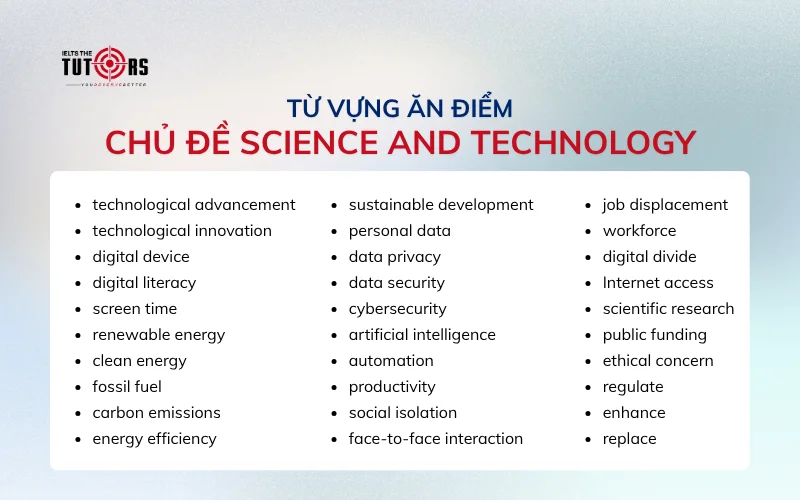
Từ vựng & collocation ăn điểm Science and Technology topics
Từ vựng IELTS Writing Task 2 chủ đề Science and Technology
Từ vựng
Từ loại
Ý nghĩa
technological advancement
noun phrase
tiến bộ công nghệ
technological innovation
noun phrase
đổi mới công nghệ
digital device
noun phrase
thiết bị kỹ thuật số
digital literacy
noun phrase
năng lực sử dụng và đánh giá công nghệ số
screen time
noun phrase
thời gian sử dụng màn hình
renewable energy
noun phrase
năng lượng tái tạo
clean energy
noun phrase
năng lượng sạch
fossil fuel
noun phrase
nhiên liệu hóa thạch
carbon emissions
noun phrase
lượng khí thải carbon
energy efficiency
noun phrase
hiệu quả sử dụng năng lượng
sustainable development
noun phrase
phát triển bền vững
personal data
noun phrase
dữ liệu cá nhân
data privacy
noun phrase
quyền riêng tư dữ liệu
data security
noun phrase
bảo mật dữ liệu
cybersecurity
noun
an ninh mạng
artificial intelligence
noun phrase
trí tuệ nhân tạo
automation
noun
quá trình tự động hóa
productivity
noun
năng suất
social isolation
noun phrase
sự cô lập xã hội
face-to-face interaction
noun phrase
sự tương tác trực tiếp
job displacement
noun phrase
tình trạng mất việc do công nghệ
workforce
noun
lực lượng lao động
digital divide
noun phrase
khoảng cách số
Internet access
noun phrase
khả năng tiếp cận Internet
scientific research
noun phrase
nghiên cứu khoa học
public funding
noun phrase
ngân sách công
ethical concern
noun phrase
vấn đề đáng lo ngại về đạo đức
regulate
verb
quản lý bằng quy định
enhance
verb
nâng cao, cải thiện
replace
verb
thay thế
Collocations IELTS Writing Task 2 chủ đề Science and Technology
Collocations
Ý nghĩa
integrate technology into education
tích hợp công nghệ vào giáo dục
provide access to online learning resources
cung cấp khả năng tiếp cận tài nguyên học trực tuyến
develop students’ digital literacy
phát triển năng lực số của học sinh
support independent learning
hỗ trợ việc tự học
distract students from their studies
khiến học sinh xao nhãng việc học
become dependent on digital devices
trở nên phụ thuộc vào thiết bị kỹ thuật số
set reasonable screen-time limits
đặt giới hạn thời gian sử dụng màn hình hợp lý
invest in renewable energy
đầu tư vào năng lượng tái tạo
reduce dependence on fossil fuels
giảm sự phụ thuộc vào nhiên liệu hóa thạch
reduce carbon emissions
cắt giảm lượng khí thải carbon
improve energy efficiency
nâng cao hiệu quả sử dụng năng lượng
promote sustainable development
thúc đẩy phát triển bền vững
protect users’ privacy
bảo vệ quyền riêng tư của người dùng
strengthen cybersecurity measures
tăng cường các biện pháp an ninh mạng
collect users’ personal data
thu thập dữ liệu cá nhân của người dùng
introduce stricter data protection laws
ban hành luật bảo vệ dữ liệu nghiêm ngặt hơn
improve the convenience of daily life
nâng cao sự tiện lợi trong cuộc sống hằng ngày
save time and effort
tiết kiệm thời gian và công sức
improve overall productivity
nâng cao năng suất chung
reduce face-to-face interaction
làm giảm tương tác trực tiếp
maintain relationships over long distances
duy trì các mối quan hệ từ xa
replace human workers with machines
thay thế người lao động bằng máy móc
perform repetitive and dangerous tasks
thực hiện các công việc lặp lại và nguy hiểm
create new employment opportunities
tạo ra những cơ hội việc làm mới
equip workers with new skills
trang bị kỹ năng mới cho người lao động
adapt to technological change
thích nghi với sự thay đổi công nghệ
bridge the digital divide
thu hẹp khoảng cách số
ensure equal access to technology
bảo đảm cơ hội tiếp cận công nghệ bình đẳng
conduct scientific research
tiến hành nghiên cứu khoa học
allocate public funds to research
phân bổ ngân sách công cho nghiên cứu
improve people’s quality of life
cải thiện chất lượng cuộc sống
balance scientific progress with ethical concerns
cân bằng tiến bộ khoa học với các vấn đề đạo đức
Tóm lại, trong thời đại công nghệ phát triển mạnh mẽ, science and technology topics là nhóm chủ đề bạn nên dành thời gian ôn luyện kỹ. Các đề bài thường không yêu cầu kiến thức chuyên môn quá sâu, nhưng sẽ đánh giá khả năng phân tích của bạn về Internet, trí tuệ nhân tạo, thiết bị số và nhiều vấn đề liên quan khác.
Hy vọng những ý tưởng trong bài viết sẽ giúp bạn xây dựng lập luận rõ ràng, sắc bén và thuyết phục hơn khi làm IELTS Writing Task 2 chủ đề khoa học và công nghệ. Đừng quên theo dõi IELTS The Tutors để cập nhật thêm nhiều ideas hữu ích và từng bước chinh phục band điểm mơ ước nhé!
Mai Minh Châu
Giáo viên tại IELTS The Tutors
Mình hiện đang giảng dạy tại IELTS The Tutors và từng bắt đầu với vai trò IELTS Coach. Trong quá trình dạy, mình nhận ra nhiều bạn chưa hiểu bản chất kiến thức, nên mình xây dựng các bài viết học thuật theo hướng dễ hiểu, sát thực tế, dựa trên trải nghiệm giảng dạy và sửa bài mỗi ngày.
Bạn còn thắc mắc về bài viết này?
Bấm đăng ký tư vấn ngay để được đội ngũ cố vấn giải đáp sâu hơn về kiến thức bạn đang đọc
Trong bài viết này, IELTS The Tutors sẽ cùng bạn khám phá ideas hay, dễ triển khai, từ vựng ghi điểm và bài mẫu tham khảo cho IELTS Writing Task 2 Animal Rights, từ đó xây dựng lập luận rõ ràng và tự tin hơn khi tự luyện viết tại nhà.
Bài viết này từ IELTS The Tutors sẽ giúp bạn hệ thống các dạng đề IELTS Writing Task 2 Food thường gặp, kèm ý tưởng, từ vựng và collocation hữu ích để phát triển bài luận tự tin hơn tại nhà.
Trong bài viết này, IELTS The Tutors sẽ tổng hợp những ý tưởng, từ vựng và bài mẫu IELTS Writing Task 2 topic Economy, giúp bạn hiểu rõ các vấn đề thường gặp và biết cách triển khai luận điểm phù hợp hơn.
Nếu bạn thường bí ý khi gặp đề IELTS Writing Task 2 Culture, hãy cùng IELTS The Tutors chuẩn bị các ý tưởng cho luận điểm, từ vựng và collocation cần thiết để phát triển bài luận mạch lạc hơn.
Trong bài viết dưới đây, IELTS The Tutors sẽ giúp bạn hệ thống những chủ đề Media IELTS Writing Task 2 thường gặp, kèm theo hướng triển khai và nhóm từ vựng dễ ứng dụng.
Mai Minh Châu
15/10/2026
Đăng ký tư vấn ngay!
Nhận lộ trình 7.0+ IELTS cấp tốc - tiết kiệm 40% thời gian Đăng ký ngay!
Đăng ký thành công!
IELTS THE TUTORS đã nhận thông tin đăng ký của bạn.