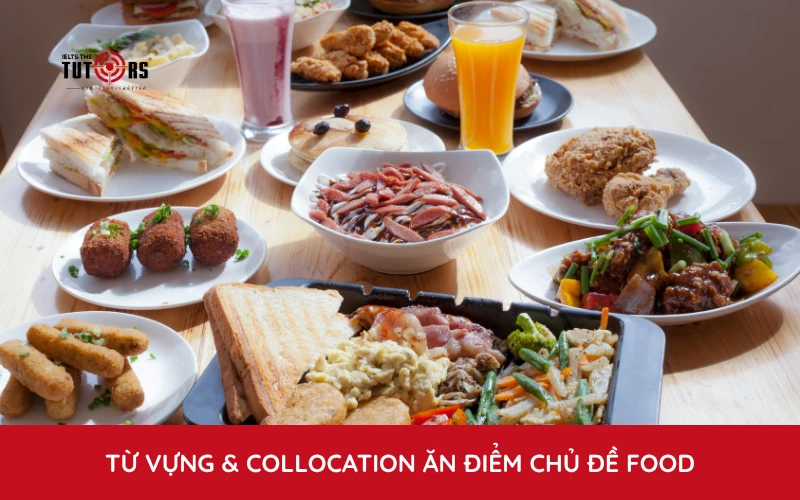
Food là chủ đề quen thuộc trong IELTS Writing Task 2 nhưng phạm vi không chỉ dừng lại ở món ăn hay thói quen ăn uống. Đề bài còn có thể khai thác sức khỏe, thực phẩm nhập khẩu, lãng phí thức ăn, an ninh lương thực và công nghệ nông nghiệp. Bài viết này từ IELTS The Tutors sẽ giúp bạn hệ thống hóa ý tưởng IELTS Writing Task 2 topic Food thường gặp, kèm từ vựng và collocation hữu ích để phát triển bài luận tự tin hơn tại nhà.
Các vấn đề thường gặp trong chủ đề Food Writing task 2
Trong IELTS Writing Task 2, Food không chỉ liên quan đến món ăn hay thói quen ăn uống mà còn mở rộng sang sức khỏe, thương mại, môi trường, an ninh lương thực và công nghệ nông nghiệp.
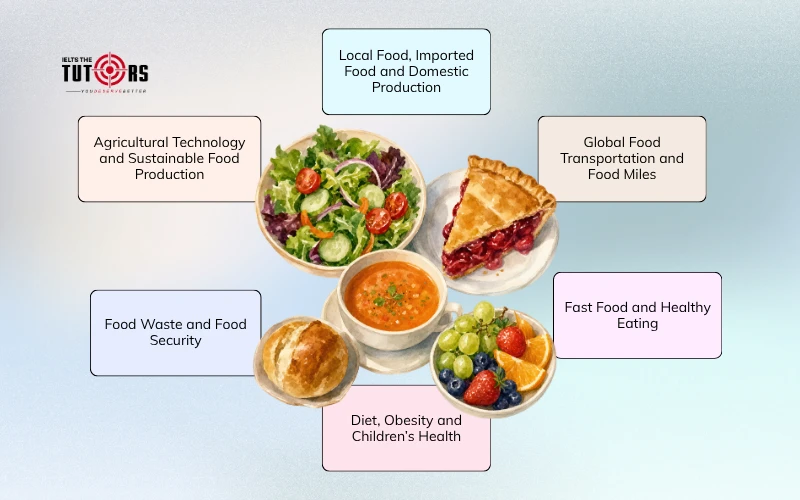
Dưới đây là những vấn đề thường gặp trong chủ đề Food:
- Nên ưu tiên nhập khẩu thực phẩm hay phát triển sản xuất lương thực trong nước.
- Tác động của việc vận chuyển thực phẩm đường dài đến sự đa dạng hàng hóa, nhiên liệu, khí thải và bao bì.
- Nguyên nhân con người lựa chọn thức ăn nhanh và cách khuyến khích chế độ ăn cân bằng, tự nấu tại nhà.
- Mối liên hệ giữa chế độ ăn uống, béo phì và các bệnh liên quan đến dinh dưỡng, đặc biệt ở trẻ em.
- Nguyên nhân, hậu quả và giải pháp cho tình trạng lãng phí thực phẩm tại gia đình, siêu thị và nhà hàng.
- Lợi ích và rủi ro của công nghệ nông nghiệp, cây trồng biến đổi gen và các phương pháp canh tác hiện đại.

Ý tưởng triển khai chủ đề Food trong IELTS Writing task 2
Local Food, Imported Food and Domestic Production
Đề bài: Countries should try to produce all the food for their population and import as little food as possible. To what extent do you agree or disagree?
Dạng bài: Agree or Disagree
Nội dung cần làm rõ: Khả năng tự chủ lương thực, hỗ trợ nông dân trong nước, sự đa dạng của nguồn cung và mức độ phụ thuộc vào thực phẩm nhập khẩu.
Ý tưởng phát triển bài Writing task 2:
| Agree |
Disagree |
- Domestic production improves food security and reduces dependence on foreign suppliers during wars, pandemics or trade disruptions.
- Supporting local agriculture creates jobs, protects farmers and keeps more income within the national economy.
- Locally produced food is often fresher because it travels a shorter distance and may require fewer preservatives.
- Shorter transport distances can reduce emissions, packaging and the environmental impact of food distribution.
- Governments can monitor local farms more closely, making food safety, quality control and traceability easier.
- A strong domestic food system makes a country more resilient during supply chain disruptions and international conflicts.
- Local production helps preserve traditional crops, regional dishes and agricultural knowledge.
- Producing essential food at home gives countries greater control over national resources and strategic decisions.
- Expanding agriculture can create jobs in farming, food processing, transport, research and equipment manufacturing.
- Domestic supply may reduce exposure to exchange-rate changes and sudden increases in global food prices.
- Local regulations can enforce higher standards for animal welfare and ethical food production.
- A balanced approach is often more practical. Countries should produce essential foods locally while importing products that cannot be grown efficiently at home.
|
- Some countries cannot grow certain foods because of climate, soil, water or seasonal limitations.
- Importing food allows countries to specialise in products they can produce efficiently and at a lower cost.
- Food imports give consumers access to a wider range of ingredients and fresh produce throughout the year.
- Producing all food domestically may raise prices, especially when local farming requires subsidies or expensive resources.
- Some countries lack the technology, infrastructure or expertise needed to produce food efficiently and to a high standard.
- Food trade strengthens international cooperation and helps countries support one another when local supplies are insufficient.
- International trade encourages the exchange of farming technology, scientific knowledge and effective production methods.
- Imports make seasonal products available year-round and can support a more varied and nutritious diet.
- Land may be more valuable for housing, industry, tourism, conservation or crops better suited to local conditions.
- Global trade allows surplus food from one region to meet shortages elsewhere, improving the overall use of resources.
- Agricultural exports create income for developing countries and can help reduce rural poverty.
- Complete food self-sufficiency is often costly and unrealistic, so imports should remain part of a secure and flexible food system.
|
Global Food Transportation and Food Miles
Đề bài: Today’s food travels thousands of miles before it reaches customers. Why is this the case? Is this a positive or negative development?
Dạng bài: Two-part Question
Nội dung cần làm rõ: Nguyên nhân thực phẩm được vận chuyển đi xa và tác động của xu hướng này đến môi trường, thương mại và nông nghiệp địa phương.
Ý tưởng phát triển bài Writing task 2:
| Agree |
Disagree |
- Producing more food domestically can strengthen food security and reduce dependence on imports during wars, pandemics or supply chain disruptions.
- Local production supports farmers, creates jobs and helps rural communities remain economically stable.
- Locally grown food is often fresher, requires less transport and may need fewer preservatives.
- Shorter transport distances can reduce emissions, packaging and the environmental impact of food distribution.
- Governments can monitor local farms more easily and enforce food safety, animal welfare and production standards.
- A strong domestic food system makes a country more resilient during international conflicts or political instability.
- Supporting local agriculture can preserve traditional crops, regional cuisine and farming knowledge.
- Reducing reliance on foreign suppliers gives countries greater control over an essential resource.
- Domestic agriculture can create employment across farming, food processing, transport and research.
- A balanced approach is often more practical, with countries producing essential food locally while importing products that are costly or unsuitable to grow.
|
- Complete self-sufficiency is unrealistic because climate, soil, water supply and seasons differ from one country to another.
- Importing food allows countries to specialise in products they can produce more efficiently and at a lower cost.
- Imports give consumers access to a wider range of food throughout the year, including products that cannot be grown locally.
- Domestic production may be more expensive, leading to higher prices and greater financial pressure on low-income households.
- Some countries lack the technology, infrastructure or agricultural knowledge needed to produce enough high-quality food.
- Food trade encourages international cooperation and helps countries respond to shortages in other regions.
- International trade also supports innovation by allowing countries to share technology, research and farming methods.
- Using land for unsuitable crops may waste resources and cause deforestation or other environmental damage.
- Agricultural exports can support economic growth and reduce poverty in developing countries.
- Food security is usually stronger when domestic production is combined with reliable international trade.
|
Fast Food and Healthy Eating
Đề bài: In many countries, fast food is becoming cheaper and more widely available. Do the disadvantages of this outweigh the advantages?
Dạng bài: Advantages Outweigh Disadvantages
Nội dung cần làm rõ: Sự tiện lợi, giá cả từ thức ăn nhanh so với việc gây béo phì, bệnh liên quan đến chế độ ăn và sự suy giảm chất lượng bữa ăn.
Ý tưởng phát triển bài Writing task 2:
| Advantages |
Disadvantages |
- Fast food is convenient for busy people because it is widely available, served quickly and requires no preparation.
- It is relatively affordable, making it accessible to students and low-income families.
- The fast-food industry creates many entry-level and part-time jobs, especially for young people.
- Standardised preparation gives customers a predictable taste and a consistent level of service.
- Fast-food outlets provide an easy meal option for travellers, students and people in urgent situations.
- The industry supports franchise growth, supply chains, tax revenue and local employment.
- Restaurants can provide affordable spaces for people to meet, study or spend time together.
- Customers can choose from a wide range of meals, including some vegetarian or customised options.
|
- Fast food is often high in calories, sugar and fat, which can contribute to obesity and weight-related problems.
- Regular consumption may increase the risk of diabetes, heart disease and high blood pressure.
- Many fast-food meals contain too much salt and too little fibre, vitamins and other essential nutrients.
- Products high in sugar, salt and fat can encourage unhealthy eating habits and make overconsumption difficult to control.
- Poor diets place greater pressure on healthcare systems and increase the cost of treating preventable diseases.
- Children may develop unhealthy food preferences early, which can affect their long-term health and concentration.
- Packaging waste, plastic use and large-scale food production can cause serious environmental damage.
- Heavy reliance on fast food may reduce cooking skills, weaken family meal traditions and increase dependence on prepared food.
- Aggressive advertising often targets children and encourages them to consume unhealthy products from an early age.
- Fast food may worsen social inequality because disadvantaged communities often have fewer healthy and affordable alternatives.
|
Diet, Obesity and Children’s Health
Đề bài: In many countries, children are becoming overweight and unhealthy. Some people think that the government should have the responsibility. To what extent do you agree or disagree?
Dạng bài: Agree or Disagree
Nội dung cần làm rõ: Trách nhiệm của chính phủ, cha mẹ, trường học và doanh nghiệp thực phẩm đối với sức khỏe của trẻ.
Ý tưởng phát triển bài Writing task 2:
| Agree |
Disagree |
- Governments can regulate the food industry through labelling laws, sugar taxes, advertising restrictions and limits on unhealthy ingredients.
- Protecting children’s health is part of the government’s public health duty because young people may not fully understand the risks of unhealthy food.
- Schools can provide nutrition education, healthy meals, physical education and better sports facilities.
- Governments can make healthy choices more accessible by subsidising nutritious food, funding sports programmes and building safe parks or cycle lanes.
- Wider problems such as poverty, food deserts and unsafe neighbourhoods require policies that individual families cannot implement alone.
- Taxes on unhealthy products and restrictions on junk food advertising can encourage healthier choices.
- Evidence from countries with strong school meal programmes and sugar taxes suggests that government measures can reduce unhealthy consumption.
- A balanced approach is most effective, with governments creating a healthier environment while schools, parents and individuals support better habits.
|
- Parents have greater control over children’s daily diets, portion sizes and eating habits at home.
- Excessive intervention may restrict personal freedom and interfere with family choices.
- Healthy habits are mainly developed at home through parental guidance and positive role models.
- Public budgets are limited, and governments must also spend money on other urgent priorities.
- Childhood obesity is also influenced by culture, genetics, screen time and personal behaviour, so government action alone cannot solve it.
- Individuals and food companies should also take responsibility instead of depending entirely on government regulation.
- Such policies may be difficult to enforce and could face resistance from families, businesses and the public.
- Parents should remain primarily responsible, while the government provides guidance and support rather than controlling family lifestyles.
|
Food Waste and Food Security
Đề bài: Every day, millions of tons of food are wasted all over the world. Why do you think this is happening? How can this problem be solved?
Dạng bài: Causes and Solutions
Nội dung cần làm rõ: Thói quen mua sắm, khẩu phần quá lớn, sản xuất dư thừa, quy định an toàn thực phẩm và phân phối lại thực phẩm.
Ý tưởng phát triển bài Writing task 2:
| Causes |
Solutions |
- Consumers often buy more food than they need because of impulse shopping, special offers and poor meal planning. Food may also be forgotten in the fridge or thrown away because people misunderstand expiry labels.
- Large restaurant portions, buffets and the habit of serving excess food lead to unnecessary leftovers.
- Strict appearance standards and unclear date labels cause shops to discard food that is still safe to eat.
- Supermarkets often overstock shelves, remove products too early and dispose of unsold food at the end of the day.
- Farms may overproduce, while crops can be rejected because of low prices, weather damage or imperfect appearance. Food can also be lost during transport and processing.
- Poor infrastructure in some countries causes food to spoil before it reaches consumers. Common problems include limited refrigeration, weak transport networks and a lack of storage facilities.
- Food is often cheap, while disposal may cost less than donation or redistribution. This gives businesses little financial reason to reduce waste.
- Cultural attitudes may link hospitality and success with serving more food than necessary. Some people may also feel that small portions appear ungenerous.
- Many people are unaware of the environmental and social effects of food waste.
- Weak laws may discourage businesses from donating food because they fear legal responsibility.
- Businesses may struggle to predict demand or identify food that is close to expiry.
|
- Public campaigns and school lessons can teach meal planning, proper storage, portion control and the difference between “best before” and “use by” dates.
- Restaurants can offer smaller portions, allow customers to take leftovers home and donate unused food to charities.
- Retailers can sell imperfect produce at lower prices, use clearer date labels and reduce unnecessary cosmetic standards.
- Better demand forecasting, flexible pricing and partnerships with food banks can reduce retail waste.
- Better storage, refrigeration and transport systems can prevent losses. Surplus crops can also be collected and redistributed.
- Governments should invest in cold-chain systems, modern storage facilities, food banks and food recovery networks.
- Governments can offer tax benefits for food donations, charge for excessive waste and reward companies that reduce or redistribute surplus food.
- Education campaigns can encourage people to value food, choose suitable portions and change attitudes towards leftovers and imperfect produce.
- Schools, media campaigns and community workshops can explain how food waste contributes to pollution, resource use and food insecurity.
- Governments can protect food donors, set national waste-reduction targets and require large retailers to donate edible surplus.
- Technology such as smart packaging, demand-prediction systems and surplus-sharing apps can improve stock management and connect excess food with consumers or charities.
|
Agricultural Technology and Sustainable Food Production
Đề bài: Modern agricultural technologies can significantly increase food production, but they may also cause environmental damage. Do the advantages of using these technologies outweigh the disadvantages?
Dạng bài: Advantages Outweigh Disadvantages
Nội dung cần làm rõ: Máy móc nông nghiệp, cây trồng biến đổi gen, thuốc trừ sâu, phân bón hóa học, năng suất và tính bền vững.
Ý tưởng phát triển bài Writing task 2:
| Advantages |
Disadvantages |
- Modern farming can produce more food on the same amount of land, helping meet rising demand and improve food security.
- Higher production can lower food prices, reduce hunger and support economic development in poorer countries.
- Precision farming, drip irrigation and sensors help farmers use water, fertilizer and land more efficiently.
- Drought-resistant and heat-tolerant crops can reduce crop failure and help agriculture adapt to climate change.
- Modern agriculture can increase farmers’ profits, create jobs and support exports and rural economies.
- Machinery reduces physical labour, improves productivity and makes farming safer and less demanding.
- Data and technology allow farmers to monitor crops, detect disease early and reduce losses.
- Improved pest control and disease-resistant crops can protect harvests and keep the food supply stable.
- Better storage and longer shelf life reduce food waste and make distribution to distant markets easier.
- Agricultural research can create new solutions and improve farming methods over time.
- Producing more food on less land can reduce pressure to clear forests and natural habitats.
|
- Intensive farming can reduce soil fertility, cause erosion and increase the risk of long-term land degradation.
- Fertilizers and pesticides may pollute rivers, groundwater and oceans, damaging aquatic ecosystems and drinking water supplies.
- Monoculture and chemical use can reduce biodiversity, harm pollinators and weaken natural ecosystems.
- Heavy reliance on pesticides can lead to resistant pests and greater chemical use over time.
- Pesticide residues and chemical exposure may create health risks for consumers and farm workers.
- Farm machinery, livestock and fertilizer production contribute to air pollution and greenhouse gas emissions.
- Modern farming often requires large amounts of fuel and electricity, increasing its carbon footprint.
- Large companies may control seeds, technology and farm inputs, leaving small farmers at a disadvantage.
- Traditional farming knowledge and local crop varieties may gradually disappear.
- Some technologies, especially genetically modified crops, may have uncertain long-term effects.
- Plastic packaging, chemical containers and greenhouse materials can create serious waste and microplastic pollution.
|
Xem thêm:
Từ vựng & collocation ăn điểm chủ đề Food
Từ vựng IELTS Writing Task 2 chủ đề Food
| Từ vựng |
Từ loại |
Ý nghĩa |
| local produce |
noun phrase |
nông sản, thực phẩm địa phương |
| imported food |
noun phrase |
thực phẩm nhập khẩu |
| domestic production |
noun phrase |
hoạt động sản xuất trong nước |
| food supply |
noun phrase |
nguồn cung thực phẩm |
| food security |
noun phrase |
an ninh lương thực |
| food miles |
noun phrase |
quãng đường vận chuyển thực phẩm |
| supply chain |
noun phrase |
chuỗi cung ứng |
| carbon footprint |
noun phrase |
lượng khí thải carbon do một sản phẩm hoặc hoạt động tạo ra |
| fast food |
noun phrase |
thức ăn nhanh |
| processed food |
noun phrase |
thực phẩm chế biến sẵn |
| balanced diet |
noun phrase |
chế độ ăn cân bằng |
| healthy eating |
noun phrase |
việc ăn uống lành mạnh |
| nutritious food |
noun phrase |
thực phẩm giàu dinh dưỡng |
| dietary habit |
noun phrase |
thói quen ăn uống |
| obesity |
noun |
tình trạng béo phì |
| childhood obesity |
noun phrase |
tình trạng béo phì ở trẻ em |
| diet-related disease |
noun phrase |
bệnh liên quan đến chế độ ăn |
| sugary drink |
noun phrase |
đồ uống có đường |
| portion size |
noun phrase |
khẩu phần ăn |
| public health |
noun phrase |
sức khỏe cộng đồng |
| food waste |
noun phrase |
sự lãng phí thực phẩm |
| food shortage |
noun phrase |
tình trạng thiếu lương thực |
| food redistribution |
noun phrase |
việc phân phối lại thực phẩm dư thừa |
| crop yield |
noun phrase |
năng suất cây trồng |
| agricultural technology |
noun phrase |
công nghệ nông nghiệp |
| sustainable agriculture |
noun phrase |
nông nghiệp bền vững |
| pesticide |
noun |
thuốc trừ sâu |
| biodiversity |
noun |
đa dạng sinh học |
| consume |
verb |
tiêu thụ |
| preserve |
verb |
bảo quản |
| distribute |
verb |
phân phối |
| nutritious |
adjective |
giàu dinh dưỡng |
| affordable |
adjective |
có giá phải chăng |
| sustainable |
adjective |
bền vững |
Collocations IELTS Writing Task 2 chủ đề Food
| Collocations |
Ý nghĩa |
| increase domestic food production |
tăng sản lượng thực phẩm trong nước |
| reduce dependence on food imports |
giảm sự phụ thuộc vào thực phẩm nhập khẩu |
| support local farmers |
hỗ trợ nông dân địa phương |
| buy locally produced food |
mua thực phẩm được sản xuất tại địa phương |
| maintain a stable food supply |
duy trì nguồn cung thực phẩm ổn định |
| meet domestic food demand |
đáp ứng nhu cầu thực phẩm trong nước |
| transport food over long distances |
vận chuyển thực phẩm trên quãng đường dài |
| reduce food miles |
giảm quãng đường vận chuyển thực phẩm |
| lower the carbon footprint of food |
giảm lượng khí thải carbon của thực phẩm |
| shorten the food supply chain |
rút ngắn chuỗi cung ứng thực phẩm |
| follow a balanced diet |
duy trì chế độ ăn cân bằng |
| adopt unhealthy eating habits |
hình thành thói quen ăn uống không lành mạnh |
| make healthier food choices |
lựa chọn thực phẩm lành mạnh hơn |
| consume processed food |
tiêu thụ thực phẩm chế biến sẵn |
| prepare home-cooked meals |
chuẩn bị các bữa ăn tại nhà |
| promote healthy eating habits |
khuyến khích thói quen ăn uống lành mạnh |
| reduce the risk of diet-related diseases |
giảm nguy cơ mắc bệnh liên quan đến chế độ ăn |
| contribute to rising obesity rates |
góp phần làm gia tăng tỷ lệ béo phì |
| tackle childhood obesity |
giải quyết tình trạng béo phì ở trẻ em |
| limit children’s intake of sugary drinks |
hạn chế lượng đồ uống có đường trẻ tiêu thụ |
| provide nutritional education at school |
cung cấp kiến thức dinh dưỡng tại trường |
| reduce household food waste |
giảm lãng phí thực phẩm trong gia đình |
| throw away edible food |
vứt bỏ thực phẩm vẫn còn sử dụng được |
| donate surplus food to charities |
quyên góp thực phẩm dư thừa cho tổ chức từ thiện |
| redistribute unsold food |
phân phối lại thực phẩm chưa bán được |
| improve food storage and preservation |
cải thiện việc lưu trữ và bảo quản thực phẩm |
| improve global food security |
cải thiện an ninh lương thực toàn cầu |
| increase crop yields |
tăng năng suất cây trồng |
| adopt sustainable farming methods |
áp dụng các phương pháp canh tác bền vững |
| reduce the use of chemical pesticides |
giảm việc sử dụng thuốc trừ sâu hóa học |
| preserve biodiversity |
bảo tồn đa dạng sinh học |
| invest in agricultural research |
đầu tư vào nghiên cứu nông nghiệp |
Tham khảo:
Bài mẫu tham khảo chủ đề Food trong IELTS Writing Task 2
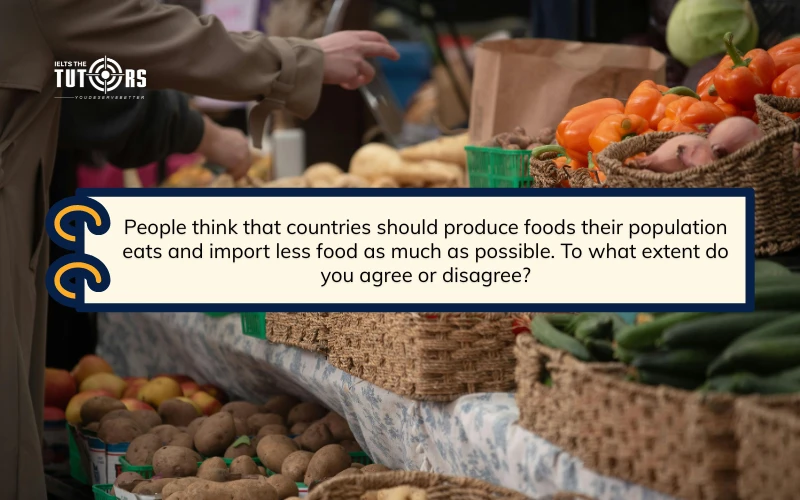
Đề bài: People think that countries should produce foods their population eats and import less food as much as possible. To what extent do you agree or disagree?
Phân tích đề bài:
- Dạng bài: Opinion Essay (Agree/Disagree)
- Keyword chủ chốt: produce foods, population eats, import less food, self-sufficiency in food production
- Hướng phát triển: Bài viết theo hướng partially agree (đồng ý một phần). Sản xuất lương thực trong nước có lợi ích về an ninh lương thực và kinh tế, nhưng việc nhập khẩu hoàn toàn hạn chế là không thực tế do điều kiện địa lý, khí hậu và nhu cầu đa dạng của người dân.
Dàn bài gợi ý:
Introduction
- Paraphrase đề bài
- Thesis statement: Đồng ý một phần – cân bằng giữa sản xuất trong nước và nhập khẩu
Body 1 – Ủng hộ việc tự sản xuất
- An ninh lương thực: Giảm phụ thuộc vào nguồn cung quốc tế
- Lợi ích kinh tế: Tạo việc làm cho nông dân, phát triển ngành nông nghiệp
- Giảm khí thải carbon từ vận chuyển quốc tế
Body 2 – Tại sao không thể hạn chế hoàn toàn nhập khẩu
- Điều kiện địa lý/khí hậu không phù hợp cho một số loại cây trồng
- Nhu cầu đa dạng thực phẩm của người tiêu dùng hiện đại
- Chi phí sản xuất trong nước có thể cao hơn nhập khẩu
Conclusion
- Tóm tắt quan điểm: Cân bằng là tốt nhất
- Khuyến nghị: Ưu tiên sản xuất trong nước nhưng vẫn duy trì nhập khẩu hợp lý
Bài mẫu Writing task 2 Food topic:
There is a growing belief that nations ought to prioritize domestic food production to meet their citizens' dietary needs while minimizing reliance on imported goods. While I acknowledge the merits of food self-sufficiency, I believe that completely restricting imports would be neither practical nor beneficial.
On the one hand, producing food domestically offers significant advantages for national security and economic stability. When countries can grow their own food, they become less vulnerable to global supply chain disruptions, price fluctuations, and geopolitical tensions that might affect international trade. Furthermore, supporting local agriculture creates employment opportunities for farmers and stimulates rural economies. From an environmental perspective, reducing food imports also means fewer carbon emissions from long-distance transportation, which contributes to combating climate change.
On the other hand, completely eliminating food imports is unrealistic and potentially harmful. Firstly, geographical and climatic conditions make it impossible for many countries to cultivate certain crops. For instance, tropical fruits cannot grow in cold Nordic countries, while wheat production is challenging in hot, arid regions. Secondly, modern consumers expect dietary diversity and access to international cuisines, which domestic production alone cannot satisfy. Finally, importing certain foods may actually be more cost-effective than attempting to produce them locally under unsuitable conditions, as this would require expensive infrastructure and technology.
In conclusion, while I support the idea of strengthening domestic food production for security and economic reasons, I believe that maintaining balanced trade relationships is essential. Countries should focus on optimizing local agriculture for foods suited to their environment while continuing to import products that cannot be efficiently produced domestically. This approach ensures both food security and consumer satisfaction.
(270 words, band 8.0)
Từ vựng ghi điểm:
- food self-sufficiency: tự cung tự cấp lương thực
- supply chain disruptions: gián đoạn chuỗi cung ứng
- geopolitical tensions: căng thẳng địa chính trị
- carbon emissions: khí thải carbon
- climatic conditions: điều kiện khí hậu
- dietary diversity: đa dạng chế độ ăn
- cost-effective: hiệu quả về chi phí
Kết luận
Tóm lại, để làm tốt IELTS Writing Task 2 Food, bạn nên chuẩn bị ý tưởng theo từng nhóm vấn đề như sức khỏe, môi trường, sản xuất thực phẩm và lãng phí thức ăn. Thay vì học thuộc quá nhiều luận điểm, hãy tập trung hiểu cách phát triển ý và sử dụng từ vựng đúng ngữ cảnh. IELTS The Tutors hy vọng những gợi ý trong bài sẽ giúp bạn viết bài rõ ràng, thuyết phục và tiến gần hơn đến band điểm mong muốn.