
Các đề thi về Art trong IELTS Writing Task 2 thường xoay quanh các vấn đề về năng khiếu nghệ thuật, giáo dục sáng tạo đến ngân sách công và tác động của công nghệ. Trong bài viết này, IELTS The Tutors sẽ giúp bạn hệ thống các ý tưởng hay, từ vựng hữu ích và cách tiếp cận những dạng đề Art Writing Task 2 thường gặp, giúp bạn có thể tự luyện viết tại nhà mà vẫn đạt hiệu quả.
Các vấn đề thường gặp chủ đề Art trong IELTS Writing task 2
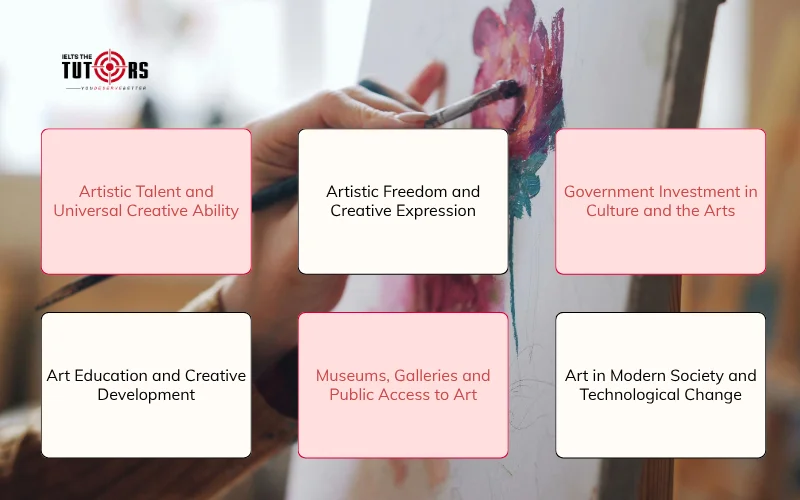
Trong IELTS Writing Task 2, Art không chỉ giới hạn ở hội họa hay các tác phẩm trong bảo tàng mà còn liên quan đến giáo dục, tự do sáng tạo, ngân sách công và sự phát triển của công nghệ.
Dưới đây là những vấn đề thường gặp trong IELTS Writing Task 2 Art topics:
- Khả năng nghệ thuật là năng khiếu bẩm sinh hay có thể phát triển thông qua học tập và luyện tập.
- Mức độ tự do của nghệ sĩ khi thể hiện suy nghĩ, cảm xúc và quan điểm xã hội.
- Việc chính phủ nên ưu tiên ngân sách cho nghệ thuật hay các dịch vụ thiết yếu như y tế và giáo dục.
- Vai trò của nghệ thuật trong chương trình học và sự phát triển toàn diện của học sinh.
- Vai trò của bảo tàng, phí vào cửa và việc lựa chọn tác phẩm địa phương hoặc quốc tế để trưng bày.
- Tác động của công nghệ, bảo tàng trực tuyến và trí tuệ nhân tạo đến cách nghệ thuật được sáng tạo và thưởng thức.
Ý tưởng triển khai chủ đề Art Writing task 2
Với chủ đề Art, bạn nên chuẩn bị các ý tưởng về khả năng sáng tạo của con người và vai trò của nghệ thuật trong giáo dục, văn hóa và đời sống xã hội. Dưới đây là một số ideas hữu ích theo từng dạng đề Art Writing task 2:
Artistic Talent and Universal Creative Ability
Đề bài: Some people believe that anyone can produce worthwhile art, while others argue that high-quality art requires special talent and ability. Discuss both views and give your own opinion.
Dạng bài: Discussion Essay
Yêu cầu bài viết:
- Thảo luận quan điểm 1: Bất kỳ ai cũng có thể tạo ra những tác phẩm nghệ thuật có giá trị.
- Thảo luận quan điểm 2: Nghệ thuật chất lượng cao đòi hỏi tài năng và khả năng đặc biệt.
- Đưa ra ý kiến cá nhân về vai trò của tài năng và sự nỗ lực trong quá trình sáng tạo nghệ thuật.
Ý tưởng triển khai bài Writing task 2:
| Anyone Can Create Art | Art Requires Special Talent |
|
|
Artistic Freedom and Creative Expression
Đề bài: Creative artists should be free to express their ideas through writing, painting, music or film without government restrictions. To what extent do you agree or disagree?
Dạng bài: Agree or Disagree
Yêu cầu bài viết:
- Đánh giá vai trò của quyền tự do sáng tạo trong nghệ thuật.
- Xem xét những lý do ủng hộ việc nghệ sĩ được tự do thể hiện quan điểm và ý tưởng.
- Cân nhắc các trường hợp có thể cần giới hạn, chẳng hạn như nội dung thù ghét, bạo lực hoặc không phù hợp với trẻ em.
- Đưa ra lập trường rõ ràng về mức độ tự do nghệ thuật phù hợp.
Ý tưởng triển khai bài Writing task 2:
| Agree | Disagree |
|
|
Government Investment in Culture and the Arts
Đề bài: Some people believe governments should financially support musicians, painters and poets, while others consider this a misuse of public money. Discuss both views and give your opinion.
Dạng bài: Discussion Essay
Yêu cầu bài viết:
- Thảo luận quan điểm 1: Chính phủ nên hỗ trợ tài chính cho nghệ sĩ và các hoạt động nghệ thuật.
- Thảo luận quan điểm 2: Việc sử dụng ngân sách công cho nghệ thuật là không cần thiết và có thể gây lãng phí.
- Đưa ra ý kiến cá nhân về vai trò phù hợp của chính phủ trong việc hỗ trợ nghệ thuật.
Ý tưởng triển khai bài Writing task 2:
| Government should support the arts | Public funding may be misused |
|
|
Art Education and Creative Development
Đề bài: Art subjects such as painting and drawing are as important to children’s development as academic subjects and should be compulsory in high school. To what extent do you agree or disagree?
Dạng bài: Agree or Disagree
Yêu cầu bài viết:
- Đánh giá tầm quan trọng của môn nghệ thuật so với các môn học thuật.
- Xem xét vai trò của nghệ thuật đối với sự phát triển sáng tạo, cảm xúc và nhận thức của trẻ.
- Cân nhắc tính khả thi của việc đưa nghệ thuật thành môn học bắt buộc ở trường trung học.
- Đưa ra lập trường rõ ràng về vị trí phù hợp của nghệ thuật trong giáo dục.
Ý tưởng triển khai bài Writing task 2:
| Agree | Disagree |
|
|
Museums, Galleries and Public Access to Art
Đề bài: Some museums require visitors to pay an admission fee, while others offer free entry. Do the advantages of charging admission outweigh the disadvantages?
Dạng bài: Advantages Outweigh Disadvantages
Yêu cầu bài viết:
- Xác định lợi ích của việc thu phí vào cửa bảo tàng, chẳng hạn như tạo doanh thu, hỗ trợ bảo trì và nâng cao chất lượng dịch vụ.
- Phân tích những hạn chế của việc thu phí, gồm rào cản tiếp cận, bất bình đẳng và ảnh hưởng đến cơ hội giáo dục.
- So sánh và đánh giá liệu lợi ích của chính sách này có vượt trội hơn các bất lợi hay không.
- Đưa ra quan điểm rõ ràng về việc bảo tàng có nên thu phí vào cửa.
Ý tưởng triển khai bài Writing task 2:
| Advantages | Disadvantages |
|
|
Art in Modern Society and Technological Change
Đề bài: People continue to value artists despite major advances in science and technology. Why is this the case? Are the arts as important as science and technology?
Dạng bài: Two-part Question
Yêu cầu bài viết:
- Phần 1: Giải thích vì sao nghệ thuật vẫn được coi trọng trong thời đại khoa học và công nghệ.
- Phần 2: Đánh giá liệu nghệ thuật có vai trò quan trọng ngang với khoa học và công nghệ hay không.
- Cần trả lời đầy đủ cả hai câu hỏi và phân bổ dung lượng cân bằng cho từng phần.
Ý tưởng triển khai bài Writing task 2:
| Why Are the Arts Still Valued? | Comparison with Science and Technology |
|
|
Xem thêm:
Từ vựng & collocation ăn điểm IELTS Writing task 2 Art topic
Từ vựng hay về topic Art Writing task 2
| Từ vựng | Từ loại | Ý nghĩa |
| artistic talent | noun phrase | năng khiếu nghệ thuật |
| creative ability | noun phrase | khả năng sáng tạo |
| innate talent | noun phrase | tài năng bẩm sinh |
| acquired skill | noun phrase | kỹ năng có được nhờ học tập và luyện tập |
| creativity | noun | khả năng sáng tạo |
| imagination | noun | trí tưởng tượng |
| self-expression | noun | sự thể hiện suy nghĩ và cảm xúc cá nhân |
| artistic freedom | noun phrase | tự do nghệ thuật |
| freedom of expression | noun phrase | quyền tự do biểu đạt |
| censorship | noun | sự kiểm duyệt |
| social responsibility | noun phrase | trách nhiệm đối với xã hội |
| public funding | noun phrase | nguồn tài chính từ ngân sách nhà nước |
| cultural institution | noun phrase | tổ chức văn hóa |
| cultural heritage | noun phrase | di sản văn hóa |
| performing arts | noun phrase | nghệ thuật biểu diễn |
| visual arts | noun phrase | nghệ thuật thị giác |
| art education | noun phrase | giáo dục nghệ thuật |
| school curriculum | noun phrase | chương trình học |
| museum | noun | bảo tàng |
| art gallery | noun phrase | phòng trưng bày nghệ thuật |
| exhibition | noun | cuộc triển lãm |
| artefact | noun | hiện vật có giá trị lịch sử hoặc văn hóa |
| admission fee | noun phrase | phí vào cửa |
| public access | noun phrase | khả năng tiếp cận của công chúng |
| local artist | noun phrase | nghệ sĩ địa phương |
| cultural identity | noun phrase | bản sắc văn hóa |
| digital art | noun phrase | nghệ thuật số |
| virtual museum | noun phrase | bảo tàng trực tuyến |
| artistic value | noun phrase | giá trị nghệ thuật |
| appreciate | verb | trân trọng, hiểu được giá trị |
| preserve | verb | bảo tồn |
| subsidise | verb | trợ cấp |
| exhibit | verb | trưng bày |
| cultivate | verb | nuôi dưỡng, phát triển |
Collocations nên học chủ đề Art Writing task 2
| Collocations | Ý nghĩa |
| possess natural artistic talent | có năng khiếu nghệ thuật bẩm sinh |
| develop creative ability | phát triển khả năng sáng tạo |
| acquire artistic skills through practice | phát triển kỹ năng nghệ thuật thông qua luyện tập |
| encourage individual creativity | khuyến khích khả năng sáng tạo cá nhân |
| express personal ideas and emotions | thể hiện ý tưởng và cảm xúc cá nhân |
| provide an outlet for self-expression | tạo cơ hội để thể hiện bản thân |
| impose restrictions on artistic expression | áp đặt giới hạn đối với sự thể hiện nghệ thuật |
| balance artistic freedom with social responsibility | cân bằng tự do nghệ thuật với trách nhiệm xã hội |
| allocate public funds to the arts | phân bổ ngân sách công cho nghệ thuật |
| invest in cultural programmes | đầu tư vào các chương trình văn hóa |
| support local artists | hỗ trợ nghệ sĩ địa phương |
| preserve cultural heritage | bảo tồn di sản văn hóa |
| promote national culture | quảng bá văn hóa dân tộc |
| rely on private sponsorship | phụ thuộc vào nguồn tài trợ tư nhân |
| include art in the school curriculum | đưa nghệ thuật vào chương trình học |
| develop children’s imagination | phát triển trí tưởng tượng của trẻ |
| encourage independent thinking | khuyến khích tư duy độc lập |
| contribute to well-rounded development | góp phần vào sự phát triển toàn diện |
| preserve historical artefacts | bảo tồn các hiện vật lịch sử |
| display works of art | trưng bày các tác phẩm nghệ thuật |
| provide educational opportunities | mang lại cơ hội học tập |
| improve public access to art | cải thiện khả năng tiếp cận nghệ thuật của công chúng |
| charge an admission fee | thu phí vào cửa |
| attract a wider audience | thu hút nhiều nhóm công chúng hơn |
| showcase local artists | giới thiệu tác phẩm của nghệ sĩ địa phương |
| promote cross-cultural understanding | thúc đẩy sự hiểu biết giữa các nền văn hóa |
| make art more widely accessible | giúp nghệ thuật dễ tiếp cận hơn |
| access exhibitions online | tiếp cận triển lãm trực tuyến |
| visit virtual museums | tham quan bảo tàng trực tuyến |
| use AI to generate artwork | sử dụng AI để tạo tác phẩm nghệ thuật |
| reach a global audience | tiếp cận công chúng toàn cầu |
| appreciate the cultural value of art | trân trọng giá trị văn hóa của nghệ thuật |
Bài mẫu tham khảo chủ đề Art trong IELTS Writing Task 2
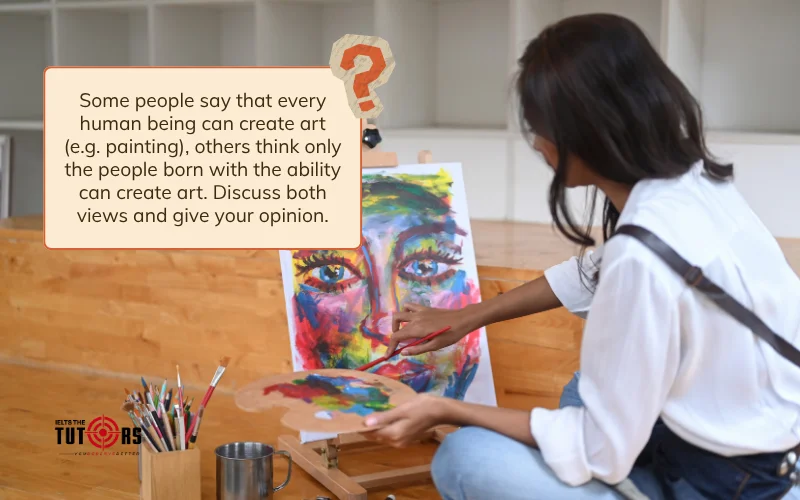
Đề bài: Some people say that every human being can create art (e.g. painting), others think only the people born with the ability can create art. Discuss both views and give your opinion.
Phân tích đề bài:
- Dạng bài: Discussion Essay (Discuss both views and give your opinion)
- Keyword chủ chốt: every human being can create art, born with the ability, painting and other art forms, artistic talent vs. learned skill, nature vs. nurture debate
- Hướng phát triển: Bài viết cần thảo luận hai quan điểm: ai cũng có thể học nghệ thuật, hoặc tài năng nghệ thuật là bẩm sinh. Ý kiến cá nhân nên rõ ràng và có thể theo hướng cân bằng rằng cả năng khiếu lẫn rèn luyện đều quan trọng.
Dàn bài gợi ý:
Introduction:
- Giới thiệu tranh luận về việc khả năng sáng tạo nghệ thuật đến từ bẩm sinh hay có thể rèn luyện.
- Thảo luận cả hai quan điểm và nghiêng về ý kiến rằng nghệ thuật có thể học được.
Body 1 – Quan điểm cho rằng tài năng nghệ thuật là bẩm sinh:
- Một số người bộc lộ năng khiếu nổi bật từ nhỏ, như Mozart hoặc Picasso.
- Tài năng tự nhiên giúp họ tiếp thu kỹ thuật nhanh và tạo ra phong cách riêng.
- Không phải ai cũng đạt trình độ chuyên nghiệp dù luyện tập nhiều.
Body 2 – Quan điểm cho rằng ai cũng có thể học nghệ thuật:
- Nghệ thuật là kỹ năng có thể phát triển qua giáo dục và luyện tập.
- Nhiều nghệ sĩ thành công nhờ sự kiên trì và đam mê.
- Sáng tạo nghệ thuật còn giúp con người thể hiện bản thân và thư giãn, không nhất thiết để trở thành chuyên nghiệp.
Conclusion: Dù năng khiếu bẩm sinh mang lại lợi thế, phần lớn mọi người vẫn có thể sáng tạo nghệ thuật nếu có đam mê và luyện tập.
Bài mẫu Art Writing task 2:
There is an ongoing debate about whether artistic ability is an inborn gift or a skill that can be developed. While some people believe that only naturally talented individuals can create valuable art, others argue that anyone can learn to do so. In my opinion, natural ability is helpful, but most people can develop artistic skills through training and practice.
Those who believe that artistic talent is innate often refer to gifted individuals who show exceptional ability from an early age. Famous figures such as Mozart and Picasso demonstrated remarkable creativity when they were young, suggesting that some people are naturally suited to artistic work. This talent may allow them to understand difficult techniques more quickly and develop an original style. Supporters of this view also argue that practice has limits, as an average learner may never reach the level of mastery achieved by an exceptionally gifted artist.
However, I believe that art is largely a skill that can be learned. Regular practice and proper instruction can help people improve techniques such as drawing, composition or musical performance. Many successful artists have developed their abilities through years of effort rather than depending entirely on natural talent. More importantly, creating art is not only about becoming a professional. It can also allow people to express emotions, reduce stress and enjoy their free time. Therefore, even those without outstanding talent can create meaningful work and benefit from the process.
In conclusion, although natural talent can give some people an advantage, it is not essential for artistic creation. With guidance, practice and genuine interest, most individuals can improve their abilities and create art at a personally meaningful level.
(275 words, band 7.5)
Từ vựng ghi điểm:
- innate/inborn (adj): bẩm sinh
- child prodigies (n): thần đồng
- exceptional abilities (n): khả năng xuất sắc
- remarkable aptitude (n): năng khiếu đáng chú ý
- inherent gift (n): tài năng vốn có
- artistic expression (n): sự biểu đạt nghệ thuật
- level of mastery (n): trình độ thành thạo
- persistent practice (n): luyện tập kiên trì
- dedicated effort (n): nỗ lực tận tâm
- artistic capabilities (n): khả năng nghệ thuật
- personal expression (n): sự thể hiện cá nhân
- emotional release (n): giải thoát cảm xúc
- derive satisfaction from (v): đạt được sự thỏa mãn từ
- artistic pursuits (n): theo đuổi nghệ thuật
Kết luận
Hy vọng những ý tưởng và từ vựng ghi điểm chủ đề Nghệ thuật đã giúp bạn dễ định hướng hơn khi gặp đề thi về Art Writing Task 2. Thay vì cố ghi nhớ quá nhiều từ khó, bạn nên tập trung xây dựng lập luận rõ ràng, chọn ví dụ phù hợp và luyện cách diễn đạt tự nhiên. Đừng quên theo dõi IELTS The Tutors để có thêm nhiều ý tưởng hay về các topic khác nhé.