


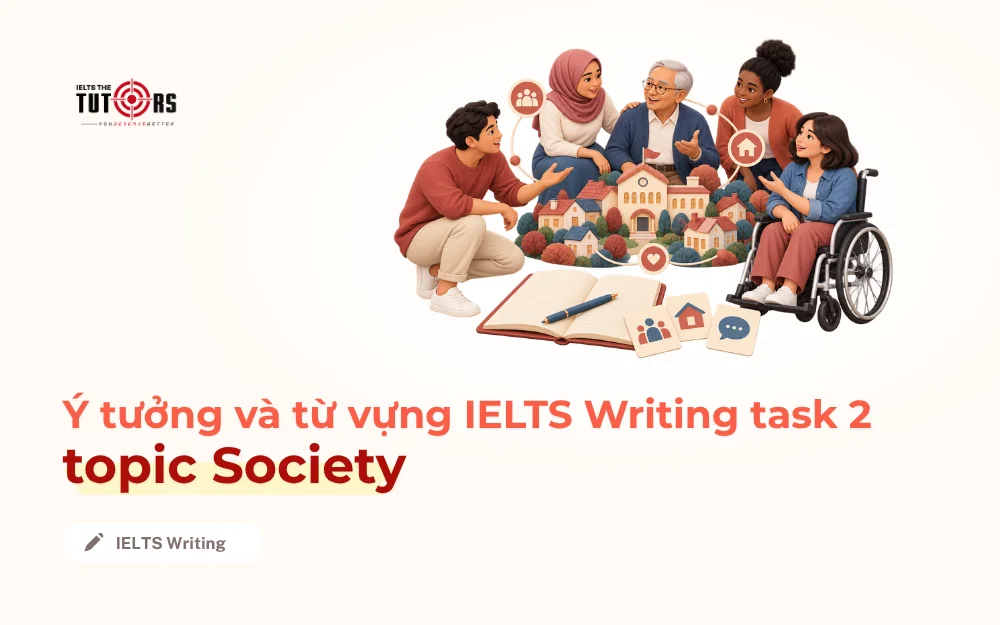
Society là một chủ đề quen thuộc nhưng khá rộng trong IELTS Writing Task 2, bao gồm nhiều vấn đề như bất bình đẳng, dân số già, đô thị hóa, lối sống tiêu dùng và trách nhiệm của chính phủ. Trong bài viết này, IELTS The Tutors sẽ tổng hợp các dạng đề thường gặp, gợi ý cách phát triển ý và cung cấp những từ vựng dễ áp dụng cho topic Society IELTS Writing Task 2. Cùng tìm hiểu để chuẩn bị bài viết mạch lạc và đúng trọng tâm hơn nhé!
Các vấn đề thường gặp trong chủ đề Society Writing task 2
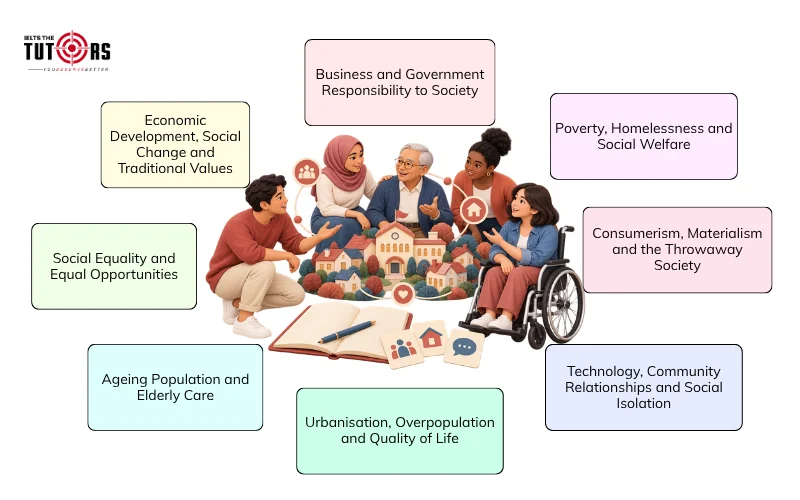
Chủ đề Society IELTS Writing task 2 có phạm vi khá rộng, xoay quanh những thay đổi trong đời sống cộng đồng và các vấn đề mà xã hội hiện đại đang phải đối mặt. Đề bài có thể yêu cầu thí sinh phân tích sự đánh đổi giữa phát triển kinh tế và giá trị truyền thống, tác động của đô thị hóa, tình trạng bất bình đẳng hoặc trách nhiệm của chính phủ và doanh nghiệp.
Dưới đây là những vấn đề thường gặp trong chủ đề Society Writing Task 2:
- Mối quan hệ giữa tăng trưởng kinh tế, mức sống và những thay đổi trong giá trị xã hội. Đề bài thường yêu cầu đánh giá liệu lợi ích vật chất có bù đắp được sự suy giảm của truyền thống, tinh thần cộng đồng và mối quan hệ giữa con người hay không.
- Những vấn đề liên quan đến bình đẳng thu nhập, cơ hội học tập, việc làm và khả năng cải thiện vị thế xã hội. Thí sinh có thể phải thảo luận liệu xã hội nên thu hẹp khoảng cách giữa các nhóm dân cư hay ưu tiên cạnh tranh dựa trên năng lực cá nhân.
- Tác động của tuổi thọ tăng và tỷ lệ người cao tuổi ngày càng lớn đối với hệ thống y tế, lương hưu, lực lượng lao động và ngân sách nhà nước. Một hướng đề phổ biến khác là xác định trách nhiệm chăm sóc người cao tuổi thuộc về gia đình hay chính phủ.
- Những hệ quả của quá trình đô thị hóa nhanh, bao gồm thiếu nhà ở, ùn tắc giao thông, ô nhiễm, quá tải dịch vụ công và chất lượng sống suy giảm. Đề bài cũng có thể yêu cầu đề xuất giải pháp cải thiện điều kiện sống tại các thành phố lớn.
- Ảnh hưởng của mạng xã hội, điện thoại thông minh và giao tiếp trực tuyến đến mối quan hệ giữa người với người. Công nghệ có thể giúp duy trì kết nối ở khoảng cách xa nhưng cũng có nguy cơ làm giảm giao tiếp trực tiếp và khiến một bộ phận người dùng trở nên cô lập.
- Nguyên nhân con người ngày càng coi trọng tài sản, mua sắm quá mức và thường xuyên thay thế sản phẩm vẫn còn sử dụng được. Các đề thuộc nhóm này thường khai thác ảnh hưởng của quảng cáo, hàng hóa giá rẻ, vòng đời sản phẩm ngắn và văn hóa dùng rồi bỏ.
- Nguyên nhân dẫn đến nghèo đói, thất nghiệp và tình trạng vô gia cư, cùng hiệu quả của các chính sách như trợ cấp, nhà ở xã hội, giáo dục và đào tạo nghề. Thí sinh cần phân biệt giữa giải pháp hỗ trợ trước mắt và biện pháp xử lý nguyên nhân lâu dài.
- Vai trò của chính phủ và doanh nghiệp trong việc giải quyết các vấn đề xã hội. Đề bài có thể đặt câu hỏi liệu doanh nghiệp chỉ cần tạo ra lợi nhuận và việc làm hay còn phải bảo vệ người lao động, đóng góp cho cộng đồng và thực hiện trách nhiệm xã hội.
Ý tưởng triển khai chủ đề Society trong IELTS Writing task 2
Để viết tốt IELTS Writing Task 2 topic Society, bạn cần xác định rõ vấn đề, đối tượng chịu ảnh hưởng và bên có trách nhiệm giải quyết. Hãy triển khai ý theo mạch nguyên nhân – hệ quả – giải pháp để bài viết rõ ràng và tránh lan man. Dưới đây là một số ý tưởng bạn có thể tham khảo:
Economic Development, Social Change and Traditional Values
Đề bài: Traditional ideas from older generations are often not helpful for young people in preparing for modern life. To what extent do you agree or disagree?
Phân tích đề bài:
Đây là dạng bài Agree/Disagree. Bạn cần đánh giá quan điểm cho rằng những tư tưởng truyền thống từ thế hệ trước không còn hữu ích với người trẻ trong cuộc sống hiện đại, sau đó nêu rõ mức độ đồng ý của mình.
Bạn có thể chọn hướng không đồng ý hoàn toàn. Dù một số quan niệm cũ đã không còn phù hợp, nhiều giá trị như đạo đức, trách nhiệm, sự tôn trọng và tính kiên trì vẫn rất cần thiết. Vì vậy, cách tiếp cận hợp lý nhất là kết hợp những giá trị truyền thống phù hợp với tư duy hiện đại.
Dưới đây là một số ý tưởng bạn có thể dùng để triển khai bài IELTS Writing Task 2:
| Agree | Disagree |
|
|
Dàn bài gợi ý:
- Introduction: Acknowledge that some traditional ideas no longer suit modern life, but argue that core values still remain useful.
- Body 1: Explain which ideas may be outdated, such as strict gender roles, rigid social expectations, authoritarian parenting, and fixed views about careers, marriage, and stability.
- Body 2: Discuss the lasting value of honesty, discipline, compassion, financial responsibility, resilience, respect, family support, and long-term thinking.
- Conclusion: Reaffirm that traditional values should not be rejected completely; outdated practices can be adapted, while timeless principles should still guide younger generations.
Social Equality and Equal Opportunities
Đề bài: In recent years, there has been growing interest in the relationship between equality and personal achievement. Some people believe that individuals can achieve more in egalitarian societies. Others believe that high levels of personal achievement are possible only if individuals are free to succeed or fail according to their individual merits. Discuss both views and give your own opinion.
Phân tích đề bài:
Đây là dạng Discussion Essay with Opinion, yêu cầu bạn phân tích hai quan điểm trước khi nêu ý kiến cá nhân.
- Quan điểm 1: Con người có thể đạt được nhiều thành tựu hơn trong một xã hội bình đẳng.
- Quan điểm 2: Thành công chỉ có được khi mỗi cá nhân được tự do cạnh tranh và được đánh giá dựa trên năng lực.
Để bài viết thuyết phục hơn, bạn nên công nhận điểm hợp lý của cả hai phía. Một xã hội lý tưởng cần đảm bảo cơ hội bình đẳng cho mọi người, đồng thời vẫn tạo điều kiện để mỗi cá nhân phát huy năng lực và được ghi nhận xứng đáng.
Dưới đây là một số ý tưởng bạn có thể dùng để triển khai bài IELTS Writing Task 2:
| Egalitarian Societies Enable Greater Achievement | Meritocracy and Freedom Are Essential for Achievement |
|
|
Dàn bài gợi ý:
- Introduction: Acknowledge the debate between equality and meritocracy, and argue that the best society should provide equal opportunities while rewarding individual achievement.
- Body 1: Explain how equal access to education, healthcare, social support, and career opportunities allows people from all backgrounds to develop their potential.
- Body 2: Discuss why rewards, competition, personal freedom, and responsibility are necessary to motivate effort, encourage innovation, and recognise talent.
- Conclusion: Reaffirm that equality and meritocracy should work together: everyone needs a fair starting point, but success should still be rewarded according to ability and effort.
Ageing Population and Elderly Care
Đề bài: Some people believe that the government should provide financial support and care for elderly people, while others think that this is primarily the responsibility of families. Discuss both views and give your opinion.
Phân tích đề bài:
Đây là dạng bài Discussion Essay with Opinion. Với dạng đề này, bạn cần:
- Phân tích quan điểm cho rằng chính phủ nên hỗ trợ tài chính và chăm sóc người cao tuổi.
- Phân tích quan điểm cho rằng gia đình phải chịu trách nhiệm chính.
- Nêu rõ ý kiến cá nhân.
Bạn có thể lựa chọn hướng lập luận cân bằng: chính phủ nên bảo đảm những hỗ trợ thiết yếu như lương hưu và dịch vụ y tế, trong khi gia đình vẫn cần quan tâm và chăm sóc người lớn tuổi. Đây là cách tiếp cận hợp lý vì trách nhiệm được chia sẻ giữa cả hai bên.
Dưới đây là một số ý tưởng bạn có thể dùng để phát triển bài IELTS Writing Task 2:
| Government Responsibility | Family Responsibility |
|
|
Dàn bài gợi ý:
- Introduction: Acknowledge the debate over who should care for older people, and argue that governments and families should share this responsibility.
- Body 1: Explain why governments should provide pensions, healthcare, professional care, and protection for older people, especially those without family support.
- Body 2: Discuss the role of families in offering personal care, emotional support, companionship, and a familiar living environment.
- Conclusion: Reaffirm that neither side can meet every need alone; government support should protect older people from poverty and neglect, while family involvement provides the human connection they need.
Urbanisation, Overpopulation and Quality of Life
Đề bài: More and more people are moving from rural areas to large cities. What problems does this cause? What measures could be taken to improve the quality of life in urban areas?
Phân tích đề bài:
Đây là dạng bài Problems & Solutions. Khi làm bài, bạn cần tập trung vào hai yêu cầu chính: phân tích những vấn đề do làn sóng di cư từ nông thôn ra thành phố gây ra và đề xuất giải pháp để cải thiện chất lượng sống ở đô thị.
Dưới đây là một số ý tưởng bạn có thể dùng để triển khai bài IELTS Writing Task 2:
| Problems | Solutions |
|
|
Dàn bài gợi ý:
- Introduction: Acknowledge that rural-to-urban migration causes serious urban problems, and state that better planning and rural development are needed to improve city life.
- Body 1: Explain the main problems, including overcrowding, traffic congestion, housing shortages, overloaded infrastructure, unemployment, pollution, crime, and pressure on public services.
- Body 2: Present solutions such as improving public transport, building affordable housing, upgrading infrastructure, protecting green spaces, creating jobs, strengthening environmental rules, and investing in rural areas.
- Conclusion: Reaffirm that governments must combine sustainable urban planning with rural development to reduce migration pressure and create more liveable cities.
Technology, Community Relationships and Social Isolation
Đề bài: The use of social media is replacing face-to-face interaction among many people in society. Do the advantages of this development outweigh the disadvantages?
Phân tích đề bài:
Đây là dạng bài Advantages/Disadvantages. Đề bài yêu cầu bạn xem xét cả lợi ích và hạn chế của công nghệ hiện đại trong giao tiếp, sau đó đưa ra quan điểm liệu lợi ích có nhiều hơn bất lợi hay không. Khi viết, bạn nên phân tích cả hai khía cạnh nhưng cần thể hiện rõ lập trường của mình và sử dụng các luận điểm để bảo vệ quan điểm đó.
Dưới đây là một số ý tưởng bạn có thể tham khảo để triển khai bài viết Writing task 2:
| Advantages | Disadvantages |
|
|
Dàn bài gợi ý:
- Introduction: Acknowledge both enhanced global connectivity and concerns about declining face-to-face interaction, then state that advantages outweigh disadvantages.
- Body 1: Discuss advantages – maintaining long-distance relationships, creating global communities, enabling remote collaboration, and supporting diverse communication preferences.
- Body 2: Discuss disadvantages – reducing quality of in-person interactions, creating superficial connections, increasing isolation, and weakening community bonds.
- Conclusion: Reaffirm that despite valid concerns about social isolation, the communication benefits of technology are more significant overall.
Consumerism, Materialism and the Throwaway Society
Đề bài: Nowadays, people frequently replace possessions rather than repairing and continuing to use them. Why is this happening? What problems can this trend cause?
Phân tích đề bài:
Đây là dạng bài Outweigh, yêu cầu phân tích nguyên nhân và hậu quả. Bạn cần giải thích:
- Vì sao nhiều người thường xuyên vứt bỏ đồ cũ để mua đồ mới.
- Làm rõ những tác động của thói quen này đến môi trường, xã hội và kinh tế.
Dưới đây là ideas triển khai bài Writing task 2 để bài viết mạch lạc và dễ thuyết phục hơn:
| Reasons | Problems Caused |
|
|
Dàn bài gợi ý:
- Introduction: Acknowledge the throwaway culture phenomenon and state that problems significantly outweigh any economic benefits.
- Body 1: Explain reasons – aggressive marketing, planned obsolescence, cheap production costs, social pressure, and rapid trend cycles in fashion and technology.
- Body 2: Discuss problems – environmental destruction and resource depletion, climate change, loss of repair culture, financial pressures, and labor exploitation.
- Conclusion: Reaffirm that despite short-term economic gains, the environmental and social costs of throwaway society are far more damaging.
Poverty, Homelessness and Social Welfare
Đề bài: Some people believe that education is the key to tackling hunger worldwide, while others feel that the answer lies in food aid. Discuss both views and give your opinion.
Phân tích đề bài:
Đây là dạng bài Discuss both views + Opinion, yêu cầu bạn phân tích hai cách giảm nghèo:
- Dung cấp giáo dục và y tế miễn phí hoặc tạo thêm việc làm.
- Nêu rõ giải pháp nào hiệu quả hơn hoặc giải thích vì sao nên kết hợp cả hai.
Dưới đây là một số ý tưởng bạn có thể tham khảo để phát triển bài Writing task 2:
| Free Education and Healthcare Approach | Job Creation Approach |
|
|
Dàn bài gợi ý:
- Introduction: Introduce the debate between providing free services versus job creation, then state that both approaches are necessary and complementary.
- Body 1: Discuss free education and healthcare – breaking poverty cycles, preventing medical debt, building skilled workforce, and addressing root causes.
- Body 2: Discuss job creation – providing immediate income and dignity, generating tax revenue, empowering local economies, and reducing welfare dependency.
- Conclusion: Conclude that while both strategies have merit, an integrated approach combining accessible services with employment opportunities is most effective.
Business and Government Responsibility to Society
Đề bài: Some people think that paying taxes is their only responsibility towards society, while others believe that everyone should do more. Discuss both views and give your own opinion.
Phân tích đề bài:
Đây là dạng bài Discuss both views + Opinion. Đề yêu cầu bạn phân tích hai quan điểm:
- Các công ty lớn nên cung cấp cơ sở thể thao và sinh hoạt cộng đồng
- Chính phủ phải chịu trách nhiệm cho vấn đề này.
Sau khi làm rõ lý do của từng bên, bạn cần nêu quan điểm cá nhân về bên nên giữ vai trò chính hoặc cách hai bên có thể cùng chia sẻ trách nhiệm.
Dưới đây là một số ý tưởng bạn có thể tham khảo để phát triển bài Writing task 2:
| Companies Should Provide Facilities | Government Should Provide Facilities |
|
|
Dàn bài gợi ý:
- Introduction: Introduce the debate about responsibility for community facilities, then state that shared responsibility between companies and government is most practical.
- Body 1: Discuss corporate responsibility – companies benefit from communities, have resources and efficiency, create positive relations, and reduce public spending pressure.
- Body 2: Discuss government responsibility – democratic mandate and tax funding, ensuring equal access, preventing commercial control, maintaining standards, and reflecting community priorities.
- Conclusion: Conclude that while government bears primary responsibility for universal provision, corporate contributions should be encouraged through partnerships for optimal community benefit.
Xem thêm:
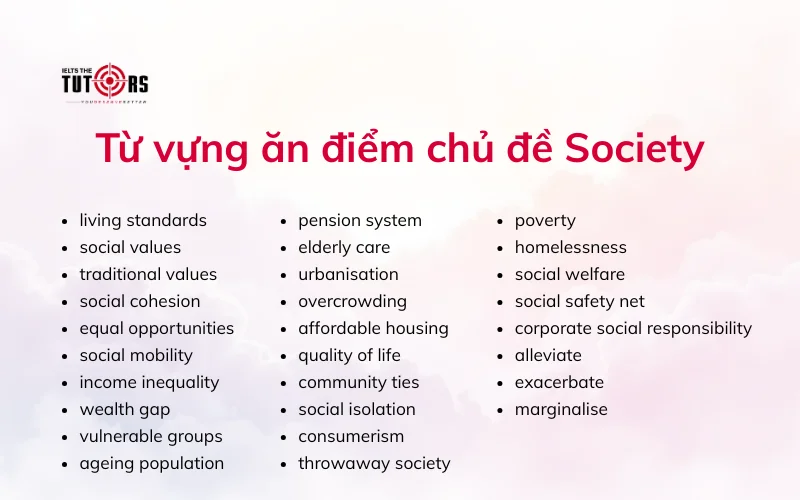
Từ vựng & collocation ăn điểm chủ đề Society
| Từ vựng/Cụm từ | Loại từ | Ý nghĩa |
| living standards | noun phrase | mức sống |
| social values | noun phrase | các giá trị xã hội |
| traditional values | noun phrase | các giá trị truyền thống |
| social cohesion | noun phrase | sự gắn kết xã hội |
| equal opportunities | noun phrase | cơ hội bình đẳng |
| social mobility | noun phrase | khả năng cải thiện vị thế xã hội |
| income inequality | noun phrase | bất bình đẳng thu nhập |
| wealth gap | noun phrase | khoảng cách giàu nghèo |
| vulnerable groups | noun phrase | nhóm dễ bị tổn thương |
| ageing population | noun phrase | dân số già |
| pension system | noun phrase | hệ thống lương hưu |
| elderly care | noun phrase | hoạt động chăm sóc người cao tuổi |
| urbanisation | noun | quá trình đô thị hóa |
| overcrowding | noun | tình trạng quá đông đúc |
| affordable housing | noun phrase | nhà ở có giá phù hợp |
| quality of life | noun phrase | chất lượng cuộc sống |
| community ties | noun phrase | sự gắn kết cộng đồng |
| social isolation | noun phrase | sự cô lập xã hội |
| consumerism | noun | chủ nghĩa tiêu dùng |
| throwaway society | noun phrase | xã hội dùng rồi bỏ |
| poverty | noun | tình trạng nghèo đói |
| homelessness | noun | tình trạng vô gia cư |
| social welfare | noun phrase | phúc lợi xã hội |
| social safety net | noun phrase | mạng lưới an sinh xã hội |
| corporate social responsibility | noun phrase | trách nhiệm xã hội của doanh nghiệp |
| alleviate | verb | làm giảm |
| exacerbate | verb | làm trầm trọng hơn |
| marginalise | verb | đẩy ra bên lề xã hội |
| balance economic progress with social values | verb phrase | cân bằng phát triển kinh tế với các giá trị xã hội |
| provide equal opportunities for all | verb phrase | tạo cơ hội bình đẳng cho mọi người |
| reduce income inequality | verb phrase | giảm bất bình đẳng thu nhập |
| place pressure on pension systems | verb phrase | gây áp lực lên hệ thống lương hưu |
| provide adequate elderly care | verb phrase | cung cấp dịch vụ chăm sóc người cao tuổi đầy đủ |
| place pressure on urban infrastructure | verb phrase | gây áp lực lên cơ sở hạ tầng đô thị |
| strengthen community ties | verb phrase | tăng cường sự gắn kết cộng đồng |
| become socially isolated | verb phrase | trở nên cô lập với xã hội |
| contribute to a throwaway culture | verb phrase | góp phần tạo nên văn hóa dùng rồi bỏ |
| break the cycle of poverty | verb phrase | phá vỡ vòng luẩn quẩn của nghèo đói |
| establish a strong social safety net | verb phrase | xây dựng mạng lưới an sinh xã hội vững chắc |
| fulfil corporate social responsibilities | verb phrase | thực hiện trách nhiệm xã hội của doanh nghiệp |
| allocate public funds to social programmes | verb phrase | phân bổ ngân sách cho các chương trình xã hội |
Tóm lại, để viết tốt IELTS Writing Task 2 topic Society, bạn cần xác định đúng vấn đề, đối tượng chịu ảnh hưởng và bên có trách nhiệm giải quyết. Mỗi luận điểm nên được giải thích rõ, đi kèm hệ quả hoặc ví dụ phù hợp thay vì chỉ liệt kê ý.
IELTS The Tutors hy vọng những gợi ý và từ vựng trong bài sẽ giúp bạn tự tin hơn khi gặp các đề về Society IELTS Writing Task 2. Đừng quên luyện tập thường xuyên và vận dụng ý tưởng linh hoạt để từng bước cải thiện band điểm.