


Urbanization là chủ đề quen thuộc nhưng khá rộng trong IELTS Writing Task 2, bao gồm nhiều vấn đề như di cư, dân số tăng nhanh và áp lực lên cơ sở hạ tầng. Trong bài viết này, IELTS The Tutors sẽ tổng hợp các dạng đề, ý tưởng triển khai, từ vựng và bài mẫu IELTS Writing Task 2 topic Urbanization để giúp bạn chuẩn bị bài viết dễ dàng hơn.
Các vấn đề thường gặp trong chủ đề Urbanization
Trong IELTS Writing Task 2, topic Urbanization thường đề cập đến sự phát triển của các thành phố và những thay đổi xảy ra khi ngày càng nhiều người chuyển đến khu vực đô thị. Các đề bài phổ biến thường xoay quanh nguyên nhân của đô thị hóa, làn sóng di cư, sự gia tăng dân số và việc mở rộng không gian đô thị.
Dưới đây là những vấn đề thường gặp trong chủ đề Urbanization:
- Nhiều người chuyển đến thành phố vì có nhiều cơ hội việc làm, mức thu nhập cao hơn và điều kiện giáo dục, y tế tốt hơn. Bên cạnh đó, sự phát triển của các ngành công nghiệp và dịch vụ cũng khiến đô thị ngày càng mở rộng.
- Việc chuyển đến thành phố có thể giúp người dân tìm được công việc tốt hơn và cải thiện thu nhập. Tuy nhiên, khi số người nhập cư tăng quá nhanh, thành phố dễ rơi vào tình trạng thiếu nhà ở, tắc đường và quá tải dịch vụ công.
- Dân số tăng tạo thêm áp lực cho hệ thống giao thông, trường học, bệnh viện và môi trường. Chi phí sinh hoạt cũng có thể tăng cao, từ đó ảnh hưởng đến chất lượng cuộc sống của người dân.
- Các khu đô thị mới có thể cung cấp thêm nhà ở và giảm áp lực cho khu vực trung tâm. Tuy nhiên, những nơi này cần có đủ việc làm, hệ thống giao thông thuận tiện và các dịch vụ thiết yếu để thu hút người dân đến sinh sống lâu dài.
Một số đề bài mẫu trong chủ đề Urbanization
Topic Urbanization trong IELTS Writing Task 2 thường gắn với sự dịch chuyển dân cư và áp lực lên các thành phố lớn. Dưới đây là một số đề bài về chủ đề đô thị hoá đã từng xuất hiện trong đề thi hoặc forecast những năm vừa qua:
- Urbanization has become one of the common features of economic development in the world. What are the causes and effects of this trend?
- In some countries, many workers move to cities to find employment. Is this a positive or negative development?
- The population of many cities is increasing as people move there for work and better opportunities. What problems does urban overpopulation cause? How can these problems be solved?
- Building new satellite towns outside major cities is the best way to accommodate a growing urban population. To what extent do you agree or disagree?
Ý tưởng triển khai chủ đề Urbanization
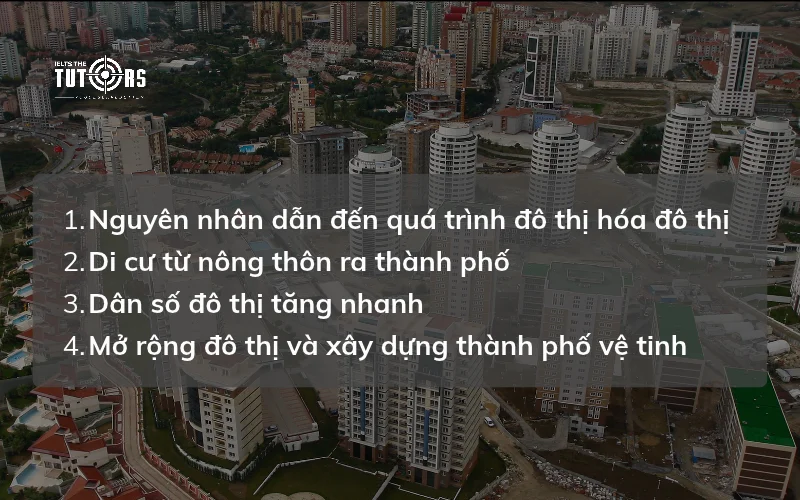
Nguyên nhân dẫn đến quá trình đô thị hóa đô thị
Đề bài: Urbanization has become one of the common features of economic development in the world. What are the causes and effects of this trend?
- Dạng bài: Causes and Effects Essay
- Yêu cầu đề bài: Phân tích những nguyên nhân chính dẫn đến quá trình đô thị hóa và làm rõ các tác động của xu hướng này. Bạn cần trả lời đầy đủ cả hai phần causes và effects, đồng thời có thể đề cập đến cả ảnh hưởng tích cực lẫn tiêu cực.
- Hướng kết luận phù hợp: Tóm tắt các nguyên nhân chính như nhiều cơ hội việc làm, dịch vụ tốt hơn và nhu cầu lao động ở nông thôn giảm. Đồng thời, nhấn mạnh rằng đô thị hóa có thể thúc đẩy kinh tế và đổi mới, nhưng cũng gây quá tải hạ tầng, ô nhiễm và bất bình đẳng nếu không được quản lý tốt.
Ý tưởng triển khai bài Writing task 2:
| Causes | Effects |
|
|
Di cư từ nông thôn ra thành phố
Đề bài: In some countries, many workers move to cities to find employment. Is this a positive or negative development?
- Dạng bài: Positive or Negative Development
- Yêu cầu đề bài: Phân tích xu hướng người lao động rời nông thôn để đến thành phố tìm kiếm việc làm. Sau đó đánh giá đây là một sự phát triển tích cực, tiêu cực hay vừa có lợi vừa có hại.
- Phạm vi phân tích: Làm rõ tác động của xu hướng này đối với người lao động, khu vực đô thị và các vùng nông thôn.
Ý tưởng triển khai bài Writing task 2:
| Positive | Negative |
|
|
Dân số đô thị tăng nhanh
Đề bài: The population of many cities is increasing as people move there for work and better opportunities. What problems does urban overpopulation cause? How can these problems be solved?
- Dạng bài: Problems and Solutions Essay
- Yêu cầu đề bài: Phân tích những vấn đề do dân số đô thị tăng quá nhanh gây ra và đề xuất các giải pháp phù hợp cho: Tình trạng quá tải dân số tại các thành phố dẫn đến những vấn đề gì? và Những biện pháp nào có thể giúp cải thiện tình trạng này?
- Hướng kết luận phù hợp: Tóm tắt những vấn đề nghiêm trọng do dân số đô thị tăng nhanh và nhấn mạnh rằng cần kết hợp nhiều biện pháp như quy hoạch hợp lý, phát triển hạ tầng, phân bố lại dân cư và kiểm soát tốc độ gia tăng dân số tại các thành phố.
Ý tưởng triển khai bài Writing task 2:
| Problems | Solutions |
|
|
Mở rộng đô thị và xây dựng thành phố vệ tinh
Đề bài: Building new satellite towns outside major cities is the best way to accommodate a growing urban population. To what extent do you agree or disagree?
- Dạng bài: Agree or Disagree
- Vấn đề cần làm rõ: Xây dựng các đô thị vệ tinh bên ngoài thành phố lớn có phải là giải pháp tốt nhất để đáp ứng sự gia tăng dân số đô thị hay không?
- Yêu cầu đề bài: Đưa ra mức độ đồng ý, phân tích lợi ích của đô thị vệ tinh và so sánh với các giải pháp khác để đánh giá liệu đây có thực sự là phương án tốt nhất hay không.
- Hướng triển khai phù hợp: Nên đồng ý một phần, vì đô thị vệ tinh có thể giúp giảm áp lực cho thành phố lớn, nhưng cần được kết hợp với quy hoạch đô thị hợp lý, giao thông công cộng thuận tiện và mô hình phát triển đa trung tâm.
Ý tưởng triển khai bài Writing task 2:
| Agree | Disagree |
|
|
Xem thêm:
Phân tích đề bài và bài mẫu IELTS Writing task 2 topic Urbanization
Để bài viết Writing task 2 Urbanization topic có tính liên kết, bạn nên sắp xếp ý theo từng nhóm rõ ràng, đồng thời giải thích cụ thể thay vì chỉ nêu ra hàng loạt vấn đề. Hãy cùng IELTS The Tutors phân tích đề bài và tham khảo bài mẫu sau:
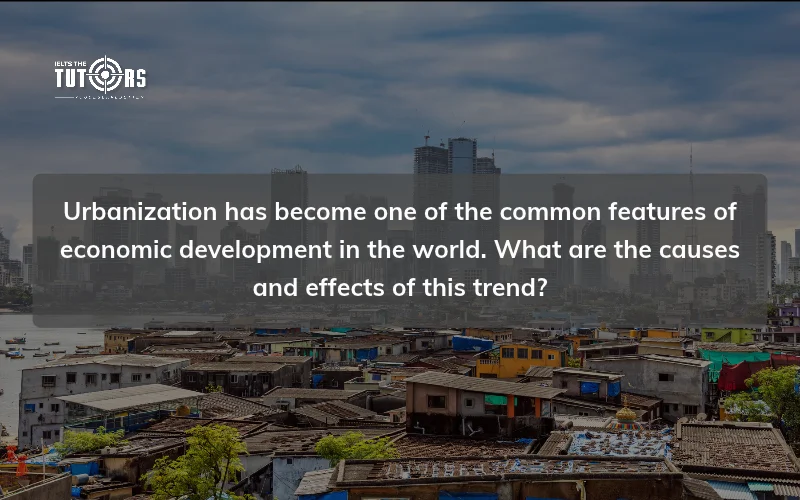
Đề bài: Urbanization has become one of the common features of economic development in the world. What are the causes and effects of this trend?
Phân tích đề bài:
- Dạng bài: Causes and Effects
- Từ khóa chính: urbanization, economic development
- Hướng triển khai: Bài viết nên phân tích các nguyên nhân như cơ hội việc làm, cơ sở hạ tầng tốt hơn, khả năng tiếp cận giáo dục và y tế, cùng sự suy giảm nhu cầu lao động ở nông thôn. Phần tác động có thể tập trung vào tăng trưởng kinh tế, đổi mới, ô nhiễm, quá tải hạ tầng và bất bình đẳng xã hội.
Dàn bài gợi ý:
Introduction
- Paraphrase đề bài: Đô thị hóa là một xu hướng phổ biến trên thế giới và thường đi cùng với sự phát triển kinh tế.
- Thesis statement: Bài viết sẽ phân tích những nguyên nhân chính dẫn đến đô thị hóa và các tác động của xu hướng này.
Body Paragraph 1: Nguyên nhân
- Thành phố mang lại nhiều cơ hội việc làm hơn nhờ sự phát triển của các ngành công nghiệp và dịch vụ.
- Cơ sở hạ tầng như giao thông, điện, nước và internet thường hiện đại hơn ở khu vực đô thị.
- Người dân có thể tiếp cận trường học, bệnh viện và các dịch vụ công chất lượng cao hơn.
- Thành phố cũng có nhiều hoạt động giải trí, mua sắm và lựa chọn ẩm thực phong phú.
- Việc áp dụng máy móc trong nông nghiệp làm giảm nhu cầu lao động tại nông thôn, khiến nhiều người chuyển đến thành phố tìm việc.
Body Paragraph 2: Tác động
- Đô thị hóa có thể thúc đẩy tăng trưởng kinh tế, tạo thêm việc làm và khuyến khích đổi mới công nghệ.
- Tuy nhiên, dân số tăng nhanh cũng gây ô nhiễm không khí, nguồn nước và tiếng ồn.
- Hệ thống giao thông, nhà ở và các dịch vụ công dễ rơi vào tình trạng quá tải.
- Tình trạng thiếu nhà ở có thể làm gia tăng các khu dân cư nghèo và một số vấn đề xã hội.
- Khoảng cách thu nhập giữa các nhóm dân cư cũng có nguy cơ ngày càng lớn.
Conclusion
- Tóm tắt: Đô thị hóa bắt nguồn từ nhiều yếu tố liên quan đến việc làm, dịch vụ và những thay đổi tại khu vực nông thôn.
- Nhận định: Các thành phố cần được quy hoạch hợp lý để tận dụng lợi ích kinh tế và hạn chế những ảnh hưởng tiêu cực đến môi trường và đời sống người dân.
Bài mẫu Writing task 2 topic Urbanization:
Urbanization is now closely linked to economic development, as more people leave rural communities in search of a better life in cities. This movement is mainly caused by wider employment opportunities and improved public services, although it can bring both economic progress and serious urban problems.
The strongest reason for rural-to-urban migration is the availability of work. Most factories, technology companies and service businesses are based in cities, where workers are more likely to earn higher salaries and develop their careers. Urban residents also tend to have better access to reliable transport, electricity, clean water and the internet. For many families, the presence of good schools, universities and hospitals is another major attraction. Meanwhile, the growing use of machinery in agriculture has reduced the number of workers needed in the countryside, leaving some people with few local job options.
Urbanization can benefit a country by bringing workers, businesses and investment together. This concentration often raises productivity, creates employment and makes it easier for companies and skilled professionals to share ideas, which can encourage innovation. Nevertheless, rapid population growth can place enormous pressure on cities. Roads and public transport may become overcrowded, while housing supply often fails to meet demand. As a result, rents rise and informal settlements may develop.Greater traffic, construction and industrial activity can also worsen air, water and noise pollution. In addition, low-income residents may struggle to access stable jobs, suitable housing, education and healthcare, widening the gap between social groups.
In conclusion, people are drawn to cities mainly by employment, better infrastructure and essential services. Although urbanization can support economic development, governments need careful long-term planning to expand housing and transport, protect the environment and ensure that urban growth benefits all residents.
(286 words, band 8.0)
Từ vựng & collocation chủ đề Urbanization
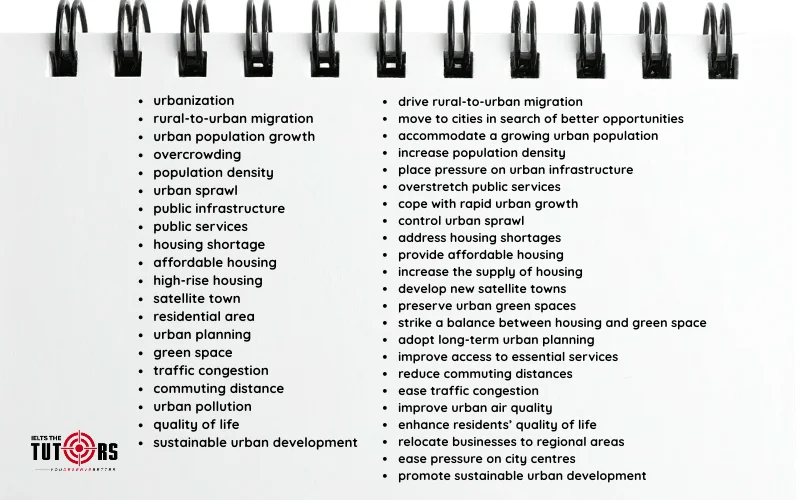
Từ vựng nên học cho topic Urbanization
| Từ vựng | Từ loại | Ý nghĩa |
| urbanization | noun | quá trình đô thị hóa |
| rural-to-urban migration | noun phrase | sự di cư từ nông thôn ra thành thị |
| urban population growth | noun phrase | sự gia tăng dân số đô thị |
| overcrowding | noun | tình trạng quá đông đúc |
| population density | noun phrase | mật độ dân số |
| urban sprawl | noun phrase | sự mở rộng đô thị thiếu kiểm soát |
| public infrastructure | noun phrase | cơ sở hạ tầng công cộng |
| public services | noun phrase | các dịch vụ công |
| housing shortage | noun phrase | tình trạng thiếu nhà ở |
| affordable housing | noun phrase | nhà ở có mức giá phù hợp |
| high-rise housing | noun phrase | nhà ở cao tầng |
| satellite town | noun phrase | đô thị vệ tinh |
| residential area | noun phrase | khu dân cư |
| urban planning | noun phrase | quy hoạch đô thị |
| green space | noun phrase | không gian xanh |
| traffic congestion | noun phrase | tình trạng ùn tắc giao thông |
| commuting distance | noun phrase | quãng đường đi lại hằng ngày |
| urban pollution | noun phrase | ô nhiễm đô thị |
| quality of life | noun phrase | chất lượng cuộc sống |
| sustainable urban development | noun phrase | phát triển đô thị bền vững |
Collocation hữu ích cho topic Urbanization
| Collocation | Ý nghĩa |
| drive rural-to-urban migration | thúc đẩy làn sóng di cư ra thành phố |
| move to cities in search of better opportunities | chuyển đến thành phố để tìm kiếm cơ hội tốt hơn |
| accommodate a growing urban population | đáp ứng nhu cầu của dân số đô thị ngày càng tăng |
| increase population density | làm tăng mật độ dân số |
| place pressure on urban infrastructure | gây áp lực lên cơ sở hạ tầng đô thị |
| overstretch public services | khiến các dịch vụ công bị quá tải |
| cope with rapid urban growth | ứng phó với tốc độ đô thị hóa nhanh |
| control urban sprawl | kiểm soát sự mở rộng đô thị thiếu quy hoạch |
| address housing shortages | giải quyết tình trạng thiếu nhà ở |
| provide affordable housing | cung cấp nhà ở có mức giá phù hợp |
| increase the supply of housing | tăng nguồn cung nhà ở |
| develop new satellite towns | phát triển các đô thị vệ tinh mới |
| preserve urban green spaces | bảo vệ không gian xanh đô thị |
| strike a balance between housing and green space | cân bằng giữa nhà ở và không gian xanh |
| adopt long-term urban planning | thực hiện quy hoạch đô thị dài hạn |
| improve access to essential services | cải thiện khả năng tiếp cận các dịch vụ thiết yếu |
| reduce commuting distances | rút ngắn quãng đường đi lại hằng ngày |
| ease traffic congestion | giảm tình trạng ùn tắc giao thông |
| improve urban air quality | cải thiện chất lượng không khí đô thị |
| enhance residents’ quality of life | nâng cao chất lượng sống của người dân |
| relocate businesses to regional areas | chuyển doanh nghiệp đến các khu vực ngoài thành phố lớn |
| ease pressure on city centres | giảm áp lực cho khu vực trung tâm thành phố |
| promote sustainable urban development | thúc đẩy phát triển đô thị bền vững |
Để làm tốt IELTS Writing Task 2 topic Urbanization, bạn cần xác định đúng dạng bài, chọn ý phù hợp và giải thích rõ mối liên hệ giữa nguyên nhân, tác động và giải pháp. Bên cạnh việc ghi nhớ từ vựng, hãy luyện cách phát triển từng luận điểm bằng giải thích và ví dụ cụ thể để bài viết có tính thuyết phục hơn.
IELTS The Tutors hy vọng những đề bài, ý tưởng và bài mẫu trong bài viết sẽ giúp bạn xây dựng nền tảng vững chắc, từ đó tự tin xử lý các câu hỏi về đô thị hóa trong kỳ thi IELTS. Chúc bạn sớm đạt band như mong muốn!