
Advertising là một chủ đề khá quen thuộc trong IELTS Writing Task 2, nhưng nhiều bạn vẫn dễ bí ý khi đề bài đề cập đến hành vi mua sắm, quảng cáo sai sự thật hoặc ảnh hưởng của quảng cáo đến trẻ em. Bài viết từ IELTS The Tutors sẽ tổng hợp những ý tưởng, từ vựng và bài mẫu thường gặp trong IELTS Writing Task 2 topic Advertising để bạn dễ hiểu đề và biết cách triển khai bài viết hơn.
Các vấn đề thường gặp chủ đề Advertising trong IELTS Writing task 2
Trong IELTS Writing Task 2, Advertising không chỉ xoay quanh lợi ích và tác hại của quảng cáo mà còn đề cập đến ảnh hưởng của quảng cáo đối với người tiêu dùng, doanh nghiệp và xã hội.
Dưới đây là những vấn đề thường gặp trong IELTS Writing Task 2 Advertising topics:
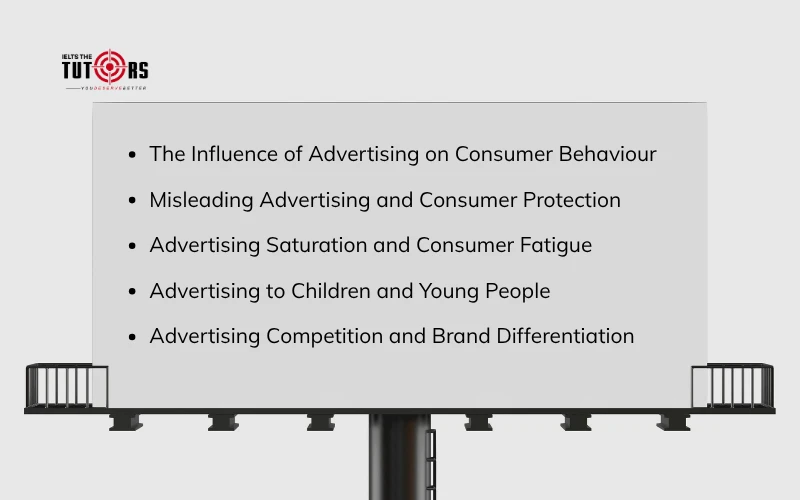
- Quảng cáo thúc đẩy mua sắm theo cảm xúc, chạy theo xu hướng và tiêu tiền cho những sản phẩm không cần thiết.
- Tác hại của quảng cáo gây hiểu lầm và vai trò của chính phủ trong việc bảo vệ người tiêu dùng.
- Tình trạng quảng cáo xuất hiện quá nhiều, gây khó chịu và làm giảm niềm tin của người tiêu dùng.
- Việc quảng cáo hướng đến trẻ em có nên bị hạn chế hoặc kiểm soát chặt chẽ hay không.
- Sự cạnh tranh quảng cáo giữa các doanh nghiệp và nguy cơ chú trọng hình ảnh thương hiệu hơn chất lượng sản phẩm.
Ý tưởng triển khai IELTS Writing task 2 Advertising topic
Để làm tốt bài IELTS Writing Task 2 topic Advertising, bạn nên chuẩn bị những luận điểm rõ ràng và phù hợp với yêu cầu của đề. Dưới đây là một số ideas hữu ích giúp bạn phát triển bài luận về quảng cáo mạch lạc và thuyết phục hơn.
The Influence of Advertising on Consumer Behaviour
Đề bài: Consumers are faced with increasing numbers of advertisements from competing companies. To what extent do you think consumers are influenced by advertisements?
Dạng bài: Opinion Essay
Yêu cầu đề bài:
- Vấn đề chính: Đánh giá mức độ quảng cáo tác động đến người tiêu dùng khi họ ngày càng tiếp xúc với nhiều thông điệp từ các doanh nghiệp cạnh tranh.
- Phạm vi trả lời: Xác định quảng cáo ảnh hưởng rất lớn, ở mức vừa phải hay chỉ trong phạm vi hạn chế.
- Hướng kết luận phù hợp: Nên đưa ra quan điểm cân bằng: quảng cáo có ảnh hưởng đáng kể nhưng không quyết định hoàn toàn hành vi mua sắm, vì tác động còn phụ thuộc vào độ tuổi, trình độ học vấn, kinh nghiệm tiêu dùng và loại sản phẩm.
Ý tưởng triển khai bài Advertising Writing task 2:
| Advertisements Strongly Influence Consumers | Advertisements Have Limited Influence |
|
|
Misleading Advertising and Consumer Protection
Đề bài: Consumers are faced with an increasing number of advertisements from competing companies. To what extent do you think consumers are influenced by advertisements? What measures can be taken to protect them?
Dạng bài: Two-part Question
Yêu cầu đề bài:
- Câu hỏi 1: Đánh giá mức độ quảng cáo ảnh hưởng đến người tiêu dùng khi số lượng nội dung quảng bá ngày càng tăng.
- Câu hỏi 2: Đề xuất các biện pháp bảo vệ người tiêu dùng trước quảng cáo gây hiểu lầm hoặc có tính thao túng.
- Cần trả lời đầy đủ và cân bằng cả hai câu hỏi.
- Hướng kết luận phù hợp: Quảng cáo có ảnh hưởng đáng kể, vì vậy cần kết hợp quy định pháp luật, giáo dục người tiêu dùng và trách nhiệm của doanh nghiệp.
Ý tưởng triển khai bài Advertising Writing task 2:
- To What Extent Are Consumers Influenced by Advertisements?
| High Level of Influence | Moderate or Limited Influence |
|
|
- Measures to Protect Consumers
| Government Regulations | Education and Self-Protection |
|
|
Advertising Saturation and Consumer Fatigue
Đề bài: Some people say that advertising is extremely successful at persuading us to buy things. Other people think that advertising is so common that we no longer pay attention to it. Discuss both these views and give your own opinion.
Dạng bài: Discussion Essay
Yêu cầu đề bài:
- Quan điểm 1: Quảng cáo có khả năng thuyết phục người tiêu dùng mua sản phẩm rất hiệu quả.
- Quan điểm 2: Quảng cáo xuất hiện quá thường xuyên nên nhiều người dần bỏ qua hoặc không còn chú ý.
- Cần thảo luận cân bằng và đầy đủ cả hai quan điểm.
- Đưa ra ý kiến cá nhân rõ ràng về mức độ hiệu quả của quảng cáo.
- Hướng kết luận phù hợp: Hiệu quả của quảng cáo phụ thuộc vào từng trường hợp; quảng cáo sáng tạo và nhắm đúng đối tượng vẫn có sức thuyết phục, nhưng tình trạng bão hòa đang làm giảm hiệu quả chung.
Ý tưởng triển khai bài Advertising Writing task 2:
| Advertising is highly effective at persuading consumers | Advertising is so common that people ignore it |
|
|
Advertising to Children and Young People
Đề bài: Many people believe that advertisements aimed at children have a bad effect on children and their families. Do you agree or disagree?
Dạng bài: Agree or Disagree
Yêu cầu đề bài:
- Vấn đề chính: Quảng cáo hướng đến trẻ em có gây ảnh hưởng tiêu cực đến trẻ nhỏ và gia đình hay không?
- Đưa ra lập trường rõ ràng: hoàn toàn đồng ý, hoàn toàn không đồng ý hoặc đồng ý một phần.
- Sử dụng lý lẽ và ví dụ phù hợp để chứng minh quan điểm.
- Duy trì lập trường nhất quán trong toàn bộ bài viết.
- Hướng triển khai phù hợp: Nên đồng ý hoặc đồng ý phần lớn vì trẻ em dễ bị tác động bởi thông điệp thương mại, từ đó hình thành nhu cầu không cần thiết và gây áp lực mua sắm lên gia đình.
Ý tưởng triển khai bài Advertising Writing task 2:
- Agree
| Harmful effects on children | Negative impact on families |
|
|
- Disagree
| Educational and informative value | Reality and parental responsibility |
|
|
Advertising Competition and Brand Differentiation
Đề bài: Consumers are faced with increasing numbers of advertisements from competing companies. To what extent do you think consumers are influenced by advertisements?
Dạng bài: Agree or Disagree
Yêu cầu đề bài:
- Vấn đề chính: Đánh giá mức độ quảng cáo ảnh hưởng đến người tiêu dùng trong bối cảnh các doanh nghiệp cạnh tranh ngày càng gay gắt.
- Xác định rõ mức độ tác động của quảng cáo: lớn, vừa phải hay hạn chế.
- Phân tích cách sự gia tăng quảng cáo từ các thương hiệu đối thủ ảnh hưởng đến lựa chọn của người tiêu dùng.
- Giải thích vai trò của quảng cáo trong việc tạo nhận diện và giúp thương hiệu nổi bật trên thị trường đông đúc.
- Hướng kết luận phù hợp: Quảng cáo có ảnh hưởng đáng kể nhưng không hoàn toàn quyết định hành vi mua hàng, vì hiệu quả còn phụ thuộc vào chất lượng quảng cáo và đặc điểm của từng người tiêu dùng.
Ý tưởng triển khai bài Advertising Writing task 2:
| Agree | Disagree |
|
|
Xem thêm:
Từ vựng & collocation ăn điểm chủ đề Advertising
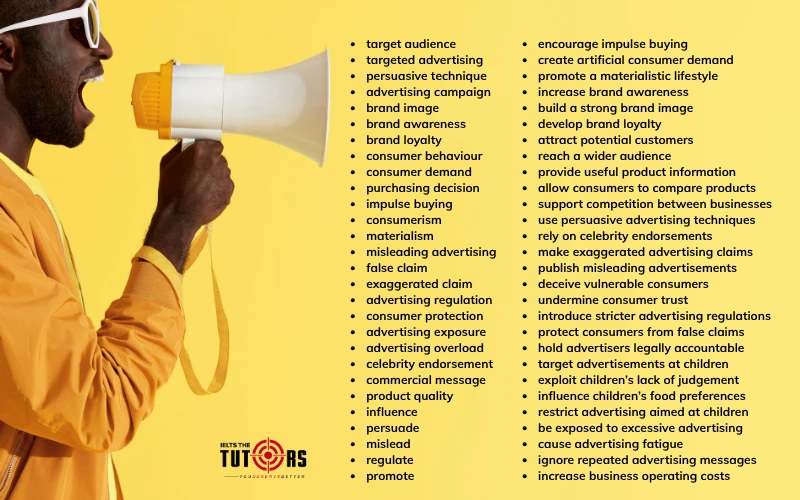
Từ vựng IELTS Writing Task 2 chủ đề Advertising
| Từ vựng | Từ loại | Ý nghĩa |
| advertising | noun | hoạt động quảng cáo |
| advertisement | noun | một mẫu quảng cáo cụ thể |
| target audience | noun phrase | đối tượng mục tiêu |
| targeted advertising | noun phrase | quảng cáo nhắm đến một nhóm cụ thể |
| persuasive technique | noun phrase | kỹ thuật thuyết phục |
| advertising campaign | noun phrase | chiến dịch quảng cáo |
| brand image | noun phrase | hình ảnh thương hiệu |
| brand awareness | noun phrase | mức độ nhận biết thương hiệu |
| brand loyalty | noun phrase | sự trung thành với thương hiệu |
| consumer behaviour | noun phrase | hành vi tiêu dùng |
| consumer demand | noun phrase | nhu cầu của người tiêu dùng |
| purchasing decision | noun phrase | quyết định mua hàng |
| impulse buying | noun phrase | hành vi mua sắm bốc đồng |
| consumerism | noun | lối sống đề cao việc mua sắm và tiêu dùng |
| materialism | noun | lối sống coi trọng tiền bạc và vật chất |
| misleading advertising | noun phrase | quảng cáo gây hiểu lầm |
| false claim | noun phrase | tuyên bố sai sự thật |
| exaggerated claim | noun phrase | tuyên bố phóng đại |
| advertising regulation | noun phrase | quy định quản lý quảng cáo |
| consumer protection | noun phrase | việc bảo vệ người tiêu dùng |
| advertising exposure | noun phrase | mức độ tiếp xúc với quảng cáo |
| advertising overload | noun phrase | tình trạng tiếp xúc với quá nhiều quảng cáo |
| celebrity endorsement | noun phrase | việc sử dụng người nổi tiếng để quảng bá |
| commercial message | noun phrase | thông điệp mang tính thương mại |
| product quality | noun phrase | chất lượng sản phẩm |
| influence | verb | tác động, ảnh hưởng |
| persuade | verb | thuyết phục |
| mislead | verb | khiến người khác hiểu sai |
| regulate | verb | quản lý bằng quy định |
| promote | verb | quảng bá, thúc đẩy |
Collocations IELTS Writing Task 2 chủ đề Advertising
| Collocations | Ý nghĩa |
| influence consumers’ purchasing decisions | tác động đến quyết định mua hàng của người tiêu dùng |
| persuade people to buy unnecessary products | thuyết phục mọi người mua những sản phẩm không cần thiết |
| encourage impulse buying | thúc đẩy hành vi mua sắm bốc đồng |
| create artificial consumer demand | tạo ra nhu cầu tiêu dùng không thực sự cần thiết |
| promote a materialistic lifestyle | cổ súy lối sống coi trọng vật chất |
| increase brand awareness | nâng cao mức độ nhận biết thương hiệu |
| build a strong brand image | xây dựng hình ảnh thương hiệu vững mạnh |
| develop brand loyalty | xây dựng lòng trung thành với thương hiệu |
| attract potential customers | thu hút khách hàng tiềm năng |
| reach a wider audience | tiếp cận nhiều nhóm công chúng hơn |
| provide useful product information | cung cấp thông tin hữu ích về sản phẩm |
| allow consumers to compare products | giúp người tiêu dùng so sánh sản phẩm |
| support competition between businesses | thúc đẩy sự cạnh tranh giữa các doanh nghiệp |
| use persuasive advertising techniques | sử dụng các kỹ thuật quảng cáo có tính thuyết phục |
| rely on celebrity endorsements | sử dụng người nổi tiếng để quảng bá sản phẩm |
| make exaggerated advertising claims | đưa ra những tuyên bố quảng cáo phóng đại |
| publish misleading advertisements | đăng tải những quảng cáo gây hiểu lầm |
| deceive vulnerable consumers | đánh lừa những người tiêu dùng dễ bị tác động |
| undermine consumer trust | làm suy giảm niềm tin của người tiêu dùng |
| introduce stricter advertising regulations | ban hành các quy định quảng cáo nghiêm ngặt hơn |
| protect consumers from false claims | bảo vệ người tiêu dùng trước những tuyên bố sai lệch |
| hold advertisers legally accountable | buộc nhà quảng cáo chịu trách nhiệm pháp lý |
| target advertisements at children | hướng quảng cáo đến trẻ em |
| exploit children’s lack of judgement | lợi dụng khả năng phán đoán còn hạn chế của trẻ |
| influence children’s food preferences | tác động đến sở thích ăn uống của trẻ |
| place pressure on parents to buy products | gây áp lực khiến cha mẹ mua sản phẩm |
| restrict advertising aimed at children | hạn chế quảng cáo hướng đến trẻ em |
| be exposed to excessive advertising | tiếp xúc với quá nhiều quảng cáo |
| cause advertising fatigue | gây cảm giác mệt mỏi vì quảng cáo |
| ignore repeated advertising messages | bỏ qua những thông điệp quảng cáo lặp lại |
| increase business operating costs | làm tăng chi phí hoạt động của doanh nghiệp |
| focus on promotion rather than product quality | chú trọng quảng bá hơn chất lượng sản phẩm |
Bài mẫu IELTS Writing task 2 Advertising
Đề bài: Some companies sponsor sports as a way to advertise themselves. Some people think this is beneficial, while others believe it has disadvantages. Discuss both views and give your opinion.
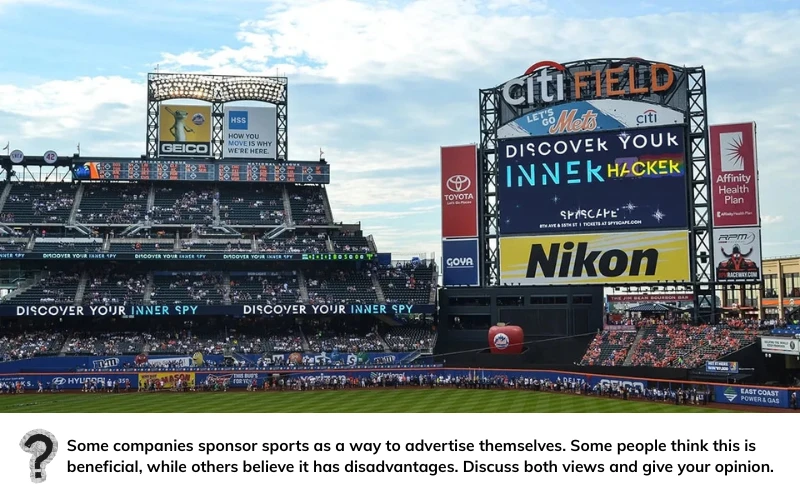
Phân tích đề bài:
- Dạng bài: Discussion Essay
- Keyword chủ chốt: companies sponsor sports, way to advertise themselves, beneficial vs. disadvantages, sports sponsorship, commercial influence on sports
- Hướng phát triển: Thảo luận hai quan điểm: một bên cho rằng tài trợ thể thao mang lại lợi ích cho cả doanh nghiệp và thể thao, bên kia lo ngại về ảnh hưởng tiêu cực của thương mại hóa đối với tinh thần thể thao. Ý kiến cá nhân nên có lập trường rõ ràng, có thể theo hướng cân bằng hoặc nghiêng về một bên với lập luận vững chắc.
Dàn bài gợi ý:
Introduction:
- Paraphrase đề bài về tranh luận việc doanh nghiệp tài trợ cho các đội tuyển và sự kiện thể thao.
- Thesis statement: Thảo luận cả hai quan điểm và nghiêng về ý kiến rằng tài trợ thể thao mang lại nhiều lợi ích hơn.
Body 1 – Quan điểm cho rằng tài trợ thể thao có lợi:
- Cung cấp nguồn tài chính quan trọng để duy trì hoạt động của các đội tuyển và tổ chức sự kiện.
- Hỗ trợ xây dựng cơ sở vật chất, mua thiết bị và đào tạo vận động viên.
- Giúp các môn thể thao được quảng bá rộng rãi và thu hút nhiều người quan tâm hơn.
- Tạo thêm việc làm và thúc đẩy kinh tế tại địa phương.
Body 2 – Quan điểm cho rằng có nhiều nhược điểm:
- Việc thương mại hóa quá mức có thể làm giảm tinh thần thể thao thuần túy.
- Áp lực từ nhà tài trợ đôi khi ảnh hưởng đến quyết định của đội tuyển hoặc ban tổ chức.
- Quảng cáo rượu và đồ ăn nhanh có thể tác động tiêu cực đến người hâm mộ, đặc biệt là trẻ em.
- Các đội nhận được nguồn tài trợ lớn có thể có lợi thế quá nhiều so với những đội ít hoặc không có tài trợ.
Conclusion: Mặc dù vẫn tồn tại một số hạn chế, tài trợ thể thao mang lại nhiều lợi ích hơn nếu được quản lý hợp lý và có quy định chặt chẽ về các sản phẩm được phép quảng cáo.
Bài mẫu Advertising Writing task 2:
Corporate sponsorship has become a common feature of modern sport, leading to debate about whether it brings more benefits than harm. While some people believe that sponsorship supports athletes and sporting events, others argue that it encourages excessive commercialisation. In my view, its advantages are greater, provided that clear regulations are in place.
Supporters of sponsorship point to its important financial role. Many teams, athletes and competitions depend on corporate funding to pay operating costs, improve training facilities and develop young talent. This support is especially valuable at grassroots level, where limited budgets can otherwise prevent promising athletes from progressing. Sponsorship also increases media coverage and public interest, helping less popular sports attract larger audiences. In addition, major sponsored events can create jobs, increase tourism revenue and benefit local businesses.
Nevertheless, corporate involvement can also create problems. Excessive commercialisation may weaken the traditional spirit of sport and allow sponsors to influence decisions for financial reasons. Another concern is the advertising of alcohol, sugary drinks and fast food during sporting events. Such promotion may send unhealthy messages to young fans, who often view athletes as role models. Furthermore, wealthy teams can secure much larger sponsorship deals than smaller clubs, widening financial inequality and reducing competitive balance.
In conclusion, corporate sponsorship may encourage unhealthy advertising and create unequal conditions between teams, but it remains an essential source of funding for sport. Rather than banning it, governments and sporting bodies should restrict the promotion of harmful products and prevent sponsors from interfering with sporting decisions. With effective regulation, sponsorship can support athletic development while preserving fairness and sporting values.
(266 words, band 8.0)
Kết luận
Cuối cùng, IELTS The Tutors hy vọng những ý tưởng, từ vựng và bài mẫu trong bài viết sẽ giúp bạn bớt lúng túng khi gặp topic Advertising. Trong quá trình luyện IELTS Writing Task 2 topic Advertising, bạn không cần cố đưa quá nhiều luận điểm vào bài mà nên tập trung giải thích từng ý thật rõ và dùng từ đúng ngữ cảnh. Hãy luyện viết thường xuyên để dần phản xạ nhanh hơn với từng dạng đề nhé!