Crime and Punishment IELTS Writing Task 2 là chủ đề quen thuộc nhưng khá khó, liên quan đến tội phạm và hình phạt. Trong bài viết này, IELTS The Tutors sẽ cùng bạn tìm hiểu các dạng đề phổ biến, từ vựng cần học và cách triển khai bài Crime IELTS Writing hiệu quả.
Các vấn đề thường gặp trong chủ đề Crime and Punishment
Trong IELTS Writing task 2 Punishment and Crime, các câu hỏi thường xoay quanh nguyên nhân của tội phạm, cách phòng ngừa và biện pháp xử lý người vi phạm. Khi làm Crime essay, bạn cần phải đánh giá mức độ hiệu quả, công bằng và khả năng giúp người phạm tội thay đổi.
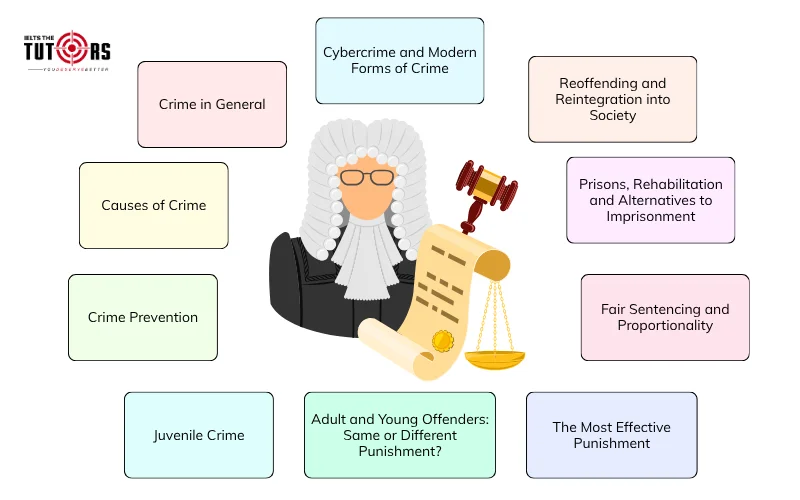
Dưới đây là những vấn đề thường gặp trong chủ đề này:
Tình trạng tội phạm gia tăng, sự khác biệt giữa thành thị và nông thôn, cùng những ảnh hưởng đến an ninh, kinh tế và đời sống cộng đồng.
Những nguyên nhân như nghèo đói, thất nghiệp, thiếu giáo dục, bất bình đẳng, gia đình thiếu ổn định, ảnh hưởng từ bạn bè và chất kích thích.
Vai trò của chính phủ, cảnh sát, trường học, gia đình và cộng đồng trong việc tạo việc làm, nâng cao nhận thức pháp luật và cải thiện an ninh.
Nguyên nhân khiến thanh thiếu niên phạm tội và các biện pháp hỗ trợ từ gia đình, nhà trường và xã hội.
Người trẻ phạm tội nghiêm trọng có nên bị xử phạt như người trưởng thành hay không, dựa trên mức độ nhận thức và khả năng cải tạo.
So sánh nhà tù, án tử hình, phạt tiền, quản chế, lao động công ích và các chương trình giáo dục dựa trên khả năng răn đe, chi phí và tỷ lệ tái phạm.
Hình phạt nên được áp dụng cố định hay điều chỉnh theo động cơ, hoàn cảnh và mức độ nghiêm trọng của từng vụ án.
Nhà tù nên chỉ trừng phạt hay cần kết hợp giáo dục, đào tạo nghề và tư vấn tâm lý để giúp phạm nhân tái hòa nhập.
Nguyên nhân người từng ngồi tù tiếp tục phạm tội, chẳng hạn như khó tìm việc, thiếu kỹ năng, bị kỳ thị hoặc quay lại môi trường cũ.
Các hình thức tội phạm công nghệ như lừa đảo trực tuyến, đánh cắp dữ liệu và gian lận tài chính, cùng trách nhiệm của chính phủ, doanh nghiệp và người dùng trong việc bảo vệ an ninh mạng.
Ý tưởng triển khai chủ đề Crime and Punishment
Để viết tốt một bài crime essay IELTS, bạn cần hiểu đúng yêu cầu đề, chọn ý tưởng phù hợp và biết cách phát triển luận điểm rõ ràng. Dưới đây là một số đề bài về topic Crime and Punishment và ideas giúp bạn làm bài luận nhanh, gọn và hiệu quả:
Crime in General
Đề bài: The crime rate nowadays is decreasing compared to the past due to advanced technology which can prevent and solve crime. Do you agree or disagree?
Phân tích đề bài:
Dạng bài: Agree/Disagree
Yêu cầu đề bài:
Đánh giá quan điểm cho rằng tỷ lệ tội phạm ngày nay đang giảm so với trước đây nhờ sự phát triển của công nghệ, giúp ngăn chặn và điều tra tội phạm hiệu quả hơn.
Đưa ra mức độ đồng ý.
Ý tưởng phát triển bài Writing task 2:
Agree
Disagree
CCTV cameras can deter crime by monitoring public places and discouraging offenders.
DNA testing, fingerprint analysis, and other forensic tools help identify criminals and solve cases.
Data analysis allows the police to identify crime hotspots and use resources more effectively.
Modern communication systems help emergency services respond more quickly to criminal incidents.
Biometric systems and security scanners can reduce smuggling, trafficking, and illegal border crossings.
Automated systems can detect fraud, money laundering, and suspicious financial activity.
Digital footprints and social media evidence can help the police track suspects and investigate cybercrime.
Technology improves crime prevention, investigation, and law enforcement efficiency.
Poverty, unemployment, and inequality often have a greater influence on crime rates.
Surveillance may simply move crime to areas with fewer cameras rather than eliminate it.
Skilled criminals can avoid detection through encryption and other advanced methods.
Changes in crime statistics may reflect underreporting rather than a real decline.
Extensive surveillance may threaten privacy and give governments too much control.
Technology also creates new crimes, including identity theft, online fraud, and cyberattacks.
Wealthier areas often have better security technology, which may widen inequality between communities.
Education, youth programmes, employment support, and mental health services are also essential for reducing crime.
Causes of Crime
Đề bài: In many countries, the level of crime is increasing and crimes are becoming more violent. Why do you think this is? What can be done about it?
Phân tích đề bài:
Dạng bài: Causes & Solutions
Yêu cầu đề bài:
Giải thích vì sao tỷ lệ tội phạm ngày càng tăng và các hành vi phạm tội có xu hướng bạo lực hơn.
Đưa ra những giải pháp phù hợp để cải thiện tình trạng này.
Ý tưởng phát triển bài Writing task 2:
Causes
Solutions
Growing economic inequality can push people in disadvantaged communities towards crime.
Unemployment and poverty may lead some people to commit theft, robbery, or other offences for financial survival.
Drug addiction can increase theft and violence, while the illegal drug trade often fuels gang conflict.
Family breakdown and poor parental supervision may leave children without guidance or emotional support.
Untreated mental health problems may contribute to aggressive or unstable behaviour.
Exposure to violent media may normalise aggression, particularly among younger audiences.
Gang culture attracts young people seeking protection, identity, or a sense of belonging.
Weak community ties can reduce social responsibility and make residents less willing to report crime.
School failure and a lack of qualifications can limit employment opportunities and increase antisocial behaviour.
Easy access to weapons can turn ordinary conflicts into serious or fatal violence.
Weak punishment may fail to deter serious and violent offenders.
Traditional punishment may not address the harm caused to victims and communities.
Governments should provide job training, apprenticeships, and employment support for disadvantaged groups.
Greater investment in education can reduce school dropout rates and improve young people’s future prospects.
Drug treatment and rehabilitation should be expanded to address addiction rather than relying only on imprisonment.
Parenting support, childcare assistance, and family counselling can help create more stable home environments.
Affordable counselling, psychiatric care, and crisis support should be made more widely available.
Parents and schools should promote media awareness and teach young people to recognise harmful content.
Sports, arts programmes, youth centres, and mentoring can provide positive alternatives to gang involvement.
Community policing can build trust between officers and residents and support earlier intervention.
Schools should provide academic support, vocational training, and after-school activities for at-risk students.
Stronger firearm controls and background checks can reduce access to dangerous weapons.
Longer sentences may be necessary for dangerous criminals to protect the public.
Restorative justice can hold offenders accountable while supporting victims and repairing community harm.
Crime Prevention
Đề bài: Some countries are struggling with an increase in the rate of crime. Many people think that having more police on the streets is the only way to reduce crime. To what extent do you agree?
Phân tích đề bài:
Dạng bài: Agree/Disagree
Yêu cầu đề bài:
Đánh giá quan điểm cho rằng tăng số lượng cảnh sát tuần tra trên đường phố là cách duy nhất để giảm tội phạm
Nêu rõ bạn đồng ý với quan điểm này ở mức độ nào
Ý tưởng phát triển bài Writing task 2:
Agree
Disagree
A visible police presence can deter potential offenders from committing crimes.
More officers can respond to emergencies faster, protect victims, and prevent crimes from escalating.
Regular patrols can make residents feel safer and encourage them to report suspicious activity.
Police officers can gather local intelligence and identify criminal activity at an early stage.
Deploying officers in high-crime areas can reduce offences through targeted policing.
Officers can intervene immediately, arrest offenders, and protect the public from direct harm.
A stronger police force can improve law enforcement in areas with limited security.
More officers may strengthen public confidence in the criminal justice system.
Police expansion provides a direct response to rising crime rates.
Effective policing can support investigations and improve the likelihood of catching offenders.
Increasing police numbers only addresses crime after its underlying causes have developed.
Poverty, unemployment, and social inequality should be tackled through economic and welfare policies.
Education, vocational training, and mentoring can prevent young people from entering a life of crime.
Youth centres, sports programmes, and community activities provide positive alternatives to crime.
Mental health treatment and addiction services can address factors that often contribute to criminal behaviour.
Housing support, childcare, and family services can reduce the social pressures linked to crime.
Better street lighting, safer public spaces, and effective urban design can reduce opportunities for crime.
Restorative justice can promote offender accountability while supporting victims and communities.
Prevention programmes may be more cost-effective than hiring and training additional officers.
Trust-based community policing is often more effective than aggressive enforcement alone.
Juvenile Crime
Đề bài: The only way to solve the increasing crime rate of young offenders is to teach parents better parenting skills. To what extent do you agree or disagree?
Phân tích đề bài:
Dạng bài: Agree/Disagree
Yêu cầu đề bài:
Đánh giá quan điểm cho rằng cách duy nhất để giảm tình trạng thanh thiếu niên phạm tội ngày càng nhiều là giúp cha mẹ cải thiện kỹ năng nuôi dạy con.
Nêu rõ bạn đồng ý với quan điểm này ở mức độ nào.
Ý tưởng phát triển bài Writing task 2:
Agree
Disagree
Parents shape children’s values, behaviour, and attitudes from an early age.
Clear rules and close supervision can prevent young people from becoming involved in crime.
A stable and supportive home gives children emotional security and reduces antisocial behaviour.
Children often copy their parents, so responsible behaviour at home provides a positive example.
Open communication helps parents understand their children’s problems and guide them towards better choices.
Attentive parents can notice warning signs and intervene before problems become more serious.
Poor parenting is often linked to a higher risk of juvenile crime.
Improving parenting skills can therefore be an effective way to reduce youth crime.
Peer pressure can influence teenagers more strongly than their parents.
Poverty, unemployment, and poor housing can push young people towards criminal activity.
Schools also play an important role by keeping students engaged and preventing them from dropping out.
Crime is more common in neighbourhoods affected by gangs, violence, and limited opportunities.
Some behavioural or mental health conditions require professional treatment, not only better parenting.
Working or single parents may have limited time for supervision despite having good parenting skills.
Drug addiction and easy access to illegal substances require treatment and stronger community support.
Media influence, social inequality, and weak public services also need to be addressed.
👉 Đăng ký nhận tư vấn ngay!
Adult and Young Offenders: Same or Different Punishment?
Đề bài: In some societies, the number of crimes committed by teenagers is growing. Some people think that, regardless of age, teenagers who commit major crimes should receive adult punishment. To what extent do you agree?
Phân tích đề bài:
Dạng bài: Agree/Disagree
Yêu cầu đề bài:
Phân tích quan điểm cho rằng thanh thiếu niên phạm tội nghiêm trọng nên bị xử phạt như người trưởng thành, dù họ vẫn còn trẻ.
Nêu rõ bạn đồng ý với quan điểm này ở mức độ nào.
Ý tưởng phát triển bài Writing task 2:
Agree
Disagree
Serious crimes cause the same harm regardless of the offender’s age, so victims deserve equal justice.
Dangerous offenders should be imprisoned to protect the public, whether they are adults or teenagers.
Most teenagers understand the difference between right and wrong and should be held responsible for serious offences.
Strict punishment may deter young people and others from committing similar crimes.
The offender’s age does not reduce the physical, emotional, or financial harm suffered by victims.
Criminal groups may use teenagers because they expect them to receive lighter sentences.
Some teenagers plan crimes carefully and show a level of maturity similar to that of adults.
Punishment can be decided case by case rather than automatically reduced because of age.
Equal punishment reinforces personal accountability and shows that serious crime has serious consequences.
Teenagers have not fully developed the judgement and impulse control of adults.
Young offenders are more likely to change and respond positively to rehabilitation.
Teenagers are more vulnerable to peer pressure and may not act as independently as adults.
Many juvenile offenders come from backgrounds involving abuse, neglect, or family instability and need treatment as well as punishment.
Adult prisons may expose teenagers to experienced criminals and make their behaviour worse.
Severe adult sentences can permanently damage a young person’s future and remove the chance of reform.
International child-rights standards support separate and more rehabilitative treatment for juvenile offenders.
Juvenile rehabilitation programmes may reduce reoffending more effectively than adult imprisonment.
Society also has a responsibility to guide and support young people who have been failed by families, schools, or communities.
The Most Effective Punishment
Đề bài: The death penalty is the best way to control and reduce serious crime. To what extent do you agree?
Phân tích đề bài:
Dạng bài: Agree/Disagree
Yêu cầu đề bài:
Phân tích quan điểm cho rằng án tử hình là biện pháp hiệu quả nhất để kiểm soát và giảm các loại tội phạm nghiêm trọng.
Nêu rõ bạn đồng ý với quan điểm này ở mức độ nào.
Ý tưởng phát triển bài Writing task 2:
Agree
Disagree
The fear of execution may deter people from committing serious crimes.
Executed offenders can never commit further crimes, which permanently protects society.
Supporters believe it provides justice for victims and is a proportionate punishment for murder.
Execution may cost less than keeping dangerous criminals in prison for life.
It removes violent offenders without the risk of parole, escape, or reoffending.
It may reassure the public that the most serious crimes receive the strongest punishment.
It reflects the view that some crimes are too serious for rehabilitation or release.
There is limited evidence that the death penalty reduces murder rates.
Wrongful convictions can lead to the execution of innocent people, and such mistakes cannot be corrected.
It is morally contradictory for the state to punish killing by taking another life.
The death penalty is often applied unfairly, particularly to poor people and minority groups.
Life imprisonment can protect the public without ending the offender’s life.
Many countries have abolished capital punishment because it conflicts with modern human rights standards.
Execution removes any possibility of rehabilitation, forgiveness, or later proof of innocence.
Fair Sentencing and Proportionality
Đề bài: Some people believe that there should be fixed punishments for each type of crime. Others, however, argue that the circumstances of an individual crime and the motivation for committing it should always be taken into account when deciding on the punishment. Discuss both these views and give your own opinion.
Phân tích đề bài:
Dạng bài: Discuss Both Views + Opinion
Yêu cầu đề bài: Thảo luận hai quan điểm: mỗi loại tội phạm nên có một mức phạt cố định hay hình phạt cần được điều chỉnh dựa trên hoàn cảnh cụ thể của từng người phạm tội.
Ý tưởng phát triển bài Writing task 2:
Fixed Punishments
Individualized Sentencing
The same crime should receive the same punishment to ensure consistency and equal treatment under the law.
Clear and predictable penalties may deter people from committing crimes.
Fixed sentences allow courts to process cases more quickly and reduce legal costs.
A transparent sentencing system can increase public trust and reduce concerns about unfair treatment.
Limiting judicial discretion may reduce corruption, favouritism, and outside influence.
The circumstances of each crime should be considered because factors such as self-defence, coercion, or mental illness may affect responsibility.
First-time offenders and repeat offenders should not always receive the same sentence.
Personal circumstances such as poverty, abuse, or addiction may reduce an offender’s level of blame.
Tailored punishments can address individual needs and improve the chances of rehabilitation.
Considering each case separately respects the complexity of human behaviour and leads to fairer decisions.
Flexible sentencing can prevent prisons from becoming overcrowded with minor or non-violent offenders.
Prisons, Rehabilitation and Alternatives to Imprisonment
Đề bài: Many people who commit crimes have a low level of education. Are education courses in prison the best way to reduce crime rates?
Phân tích đề bài:
Dạng bài: Yes/No Question
Yêu cầu đề bài: Làm rõ vấn đề giáo dục trong tù có thực sự là cách hiệu quả nhất để giảm tỷ lệ tội phạm hay không?
Ý tưởng phát triển bài Writing task 2:
Prison Education Effective
Other Approaches Also Necessary
Education addresses poor literacy and limited qualifications, which can contribute to criminal behaviour.
Better qualifications improve employment prospects and reduce the risk of reoffending after release.
Educational programmes allow prisoners to use their time productively and create a more positive prison environment.
Learning develops critical thinking, problem-solving skills, and the ability to make better decisions
Prison education can be more cost-effective than repeatedly imprisoning the same offenders.
Educated offenders are more likely to become independent and productive members of society.
Vocational training provides practical skills such as carpentry, plumbing, and electrical work.
Mental health treatment is essential for offenders with psychological or behavioural problems.
Addiction treatment is needed when drug or alcohol dependence is a major cause of crime.
Early intervention through schools and community programmes can prevent crime before it occurs.
Former prisoners also need housing, employment support, and family assistance to reintegrate successfully.
Wider problems such as poverty, inequality, and limited opportunities cannot be solved through prison education alone.
Reoffending and Reintegration into Society
Đề bài: Many criminals commit further crimes as soon as they are released from prison. What do you think are the causes of this? What possible solutions can you suggest?
Phân tích đề bài:
Dạng bài: Causes & Solutions
Yêu cầu đề bài: Làm rõ nguyên nhân tái phạm sau khi ra tù v àgiải pháp.
Ý tưởng phát triển bài Writing task 2:
Causes
Solutions
A criminal record makes it difficult to find work, which may push former offenders back into crime.
Many prisoners leave prison without stable housing, increasing the risk of homelessness and reoffending.
Social stigma and rejection from employers, families, and communities can leave ex-offenders isolated.
Untreated drug or alcohol addiction may lead individuals to return to criminal behaviour.
Prison can strengthen connections with gangs and other criminal networks.
Some prisoners leave without the education or practical skills needed to earn a legal income.
Untreated mental health problems may affect judgement and increase the risk of reoffending.
Returning to society after a long prison sentence can be overwhelming, especially without guidance.
Governments can provide vocational training, job placement services, and incentives for employers to hire ex-offenders.
Transitional housing can give former prisoners a safe and stable place to live after release.
Public awareness campaigns and second-chance programmes can support social acceptance and reintegration.
Rehabilitation should begin in prison and continue after release through long-term treatment and support.
Mentors, parole officers, and community support groups can help offenders build healthier relationships.
Education and vocational courses can improve employability and financial independence.
Former prisoners should receive continued counselling, psychological treatment, and medical support.
Structured reintegration programmes can help ex-offenders adjust to work, family life, and social responsibilities.
Cybercrime and Modern Forms of Crime
Đề bài: Do developments in technology make crime easier to detect, or do they make people more vulnerable to crime? Discuss both views and give your opinion.
Phân tích đề bài:
Dạng bài: Discuss Both Views + Opinion
Yêu cầu đề bài:
Phân tích việc công nghệ giúp việc phát hiện tội phạm trở nên dễ dàng hơn, hay khiến người dùng đối mặt với nhiều rủi ro hơn.
Đưa ra quan điểm của bạn.
Ý tưởng phát triển bài Writing task 2:
Technology Makes Crime Easier to Detect
Technology Makes Crime Easier to Detect
CCTV and facial recognition help the police identify suspects more quickly.
Emails, phone records, and digital transactions provide useful evidence during investigations.
DNA and biometric databases improve the accuracy and speed of criminal identification.
Data analysis can reveal crime patterns and help the police prevent offences.
Digital systems allow law enforcement agencies to share information across borders.
Automated tools can detect suspicious payments, fraud, and money laundering.
Social media activity can help investigators identify criminal networks and collect evidence.
Modern surveillance can improve public safety in high-risk areas.
Technology has created new crimes such as hacking, identity theft, and online fraud.
Data breaches can expose large amounts of personal and financial information
Online anonymity and encrypted platforms make some criminals harder to trace.
Phishing attacks and online scams can deceive even careful users.
Cyberattacks on hospitals, banks, and public services can cause serious disruption.
Social media can expose children and other vulnerable users to online exploitation.
Cryptocurrency and poorly regulated online finance can be used for fraud and illegal transactions.
Extensive surveillance may reduce privacy and threaten civil liberties.
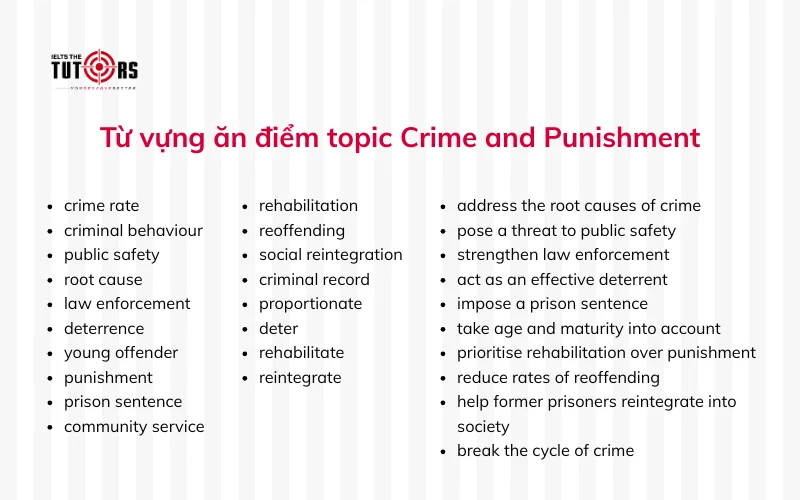
Từ vựng & collocation ăn điểm chủ đề Crime and Punishment
Để làm tốt bài luận Crime IELTS Writing Task 2 Punishment, có ý tưởng thôi vẫn chưa đủ. Bạn cũng cần sử dụng từ vựng và cụm từ đúng ngữ cảnh để diễn đạt quan điểm rõ ràng, tự nhiên và thuyết phục hơn.
Dưới đây là các từ vựng và collocation mà bạn nên học để nâng chất lượng bài viết của mình:
Từ vựng/Cụm từ
Ý nghĩa
crime rate
tỷ lệ tội phạm
criminal behaviour
hành vi phạm tội
public safety
an toàn công cộng
root cause
nguyên nhân gốc rễ
law enforcement
hoạt động thực thi pháp luật
deterrence
sự răn đe
young offender
người phạm tội trẻ tuổi
punishment
hình phạt
prison sentence
án tù
community service
lao động công ích
rehabilitation
quá trình cải tạo
reoffending
hành vi tái phạm
social reintegration
quá trình tái hòa nhập xã hội
criminal record
tiền án, hồ sơ phạm tội
proportionate
tương xứng
deter
ngăn chặn bằng sự răn đe
rehabilitate
cải tạo người phạm tội
reintegrate
giúp tái hòa nhập
address the root causes of crime
giải quyết các nguyên nhân gốc rễ của tội phạm
pose a threat to public safety
đe dọa an toàn công cộng
strengthen law enforcement
tăng cường thực thi pháp luật
act as an effective deterrent
tạo ra sự răn đe hiệu quả
impose a prison sentence
tuyên án tù
take age and maturity into account
cân nhắc độ tuổi và mức độ trưởng thành
prioritise rehabilitation over punishment
ưu tiên cải tạo hơn trừng phạt
reduce rates of reoffending
giảm tỷ lệ tái phạm
help former prisoners reintegrate into society
giúp cựu tù nhân tái hòa nhập xã hội
break the cycle of crime
phá vỡ vòng luẩn quẩn của tội phạm
Nhìn chung, để làm tốt các đề Crime and Punishment trong IELTS Writing Task 2, bạn cần chuẩn bị ý tưởng rõ ràng và lựa chọn từ vựng phù hợp để phát triển bài viết đúng trọng tâm, logic và thuyết phục hơn.
Hy vọng bài viết đã giúp bạn tiết kiệm thời gian ôn tập và tự tin hơn khi gặp chủ đề Crime IELTS Writing trong phòng thi. Đừng quên theo dõi IELTS The Tutors để cập nhật thêm nhiều ý tưởng hay hơn cho các chủ đề Writing khác. Chúc bạn tiến bộ mỗi ngày!
Phạm Công Danh
Cố vấn học thuật tại IELTS The Tutors
Mình hiện là cố vấn học thuật tại IELTS The Tutors với hơn 2 năm kinh nghiệm giảng dạy tiếng Anh, tập trung vào kỹ năng Speaking. Mình tin rằng những kiến thức và phương pháp mình chia sẻ sẽ giúp bạn cải thiện giao tiếp, xây dựng sự tự tin và tiến bộ rõ rệt trong hành trình luyện thi IELTS.
Bạn còn thắc mắc về bài viết này?
Bấm đăng ký tư vấn ngay để được đội ngũ cố vấn giải đáp sâu hơn về kiến thức bạn đang đọc
Trong bài viết này, IELTS The Tutors sẽ cùng bạn khám phá ideas hay, dễ triển khai, từ vựng ghi điểm và bài mẫu tham khảo cho IELTS Writing Task 2 Animal Rights, từ đó xây dựng lập luận rõ ràng và tự tin hơn khi tự luyện viết tại nhà.
Bài viết này từ IELTS The Tutors sẽ giúp bạn hệ thống các dạng đề IELTS Writing Task 2 Food thường gặp, kèm ý tưởng, từ vựng và collocation hữu ích để phát triển bài luận tự tin hơn tại nhà.
Bài viết từ IELTS The Tutors sẽ giúp bạn hệ thống các Science and Technology topics thường gặp, kèm theo ý tưởng và từ vựng hữu ích để tự tin phát triển bài luận ngay tại nhà.
Trong bài viết này, IELTS The Tutors sẽ tổng hợp những ý tưởng, từ vựng và bài mẫu IELTS Writing Task 2 topic Economy, giúp bạn hiểu rõ các vấn đề thường gặp và biết cách triển khai luận điểm phù hợp hơn.
Nếu bạn thường bí ý khi gặp đề IELTS Writing Task 2 Culture, hãy cùng IELTS The Tutors chuẩn bị các ý tưởng cho luận điểm, từ vựng và collocation cần thiết để phát triển bài luận mạch lạc hơn.