Chủ đề Leisure activities đề cập đến sở thích cá nhân, thời gian sử dụng thiết bị đến cách cân bằng giữa nghỉ ngơi và công việc,… tuy gần gũi nhưng dễ khiến bài viết bị lan man nếu bạn thiếu định hướng. Bài viết này của IELTS The Tutors sẽ cung cấp những ý tưởng trọng tâm, bài mẫu tham khảo và nhóm từ vựng hữu ích để bạn triển khai IELTS Writing Task 2 topic Leisure Activities rõ ràng và hiệu quả hơn.
Các vấn đề thường gặp trong chủ đề Leisure activities
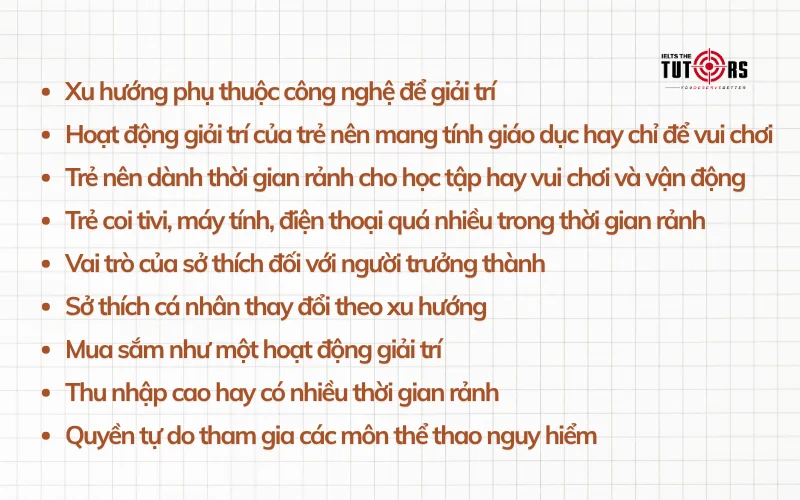
Trong IELTS Writing Task 2, chủ đề Leisure Activities thường bàn về cách trẻ em và người lớn sử dụng thời gian rảnh, lựa chọn sở thích và cân bằng giữa công việc với nghỉ ngơi. Một số vấn đề thường gặp gồm:
- Xu hướng con người ngày càng dựa vào thiết bị số và nền tảng công nghệ để giải trí thay vì các hoạt động thể thao ngoài trời.
- Hoạt động trong thời gian rảnh của trẻ có cần mang mục đích giáo dục hay nên ưu tiên vui chơi và thư giãn.
- Trẻ đã học nhiều ở trường có nên dành toàn bộ thời gian rảnh cho vui chơi và vận động thể chất.
- Việc trẻ sử dụng màn hình quá nhiều trong thời gian rảnh và những giải pháp để hạn chế tình trạng này.
- Mỗi người trưởng thành có cần duy trì một sở thích để cải thiện sức khỏe và chất lượng cuộc sống.
- Sở thích ngày nay có xuất phát từ đam mê thật sự hay chỉ thay đổi theo trào lưu.
- Nguyên nhân mua sắm trở thành một hình thức giải trí và ảnh hưởng của xu hướng này.
- Lựa chọn giữa mức thu nhập cao nhưng ít thời gian rảnh và thu nhập thấp hơn nhưng có nhiều thời gian nghỉ ngơi.
- Các môn thể thao nguy hiểm nên bị cấm hay người tham gia cần được tự quyết định.
Một số đề bài mẫu trong IELTS Writing task 2 Leisure activities topic
Các đề IELTS Writing Task 2 về Leisure Activities xuất hiện dưới nhiều dạng bài và góc tiếp cận khác nhau. Tham khảo những đề mẫu dưới đây để làm quen với cách ra đề nhé:
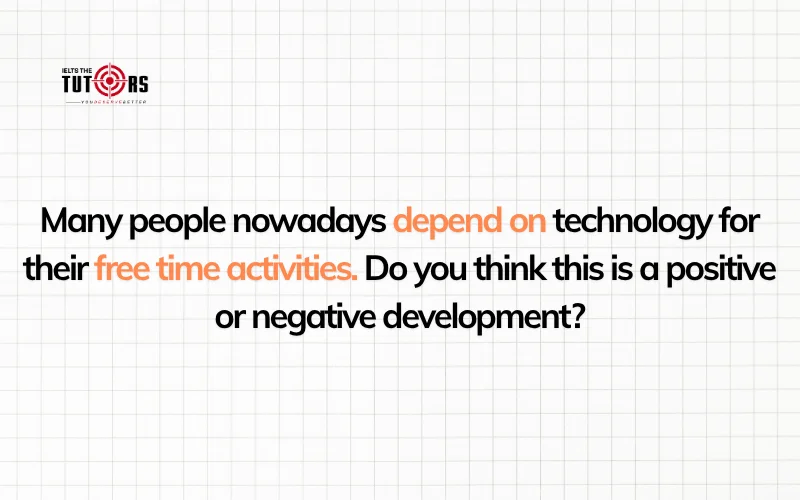
- Many people nowadays depend on technology for their free time activities. Do you think this is a positive or negative development?
- Some people believe that children’s leisure activities should always have an educational purpose. Others think children should be free to play and relax. Discuss both views and give your opinion.
- Children already spend enough time studying at school, so their free time should be reserved for play and physical activities. To what extent do you agree or disagree?
- Too many children spend most of their free time using screens. Why is this a problem, and what solutions can you suggest?
- Hobbies are healthy activities that all adults should have. To what extent do you agree or disagree?
- Popular hobbies change over time and often reflect current fashions rather than people’s genuine interests. To what extent do you agree or disagree?
- Shopping is becoming increasingly popular as a leisure activity. Why is it so popular, and what effects does this trend have on individuals and society?
- Some people prefer earning more money despite having less free time, while others choose a lower income in exchange for more leisure. Discuss both views and give your opinion.
- Some people believe dangerous sports should be prohibited, while others think individuals should be free to choose such activities. Discuss both views and give your opinion.
Ý tưởng triển khai chủ đề Leisure activities Writing task 2

Xu hướng phụ thuộc công nghệ để giải trí
Đề bài: Many people nowadays depend on technology for their free time activities. Do you think this is a positive or negative development?
Ideas for Leisure activities Writing task 2:
| Positive |
Negative |
- Technology gives people quick and convenient access to films, music, games and other forms of entertainment at any time.
- Digital entertainment is often cheaper than going to cinemas, restaurants or other recreational venues.
- Social media, video calls and online games help people stay connected with friends and relatives who live far away.
- Online communities allow people with similar interests to meet, share ideas and take part in group activities.
- Educational videos, online courses and learning apps allow people to develop new knowledge and practical skills during their free time.
- Digital tools support creative hobbies such as photography, video editing, music production and content creation.
- Personalised recommendations help users find content that matches their interests and preferred learning pace.
- Technology makes leisure activities more accessible to elderly people, people with disabilities and those living in remote areas.
- Games, videos and wellness apps can help people relax and reduce stress after work or study.
- A single digital device can provide many different forms of entertainment without requiring travel or favourable weather.
- Technology allows people to enjoy leisure activities privately and at their own pace.
- Digital platforms can introduce users to new cultures, ideas and interests from around the world.
|
- Spending too much leisure time on screens can cause obesity, eye strain, poor posture and sleep problems.
- Heavy technology use may reduce physical exercise, outdoor activities and exposure to nature.
- Excessive screen use can reduce face-to-face interaction and weaken communication skills, empathy and family relationships.
- Online relationships may be less meaningful than real-life connections, which can increase loneliness and social isolation.
- Social media, gaming and video platforms can become addictive and make it difficult for users to control their screen time.
- Constant notifications, short videos and instant entertainment may reduce attention span and make concentration more difficult.
- Algorithms may encourage endless scrolling or binge-watching, leading to procrastination and wasted time.
- Children and vulnerable users may be exposed to cyberbullying, scams, misinformation or inappropriate content.
- Social comparison and fear of missing out can contribute to anxiety, low self-esteem and depression.
- Overdependence on devices can make people feel bored, anxious or uncomfortable when they have no Internet connection or phone access.
- Passive screen-based entertainment may replace reading, sports, crafts and other active or creative hobbies.
- Technology companies may collect personal data, track user behaviour and create privacy or security risks.
|
Xem thêm:
Hoạt động giải trí của trẻ nên mang tính giáo dục hay chỉ để vui chơi
Đề bài: Some people believe that children’s leisure activities should always have an educational purpose. Others think children should be free to play and relax. Discuss both views and give your opinion.
Ideas for Leisure activities Writing task 2:
| Leisure Should Be Educational |
Children Should Be Free to Play |
- Educational activities allow children to use their free time to develop useful knowledge and skills.
- Reading, puzzles and educational games can improve language, memory and problem-solving abilities.
- Structured activities give parents and teachers opportunities to guide children’s development.
- Educational leisure can prepare children for academic challenges and improve their performance at school.
- Productive activities can reduce excessive screen use and prevent children from developing unhealthy habits.
- Practical activities such as cooking, sports and building games can combine enjoyment with real-world learning.
- Educational leisure may help children develop discipline, concentration and better time-management skills.
- Learning can still be enjoyable when activities are engaging and suitable for the child’s age.
- A balanced approach can include educational activities without making every moment of free time academically focused.
|
- Free play gives children time to relax, recharge and enjoy their childhood.
- Unstructured play encourages creativity because children can invent their own games, stories and ideas.
- Playing with others helps children learn cooperation, sharing, empathy and conflict resolution.
- Outdoor play supports physical fitness, coordination and healthy development.
- Choosing their own activities helps children become more independent and discover their personal interests.
- Trial and error during play teaches children resilience and allows them to solve problems without constant adult help.
- Constantly turning leisure into lessons may create stress, reduce motivation and make children feel pressured.
- Play is also a natural form of learning, so not every activity needs to have a formal educational purpose.
- Children should have enough freedom to play while still taking part in some meaningful learning activities.
|
Trẻ nên dành thời gian rảnh cho học tập hay vui chơi và vận động
Đề bài: Children already spend enough time studying at school, so their free time should be reserved for play and physical activities. To what extent do you agree or disagree?
Ideas for topic Leisure activities Writing task 2:
| Agree |
Disagree |
- Physical activities improve children’s fitness, strengthen their bones and muscles, and help prevent obesity.
- Play and exercise help children reduce stress, improve their mood and recover from pressure at school.
- Team sports and group games teach children cooperation, communication and conflict resolution.
- Active and unstructured play can improve concentration, creativity and problem-solving skills.
- Children already spend many hours at school, so they need time to rest and take a break from academic work.
- A healthy childhood should support physical, emotional and social development rather than focus only on academic achievement.
- Limiting additional study can prevent burnout, anxiety and other mental health problems caused by excessive academic pressure.
- Playing sports or spending time outdoors with parents can strengthen family relationships and create shared memories.
- Children who develop active habits are more likely to maintain a healthy lifestyle in adulthood.
|
- Children who struggle academically may need extra time for homework, tutoring or exam preparation.
- Music, art, language classes and academic clubs can develop valuable skills beyond the school curriculum.
- Structured activities may be more beneficial than allowing children to spend all their free time on phones or video games.
- Some children genuinely enjoy studying or pursuing intellectual interests during their free time.
- Older students may require more study time because they face important examinations and university entrance competition.
- Children have different needs and interests, so a fixed rule about how they use their free time may not suit everyone.
- Academic success can create better educational and career opportunities, making extra study worthwhile in some circumstances.
- A balanced schedule can include study, creative activities, screen time, physical exercise and relaxation.
- The best use of free time should depend on the child’s age, academic needs and personal preferences.
|
Trẻ coi tivi, máy tính, điện thoại quá nhiều trong thời gian rảnh
Đề bài: Too many children spend most of their free time using screens. Why is this a problem, and what solutions can you suggest?
Ideas for topic Leisure activities Writing task 2:
| Problems |
Solutions |
- Excessive screen use can cause eye strain, poor posture, headaches and sleep problems.
- Spending too much time sitting may reduce physical activity and increase the risk of childhood obesity.
- Social media, games and videos can become addictive and make children anxious or emotionally dependent on online attention.
- Online comparison, cyberbullying and unrealistic content may damage children’s confidence and mental health.
- Heavy screen use can weaken face-to-face communication, empathy and the ability to understand social cues.
- Digital distractions can reduce concentration, reading time and academic performance.
- Children may be exposed to violent content, false information, online predators and privacy risks.
- Passive digital entertainment can reduce imaginative play, creativity and real-world problem-solving.
- Constant device use can interrupt family conversations and weaken relationships between parents and children.
- Many parents lack the knowledge or confidence needed to manage their children’s technology use.
- Features such as autoplay, endless scrolling and frequent notifications encourage children to stay online for longer.
- A lack of affordable recreational facilities may leave children with few alternatives to digital entertainment.
|
- Parents should set clear daily screen limits and avoid allowing devices during meals or before bedtime.
- Children should be encouraged to take part in outdoor play, sports and other active hobbies.
- Parents should monitor children’s online habits and teach them how to use technology in a healthy and balanced way.
- Schools should teach digital literacy, online safety and responsible social media use.
- Families and communities should create more opportunities for children to interact through clubs, group activities and shared events.
- Schools and parents should establish device-free study periods and encourage books, puzzles and creative activities.
- Technology companies should provide stronger age filters, privacy controls and child-friendly versions of their platforms.
- Children should have regular access to arts, music, crafts, cooking and other activities that require active participation.
- Families should plan screen-free meals, outings and shared activities to spend more meaningful time together.
- Governments, schools and healthcare providers should offer practical guidance, workshops and public awareness campaigns.
- Technology companies should introduce time reminders, usage dashboards and default limits for young users.
- Governments and local communities should invest in parks, libraries, sports facilities and low-cost activity programmes.
|
Vai trò của sở thích đối với người trưởng thành
Đề bài: Hobbies are healthy activities that all adults should have. To what extent do you agree or disagree?
Ideas for topic Leisure activities Writing task 2:
| Agree |
Disagree |
- Active hobbies such as cycling, swimming, gardening and dancing can improve fitness and reduce the risks of a sedentary lifestyle.
- Creative and relaxing hobbies can reduce stress, prevent burnout and support better mental health.
- Reading, puzzles and learning-based activities can keep the mind active and support cognitive health as people age.
- Group activities can help adults make friends, reduce loneliness and develop a stronger sense of community.
- Hobbies can create a healthier work–life balance by giving people interests and goals outside their careers.
- Learning a new hobby can build useful skills, confidence, patience and a sense of achievement.
- Personal interests can provide enjoyment, purpose and a stronger identity beyond a person’s job.
- Active, mental and social hobbies can help older adults maintain their health, independence and social connections.
- Creative hobbies can encourage imagination, self-expression and new ways of solving problems.
- Overall, hobbies are highly beneficial when they are enjoyable, affordable and suited to a person’s circumstances.
|
- Many adults lack spare time because of demanding jobs, childcare or other family responsibilities.
- Some hobbies require expensive equipment, travel or membership fees, making them unsuitable for people with limited incomes.
- Not everyone enjoys having a structured hobby, as some people prefer simple rest or informal leisure activities.
- Physical disabilities, chronic illnesses or mental health difficulties may limit a person’s ability or motivation to pursue certain hobbies.
- Caregivers may have little energy left for personal activities after looking after children, elderly parents or sick relatives.
- Irregular shifts, frequent travel and high-pressure careers can make it difficult to maintain a hobby consistently.
- Cultural expectations may place greater importance on work and family duties than on individual leisure pursuits.
- People in rural or remote areas may lack the facilities, equipment or groups needed for particular activities.
- Adults can gain similar benefits through family time, religious activities, community service or everyday exercise without having a formal hobby.
- Hobbies should therefore be encouraged rather than treated as an obligation that every adult must follow.
|
Sở thích cá nhân thay đổi theo xu hướng
Đề bài: Popular hobbies change over time and often reflect current fashions rather than people’s genuine interests. To what extent do you agree or disagree?
Ideas for topic Leisure activities Writing task 2:
| Agree |
Disagree |
- Social media and influencers can quickly turn certain activities into popular trends that people follow mainly to fit in or avoid missing out.
- Marketing and consumer culture encourage people to buy equipment and try hobbies that are presented as fashionable or desirable.
- Peer pressure can influence hobby choices because individuals may adopt activities that are popular among friends, colleagues or social groups.
- New technology frequently creates short-lived hobbies, such as certain games, apps or digital activities that lose popularity when newer trends appear.
- Celebrity endorsements can make a sport or activity popular for a limited period, but public interest often declines when the trend fades.
- Some hobbies return in cycles because nostalgia and changing fashions make older activities attractive again.
- Trend-based hobbies are often abandoned quickly, which suggests that many people were attracted by popularity rather than genuine enjoyment.
- Changes in popular hobbies across different decades show that fashion clearly affects which activities receive the most attention.
|
- Many hobbies, such as reading, gardening, cooking and playing sports, remain popular across generations because they meet lasting human interests.
- People are more likely to continue hobbies that match their personality, values and natural preferences.
- Genuine passion often leads people to spend years improving their skills, even when the activity is no longer fashionable.
- Long-term commitment, regular practice and participation in competitions show that many hobbies are driven by personal motivation rather than fashion.
- Cultural and family traditions help preserve hobbies such as traditional music, crafts, dancing and cooking across generations.
- Health and wellbeing goals encourage people to maintain activities such as running, swimming, cycling or meditation over the long term.
- Practical factors such as cost, available time and usefulness often influence hobby choices more strongly than social trends.
- Fashion may encourage people to try a hobby, but genuine interest is usually what makes them continue it.
|
Mua sắm như một hoạt động giải trí
Đề bài: Shopping is becoming increasingly popular as a leisure activity. Why is it so popular, and what effects does this trend have on individuals and society?
Ideas for topic Leisure activities Writing task 2:
| Reasons |
Effects |
- Modern shopping centres combine shops with cinemas, restaurants and play areas, making them attractive entertainment destinations.
- Window shopping offers a free and convenient form of entertainment that requires no special skills or equipment.
- Buying new products can provide temporary pleasure, reduce stress and offer an escape from boredom or daily problems.
- Shopping is often treated as a social activity that allows friends and family members to spend time together.
- Fashion trends and the desire to display wealth or social status encourage people to shop more frequently.
- Advertising, discounts and influencer marketing create desire and pressure consumers to make quick purchasing decisions.
- Online stores and mobile applications allow people to browse and buy products at any time from almost anywhere
- Shopping centres provide safe, clean and comfortable environments that are accessible in different weather conditions.
- Shopping fits easily into busy lifestyles because it can be combined with eating, entertainment and essential errands.
- Consumer spending supports retail businesses, creates employment and generates tax revenue.
- The wide range of stores allows people with different budgets and preferences to enjoy the same activity.
- Shopping has become a common weekend routine because it is familiar, convenient and widely available.
- Frequent buying increases demand for mass production, fast fashion and global delivery services.
- Online shopping and global supply chains make products cheaper and easier to obtain.
|
- Shopping can provide social interaction, relaxation and enjoyable time with family or friends.
- Walking around shopping centres may provide light exercise and expose people to new products, trends and ideas.
- Relying on shopping to improve mood can develop into compulsive behaviour and create long-term dissatisfaction.
- Social pressure and constant comparison may cause low self-esteem, status anxiety and excessive materialism.
- Impulsive spending can lead to credit card debt, financial stress and regret after unnecessary purchases.
- Aggressive marketing can encourage people to buy products they do not need and live beyond their financial means.
- Personalised recommendations, rewards and one-click payments can make online shopping difficult to control.
- The popularity of private shopping centres may reduce the use of parks, community spaces and other public leisure facilities.
- People may spend less time on healthier activities such as sport, creative hobbies and outdoor recreation.
- Large shopping centres and online retailers may weaken small local businesses and traditional shopping streets.
- Visible differences in spending power can increase social comparison and highlight economic inequality.
- A culture centred on consumption may weaken community values and make personal identity increasingly dependent on possessions.
- Overconsumption creates packaging waste, fills landfills and increases pressure on natural resources.
- Manufacturing and transporting goods increase carbon emissions, energy use and environmental pollution.
|
Thu nhập cao hay có nhiều thời gian rảnh
Đề bài: Some people believe dangerous sports should be prohibited, while others think individuals should be free to choose such activities. Discuss both views and give your opinion.
Ideas for topic Leisure activities Writing task 2:
| Ban Dangerous Sports |
Allow People to Choose |
- Dangerous sports can cause fatal accidents, permanent disabilities and serious injuries that reduce a person’s quality of life.
- Accidents place pressure on public healthcare services and may require expensive rescue operations funded by taxpayers.
- Rescue teams may also be placed in danger while trying to help injured participants in remote or hazardous locations.
- Serious injury or death can cause emotional distress and long-term financial difficulties for participants’ families.
- Social media can glorify reckless stunts and encourage young people to copy dangerous behaviour without understanding the consequences.
- These activities involve avoidable risks, while safer alternatives can provide exercise, excitement and entertainment.
- Organisers and insurance companies may face complex legal disputes over responsibility when accidents occur.
- The social benefits may not justify the medical costs and public resources required when serious accidents happen.
- A ban could protect inexperienced participants who underestimate the level of danger involved.
- Governments have a duty to prevent unnecessary deaths when an activity presents an exceptionally high level of risk.
|
- Adults should have the freedom to take informed risks as long as their choices do not directly harm other people.
- Proper training, safety equipment and professional supervision can significantly reduce the risk of accidents.
- Legal regulation is safer than prohibition because licensing and safety standards allow authorities to supervise these activities.
- Banning dangerous sports may push them underground, where participants receive less training and face greater risks.
- Education and public awareness can help people understand the risks and make more responsible decisions.
- Extreme sports improve physical fitness and can develop confidence, resilience and self-discipline.
- Participants can accept personal responsibility by signing waivers and purchasing private insurance.
- Extreme sports support tourism, create jobs and generate income for local businesses and event organisers.
- Many other risky activities, including driving and contact sports, remain legal, so banning only extreme sports would be inconsistent.
- Overcoming difficult challenges can give people a strong sense of achievement, purpose and personal fulfilment.
|
Quyền tự do tham gia các môn thể thao nguy hiểm
Đề bài: Some people believe dangerous sports should be prohibited, while others think individuals should be free to choose such activities. Discuss both views and give your opinion.
Ideas for topic Leisure activities Writing task 2:
| Should Be Prohibited |
Should Be Free to Choose |
- Dangerous sports can cause fatal accidents, permanent disabilities and serious injuries that severely reduce a person’s quality of life.
- Participants may place pressure on public healthcare and emergency services when costly treatment or rescue operations are required.
- Serious injuries or death can cause emotional and financial hardship for families, especially when the participant has dependants.
- Social media and peer pressure may encourage inexperienced young people to copy dangerous stunts without understanding the risks.
- These activities involve avoidable risks because safer forms of exercise and recreation are widely available.
- Legal and insurance disputes may arise when organisers, participants and rescue services disagree over responsibility for accidents.
- Allowing dangerous sports may normalise reckless behaviour and encourage others to take unnecessary risks.
- The wider public may bear the social and financial costs, while the main benefit is often limited to personal excitement.
|
- Adults should be free to decide which risks they are willing to take, provided their choices do not directly harm others.
- Proper training, professional supervision and modern safety equipment can reduce the risk of serious accidents.
- Extreme sports can improve physical fitness, confidence, resilience and mental wellbeing.
- Adventure sports support tourism, create jobs and generate income for local businesses and communities.
- Overcoming difficult challenges can give participants a strong sense of achievement, purpose and personal growth.
- Many other risky activities, such as driving, boxing and smoking, remain legal, so banning only extreme sports would be inconsistent.
- Participants can accept responsibility through informed consent, liability waivers and private insurance.
- Regulation, licensing and safety education are more practical than a complete ban, which may push these activities underground.
|
Phân tích đề bài và bài mẫu topic Leisure activities Writing task 2
Đề bài: Many people nowadays depend on technology for their free time activities. Do you think this is a positive or negative development?
Phân tích đề bài:
- Dạng bài: Positive or Negative Development
- Từ khoá chính: depend on technology, free time activities
- Hướng triển khai: Trước hết hãy nêu những lợi ích của công nghệ trong giải trí, như giúp mọi người dễ tiếp cận nội dung và duy trì kết nối với người khác. Sau đó, bài viết tập trung phân tích các tác động tiêu cực nghiêm trọng hơn đối với sức khỏe, khả năng giao tiếp và các mối quan hệ, từ đó khẳng định đây là một xu hướng nhìn chung không tích cực.
Dàn bài gợi ý:
Introduction
- Paraphrase đề bài: Công nghệ ngày càng trở thành một phần quan trọng trong cách con người giải trí.
- Thesis statement: Xu hướng này mang lại một số lợi ích, nhưng nhìn chung những tác động tiêu cực đến sức khỏe và đời sống xã hội đáng lo ngại hơn.
Body Paragraph 1 – Những mặt tích cực
- Công nghệ giúp mọi người tiếp cận phim, nhạc và trò chơi nhanh chóng với chi phí hợp lý.
- Các nền tảng trực tuyến giúp duy trì liên lạc với bạn bè và người thân ở xa.
- Video giáo dục, khóa học trực tuyến và ứng dụng học tập có thể kết hợp giải trí với phát triển kiến thức, kỹ năng.
- Người cao tuổi, người khuyết tật hoặc người sống ở vùng xa có thêm nhiều lựa chọn giải trí.
- Các công cụ số cũng hỗ trợ những sở thích sáng tạo như chụp ảnh, chỉnh sửa video và làm nhạc.
Body Paragraph 2 – Những mặt tiêu cực
- Dành quá nhiều thời gian trước màn hình có thể gây béo phì, mỏi mắt, tư thế xấu và rối loạn giấc ngủ.
- Giải trí bằng thiết bị số khiến nhiều người ít vận động và giảm thời gian tham gia các hoạt động ngoài trời.
- Việc phụ thuộc vào mạng xã hội và trò chơi trực tuyến có thể làm giảm giao tiếp trực tiếp, ảnh hưởng đến quan hệ gia đình.
- Một số người khó kiểm soát thời gian sử dụng thiết bị, từ đó dễ rơi vào tình trạng nghiện công nghệ.
- Nội dung trên mạng xã hội có thể gây lo âu, cảm giác tự ti, sợ bị bỏ lỡ và cô lập xã hội.
- Thói quen lướt nội dung liên tục còn làm giảm khả năng tập trung và thay thế các hoạt động lành mạnh như đọc sách hoặc chơi thể thao.
Conclusion
- Tóm tắt: Công nghệ giúp hoạt động giải trí trở nên thuận tiện, đa dạng và dễ tiếp cận hơn.
- Nhận định: Tuy nhiên, đây vẫn là xu hướng tiêu cực nếu con người sử dụng thiếu kiểm soát, vì nó có thể gây hại cho sức khỏe, các mối quan hệ và chất lượng cuộc sống.
Bài mẫu Writing task 2 topic Leisure activities:
Technology plays an increasingly important role in how people spend their free time. Although digital entertainment offers convenience and wider access to leisure activities, I believe this is largely a negative development because excessive use can harm both health and personal relationships.
On the positive side, technology makes entertainment more affordable and accessible. People can watch films, listen to music or play games at home without spending money on travel or tickets. Online platforms also help users stay connected with friends and relatives who live far away, while educational videos and creative applications allow them to learn new skills during their leisure time. These benefits are especially valuable for older people, those with disabilities and residents of remote areas who may have fewer recreational options.
However, the disadvantages are more serious. Spending long periods in front of screens can contribute to eye strain, poor posture, sleep problems and a lack of physical exercise. Technology-based leisure may also replace outdoor activities, sport and other active hobbies that support physical well-being. In addition, heavy use of social media and online games can reduce face-to-face interaction, weakening communication skills and family bonds. Many platforms are designed to keep users engaged for as long as possible, which may encourage endless scrolling, binge-watching and poor time management. Constant exposure to carefully edited online content can also lead to social comparison, anxiety and low self-esteem. As a result, people may feel more isolated despite being digitally connected.
In conclusion, technology has made entertainment easier to access and has created useful opportunities for communication and learning. Nevertheless, its negative effects on physical health, mental well-being and meaningful social interaction make this a largely harmful development.
(278 words, band 8.0)
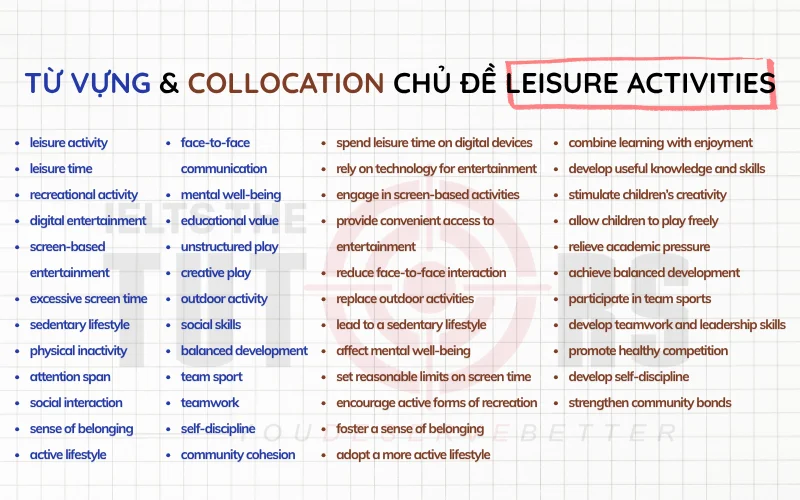
Từ vựng & collocation chủ đề Leisure activities
Từ vựng nên học chủ đề Leisure Activities IELTS Writing Task 2
| Từ vựng |
Từ loại |
Ý nghĩa |
| leisure activity |
noun phrase |
hoạt động giải trí |
| leisure time |
noun phrase |
thời gian rảnh |
| recreational activity |
noun phrase |
hoạt động vui chơi, thư giãn |
| digital entertainment |
noun phrase |
hình thức giải trí kỹ thuật số |
| screen-based entertainment |
noun phrase |
hình thức giải trí qua màn hình |
| excessive screen time |
noun phrase |
thời gian sử dụng màn hình quá mức |
| sedentary lifestyle |
noun phrase |
lối sống ít vận động |
| physical inactivity |
noun phrase |
tình trạng thiếu vận động |
| attention span |
noun phrase |
khả năng duy trì sự tập trung |
| social interaction |
noun phrase |
sự tương tác xã hội |
| face-to-face communication |
noun phrase |
giao tiếp trực tiếp |
| mental well-being |
noun phrase |
sức khỏe tinh thần |
| educational value |
noun phrase |
giá trị giáo dục |
| unstructured play |
noun phrase |
hoạt động vui chơi tự do |
| creative play |
noun phrase |
hoạt động vui chơi sáng tạo |
| outdoor activity |
noun phrase |
hoạt động ngoài trời |
| social skills |
noun phrase |
kỹ năng xã hội |
| balanced development |
noun phrase |
sự phát triển cân bằng |
| team sport |
noun phrase |
môn thể thao đồng đội |
| teamwork |
noun |
khả năng làm việc nhóm |
| self-discipline |
noun |
tính tự giác, kỷ luật |
| community cohesion |
noun phrase |
sự gắn kết cộng đồng |
| sense of belonging |
noun phrase |
cảm giác gắn bó với cộng đồng |
| active lifestyle |
noun phrase |
lối sống năng động |
Collocation hữu ích cho IELTS Writing Task 2 topic Leisure Activities
| Collocation |
Ý nghĩa |
| spend leisure time on digital devices |
dành thời gian rảnh cho các thiết bị số |
| rely on technology for entertainment |
phụ thuộc vào công nghệ để giải trí |
| engage in screen-based activities |
tham gia các hoạt động qua màn hình |
| provide convenient access to entertainment |
giúp mọi người dễ dàng tiếp cận nội dung giải trí |
| reduce face-to-face interaction |
làm giảm tương tác trực tiếp |
| replace outdoor activities |
thay thế các hoạt động ngoài trời |
| lead to a sedentary lifestyle |
dẫn đến lối sống ít vận động |
| affect mental well-being |
ảnh hưởng đến sức khỏe tinh thần |
| set reasonable limits on screen time |
đặt giới hạn hợp lý cho thời gian dùng màn hình |
| encourage active forms of recreation |
khuyến khích các hình thức giải trí năng động |
| combine learning with enjoyment |
kết hợp học tập với niềm vui |
| develop useful knowledge and skills |
phát triển kiến thức và kỹ năng hữu ích |
| stimulate children’s creativity |
kích thích khả năng sáng tạo của trẻ |
| allow children to play freely |
cho phép trẻ vui chơi tự do |
| relieve academic pressure |
giảm áp lực học tập |
| develop social and communication skills |
phát triển kỹ năng xã hội và giao tiếp |
| achieve balanced development |
đạt được sự phát triển cân bằng |
| strike a balance between learning and play |
cân bằng giữa học tập và vui chơi |
| participate in team sports |
tham gia các môn thể thao đồng đội |
| develop teamwork and leadership skills |
phát triển kỹ năng làm việc nhóm và lãnh đạo |
| promote healthy competition |
thúc đẩy sự cạnh tranh lành mạnh |
| develop self-discipline |
hình thành tính tự giác và kỷ luật |
| strengthen community bonds |
củng cố sự gắn kết cộng đồng |
| foster a sense of belonging |
nuôi dưỡng cảm giác gắn bó |
| adopt a more active lifestyle |
hình thành lối sống năng động hơn |
Qua những nội dung trên, bạn có thể thấy IELTS Writing Task 2 topic Leisure Activities không chỉ xoay quanh sở thích cá nhân mà còn liên quan đến công nghệ, sức khỏe, trẻ em và cách con người sử dụng thời gian rảnh. Khi đã nắm rõ các hướng ra đề phổ biến và chuẩn bị sẵn vốn từ phù hợp, việc phát triển ý trong bài viết sẽ trở nên dễ dàng hơn.
Hãy tiếp tục theo dõi IELTS The Tutors để tham khảo thêm nhiều chủ đề IELTS Writing Task 2 khác và từng bước cải thiện kỹ năng viết của mình nhé!