

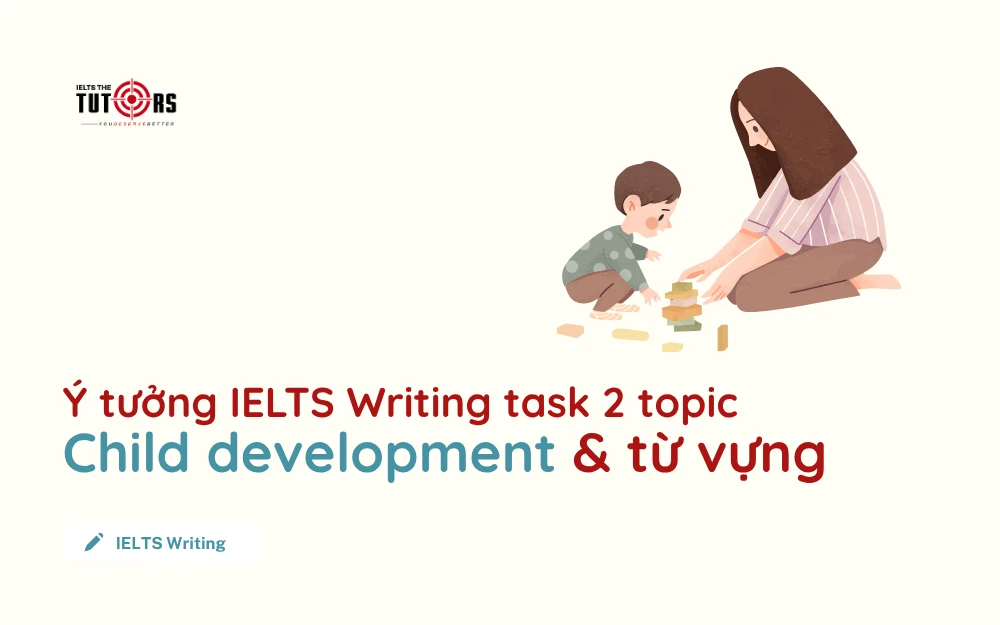
Chủ đề Child development liên quan đến sự phát triển của trẻ chịu ảnh hưởng từ nhiều yếu tố, từ cách nuôi dạy của cha mẹ đến môi trường học tập, công nghệ và mức độ tự do trong cuộc sống. Bài viết từ IELTS The Tutors sẽ giúp bạn tìm hiểu các hướng ra đề phổ biến, tham khảo cách phát triển ý và bổ sung từ vựng hữu ích cho IELTS Writing Task 2 topic Child Development.
Các vấn đề thường gặp trong chủ đề Child development
Trong IELTS Writing Task 2, chủ đề Child Development thường đề cập đến những yếu tố ảnh hưởng đến kiến thức, tính cách, kỹ năng xã hội và khả năng tự lập của trẻ. Một số vấn đề thường gặp gồm:
- Cách cha mẹ dành thời gian cho con, đặt ra kỳ vọng, áp dụng kỷ luật và hướng dẫn trẻ phân biệt đúng sai. Khi cha mẹ quá bận rộn, trẻ có thể thiếu sự quan tâm, hỗ trợ tinh thần và định hướng cần thiết trong quá trình trưởng thành.
- Vai trò của nhà trường trong việc trang bị kiến thức, phát triển kỹ năng giao tiếp và hình thành ý thức trách nhiệm cho trẻ. Đề bài cũng có thể bàn đến độ tuổi bắt đầu đi học, áp lực thành tích hoặc việc khuyến khích trẻ đặt ra những mục tiêu lớn. Nếu chương trình học quá nặng, trẻ sẽ có ít thời gian hơn cho vui chơi, vận động và sáng tạo.
- Ảnh hưởng của công nghệ đến sức khỏe, khả năng tư duy và kỹ năng giao tiếp của trẻ. Bên cạnh đó, quảng cáo và các hoạt động thương mại cũng có thể tác động đến sở thích, thói quen tiêu dùng và cách trẻ nhìn nhận giá trị vật chất.
- Mức độ tự do trẻ nên có khi lựa chọn quần áo, thức ăn, hoạt động giải trí hoặc cách sử dụng thời gian. Trao quyền lựa chọn có thể giúp trẻ tự tin và độc lập hơn, nhưng vẫn cần sự hướng dẫn phù hợp từ người lớn.
Ý tưởng triển khai IELTS Writing task 2 topic Child development
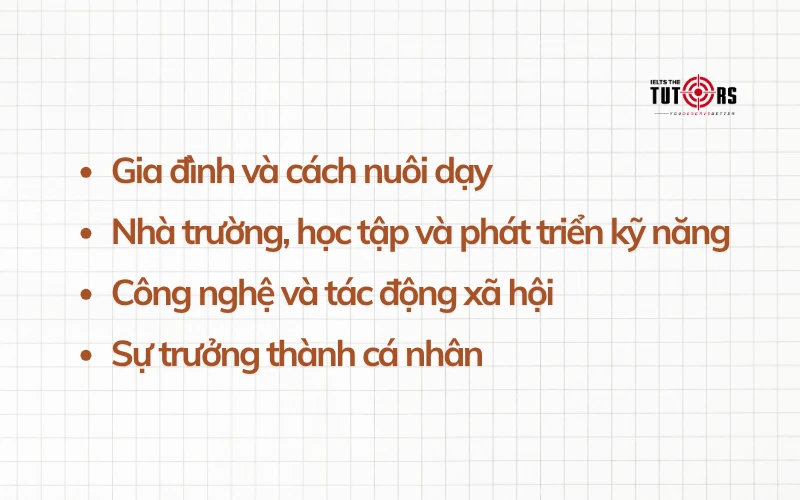
Gia đình và cách nuôi dạy
Đề bài: Nowadays parents put too much pressure on their children to succeed. What is the reason for doing this? Is this a positive or negative development?
Yêu cầu đề bài:
- Giải thích vì sao cha mẹ tạo quá nhiều áp lực cho con cái.
- Đánh giá xu hướng này mang lại ảnh hưởng tích cực hay tiêu cực.
Ideas for IELTS Writing task 2 topic Child development:
Reasons Why Parents Pressure Children
- Parents may worry that intense competition, automation and economic uncertainty will make it difficult for their children to find secure employment.
- Rising living costs and fear of downward social mobility can make parents believe that only outstanding children will succeed financially.
- Competitive education systems encourage parents to focus heavily on grades, examinations and admission to prestigious universities.
- Parents often compare their children with classmates or relatives because academic success is linked to family status and pride.
- Cultural expectations may place family honour and future success on children’s academic or professional achievements.
- Some parents project their own unfulfilled ambitions onto their children and push them towards careers or activities they once wanted for themselves.
- Fear-based parenting can lead adults to believe that strict control is necessary to protect children from future failure.
- Social media and competition among parents can create pressure to ensure that children are not seen as falling behind their peers.
- Digital school platforms allow parents to monitor grades, homework and attendance continuously, increasing their involvement in daily performance.
- Many parents define success narrowly through prestigious degrees, high-paying careers and visible achievements.
- Parents may believe that intensive preparation is necessary because university places and desirable careers are limited.
- Overall, parental pressure often comes from concern about children’s future, although it may also reflect social expectations or the parents’ personal ambitions.
| Positive | Negative |
|
|
Nhà trường, học tập và phát triển kỹ năng
Đề bài: In some cultures, children are often told that they can achieve anything if they try hard enough. What are the advantages and disadvantages of giving children this message?
Yêu cầu đề bài:
- Phân tích những lợi ích khi trẻ được dạy rằng chỉ cần cố gắng, các em có thể đạt được mục tiêu.
- Phân tích những hạn chế hoặc tác động tiêu cực của thông điệp này.
Ideas for IELTS Writing task 2 topic Child development:
| Advantages | Disadvantages |
|
|
Công nghệ và tác động xã hội
Đề bài: Some children spend hours every day on their smartphones. Why is this the case? Do you think this is a positive or negative development?
Yêu cầu đề bài:
- Giải thích vì sao trẻ em dành nhiều giờ mỗi ngày để sử dụng điện thoại thông minh.
- Đánh giá xu hướng này mang lại ảnh hưởng tích cực hay tiêu cực.
Ideas for IELTS Writing task 2 topic Child development:
Reasons Children Spend Hours on Smartphones
- Social media, video platforms and mobile games use notifications, personalised content and endless scrolling to keep children engaged.
- Children stay online to communicate with friends and avoid missing conversations, trends or group activities.
- Games, videos and music provide instant entertainment whenever children feel bored.
- Children often copy parents who use their phones frequently or allow unrestricted screen time at home.
- Some children use smartphones to escape stress, loneliness or difficulties at home or school.
- Limited access to outdoor spaces, sports or supervised activities can make smartphones the easiest form of recreation.
- Online games provide rewards, competition and a sense of progress that encourage children to continue playing.
- Schools increasingly require students to use devices for lessons, homework and communication.
- Habits formed during online learning and periods of social isolation have made long hours of device use feel normal.
- Weak parental monitoring and the absence of clear screen-time rules allow children to use their devices without limits.
| Positive | Negative |
|
|
Sự trưởng thành cá nhân
Đề bài: Some people believe that allowing children to make their own choices on everyday matters, such as food, clothes and entertainment, is likely to result in a society of individuals who only think about their own wishes. Others believe that it is important for children to make decisions about matters that affect them. Discuss both views and give your own opinion.
Yêu cầu đề bài:
- Trình bày quan điểm cho rằng nếu trẻ được tự quyết định quá nhiều, chúng có thể trở nên ích kỷ và chỉ quan tâm đến mong muốn của bản thân.
- Phân tích quan điểm cho rằng trẻ nên được tham gia quyết định những vấn đề có ảnh hưởng trực tiếp đến mình.
- Nêu rõ ý kiến cá nhân (đây là phần bắt buộc).
Ideas for IELTS Writing task 2 topic Child development:
| Giving Children Choices Can Create Selfishness | Giving Children Choices Supports Development |
|
|
Từ vựng & collocation ăn điểm chủ đề Child development
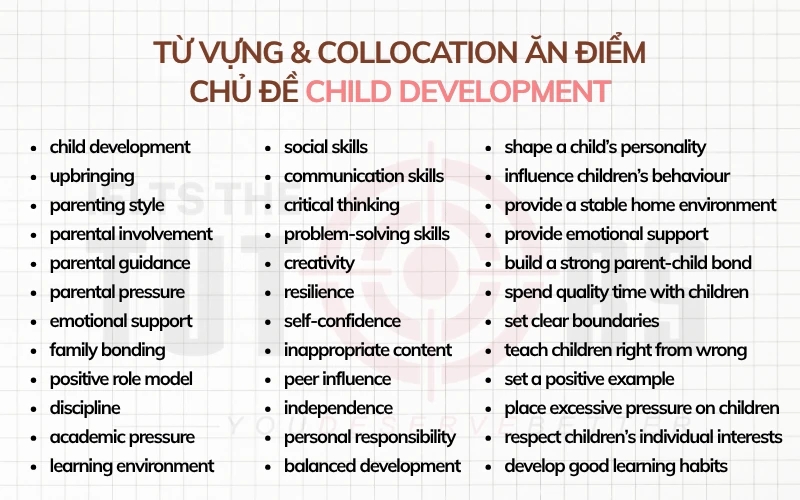
Từ vựng nên học cho IELTS Writing Task 2 topic Child Development
| Từ vựng | Từ loại | Ý nghĩa |
| child development | noun phrase | sự phát triển của trẻ |
| upbringing | noun | quá trình nuôi dưỡng và giáo dục trẻ |
| parenting style | noun phrase | phương pháp nuôi dạy con |
| parental involvement | noun phrase | sự tham gia của cha mẹ vào cuộc sống của con |
| parental guidance | noun phrase | sự hướng dẫn của cha mẹ |
| parental pressure | noun phrase | áp lực từ cha mẹ |
| emotional support | noun phrase | sự hỗ trợ về mặt cảm xúc |
| family bonding | noun phrase | sự gắn kết gia đình |
| positive role model | noun phrase | hình mẫu tích cực |
| discipline | noun | tính kỷ luật; phương pháp uốn nắn hành vi |
| academic pressure | noun phrase | áp lực học tập |
| learning environment | noun phrase | môi trường học tập |
| social skills | noun phrase | kỹ năng xã hội |
| communication skills | noun phrase | kỹ năng giao tiếp |
| critical thinking | noun phrase | tư duy phản biện |
| problem-solving skills | noun phrase | kỹ năng giải quyết vấn đề |
| creativity | noun | khả năng sáng tạo |
| resilience | noun | khả năng vượt qua khó khăn |
| self-confidence | noun | sự tự tin |
| screen time | noun phrase | thời gian sử dụng thiết bị có màn hình |
| inappropriate content | noun phrase | nội dung không phù hợp |
| peer influence | noun phrase | ảnh hưởng từ bạn bè đồng trang lứa |
| independence | noun | tính tự lập |
| personal responsibility | noun phrase | trách nhiệm cá nhân |
| balanced development | noun phrase | sự phát triển cân bằng, toàn diện |
Collocation hữu ích cho chủ đề Child Development Writing Task 2
| Collocation | Ý nghĩa |
| play a vital role in children’s development | giữ vai trò quan trọng trong sự phát triển của trẻ |
| shape a child’s personality | định hình tính cách của trẻ |
| influence children’s behaviour | ảnh hưởng đến hành vi của trẻ |
| provide a stable home environment | tạo môi trường gia đình ổn định |
| provide emotional support | hỗ trợ trẻ về mặt cảm xúc |
| build a strong parent-child bond | xây dựng mối quan hệ cha mẹ – con cái bền chặt |
| spend quality time with children | dành thời gian ý nghĩa bên con |
| set clear boundaries | đặt ra những giới hạn rõ ràng |
| teach children right from wrong | dạy trẻ phân biệt đúng sai |
| set a positive example | làm gương tích cực |
| place excessive pressure on children | tạo áp lực quá mức lên trẻ |
| respect children’s individual interests | tôn trọng sở thích riêng của trẻ |
| create a supportive learning environment | xây dựng môi trường học tập tích cực |
| develop good learning habits | hình thành thói quen học tập tốt |
| develop social and communication skills | phát triển kỹ năng xã hội và giao tiếp |
| encourage independent thinking | khuyến khích tư duy độc lập |
| develop problem-solving skills | phát triển kỹ năng giải quyết vấn đề |
| stimulate children’s creativity | kích thích khả năng sáng tạo của trẻ |
| learn through play | học hỏi thông qua vui chơi |
| build confidence and resilience | xây dựng sự tự tin và khả năng vượt khó |
| spend excessive time on digital devices | dành quá nhiều thời gian cho thiết bị số |
| reduce face-to-face interaction | làm giảm tương tác trực tiếp |
| expose children to inappropriate content | khiến trẻ tiếp xúc với nội dung không phù hợp |
| set reasonable limits on screen time | đặt giới hạn hợp lý cho thời gian sử dụng màn hình |
| learn from their own mistakes | học hỏi từ chính sai lầm của mình |
| develop a sense of responsibility | hình thành ý thức trách nhiệm |
| take responsibility for their actions | chịu trách nhiệm về hành động của mình |
| support children’s balanced development | hỗ trợ sự phát triển toàn diện của trẻ |
Nhìn chung, IELTS Writing Task 2 topic Child Development thường khai thác những vấn đề gần gũi nhưng đòi hỏi người viết phải nhìn nhận từ cả góc độ của trẻ, gia đình, nhà trường và xã hội. Để làm bài tốt, bạn nên xác định rõ yếu tố đang ảnh hưởng đến trẻ, phân tích cả lợi ích lẫn hạn chế và lựa chọn ví dụ phù hợp với từng luận điểm.
Hy vọng những ý tưởng và từ vựng trong bài sẽ giúp bạn tự tin hơn khi gặp chủ đề Child Development. Hãy theo dõi IELTS The Tutors để có thêm tài liệu luyện viết IELTS Writing hay hơn nữa nhé!