

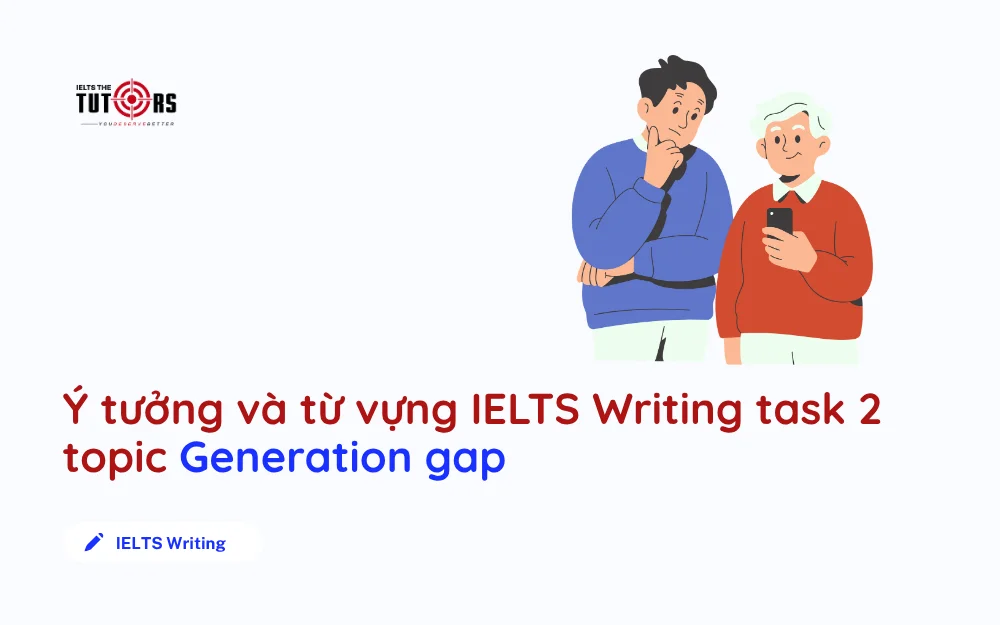
Topic Generation Gap Writing Task 2 thường khai thác sự khác biệt trong lối sống, quan điểm và cách giao tiếp giữa các thế hệ. Trong bài viết này, IELTS The Tutors sẽ tổng hợp các ý tưởng theo từng dạng vấn đề, đề mẫu, sample writing và từ vựng hữu ích cho IELTS Writing Task 2 topic Generation Gap, giúp bạn phát triển lập luận rõ ràng và dễ áp dụng hơn.
Các vấn đề thường gặp trong IELTS Writing task 2 topic Generation gap
Topic Generation Gap trong IELTS Writing Task 2 thường tập trung vào sự khác biệt trong suy nghĩ, lối sống và cách giao tiếp giữa người trẻ với cha mẹ hoặc ông bà. Đề bài có thể yêu cầu thí sinh phân tích nguyên nhân, hệ quả của khoảng cách thế hệ và đề xuất cách cải thiện mối quan hệ trong gia đình cũng như ngoài xã hội.
Một số vấn đề thường gặp trong đề topic Generation gap Writing task 2:
- Quan niệm của thế hệ trước về cách sống, cách ứng xử và định hướng tương lai có còn phù hợp với người trẻ trong xã hội hiện đại.
- Sự khác biệt giữa người trẻ với cha mẹ hoặc ông bà trong các vấn đề như nghề nghiệp, hôn nhân, tiền bạc, công nghệ và quyền tự do cá nhân.
- Những khác biệt về cách sử dụng ngôn ngữ, thói quen công nghệ và trải nghiệm sống khiến các thế hệ khó thấu hiểu và giao tiếp với nhau.
- Hệ quả của việc con cháu ít dành thời gian cho ông bà do lịch học, công việc bận rộn hoặc khoảng cách địa lý.
- Quan điểm cho rằng ông bà có nhiều kinh nghiệm quý giá để truyền lại cho con cháu, trong khi một số người cho rằng suy nghĩ của họ đã lỗi thời và khó phù hợp với thế hệ trẻ.
- Nguyên nhân khiến người cao tuổi ngày càng nhận được ít sự tôn trọng hơn từ xã hội và thế hệ trẻ.
Một số đề bài mẫu trong chủ đề Generation gap
Khi viết lập luận cho đề Generation gap Writing task 2, bạn nên xem xét quan điểm của cả người trẻ và người lớn tuổi để bài viết khách quan hơn. Dưới đây là một số đề mẫu từng xuất hiện trong đề thi thật hoặc được dự đoán trong các đợt forecast:
- Traditional ideas from older people about the way to live and behave are not helpful to young people and their futures. To what extent do you agree or disagree?
- Young people’s ideas and attitudes are different from those of their parents and grandparents. What are the differences? What problems may be caused?
- In some places, young people find it difficult to communicate with older people. Why is this? What are the solutions?
- In many modern societies, grandchildren rarely spend any quality time with their grandparents. What do you think are the consequences of this?
- Some people think grandparents have a lot to teach their grandchildren, while others think they are too out of date to connect with them. Discuss both views and give your opinion.
- Old people are becoming less respected by society and by the younger generation. Why is this happening? What can be done about it?
Ý tưởng triển khai chủ đề Generation gap Writing task 2
Quan điểm sống của người lớn tuổi có còn phù hợp với giới trẻ
Đề bài: Traditional ideas from older people about the way to live and behave are not helpful to young people and their futures. To what extent do you agree or disagree?
Ideas for Writing task 2 topic Generation gap:
| Traditional Ideas Are No Longer Helpful | Traditional Ideas Remain Valuable |
|
|
Sự khác biệt trong suy nghĩ giữa các thế hệ
Đề bài: Young people’s ideas and attitudes are different from those of their parents and grandparents. What are the differences? What problems may be caused?
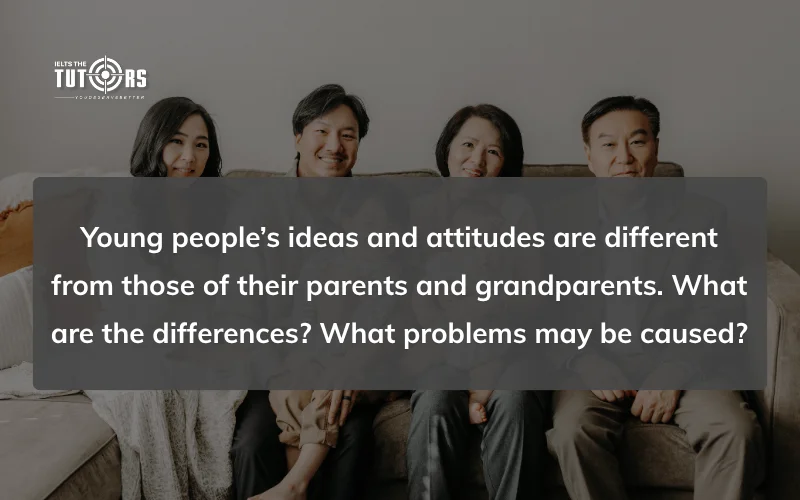
Ideas for Writing task 2 topic Generation gap:
| Differences Between Generations | Problems Caused by These Differences |
|
|
Khó khăn trong giao tiếp giữa người trẻ và người lớn tuổi
Đề bài: In some places, young people find it difficult to communicate with older people. Why is this? What are the solutions?
Ideas for Writing task 2 topic Generation gap:
| Causes | Solutions |
|
|
Hệ quả khi con cháu ít dành thời gian cho ông bà
Đề bài: In many modern societies, grandchildren rarely spend any quality time with their grandparents. What do you think are the consequences of this?
Ideas for Writing task 2 topic Generation gap:
| Consequence | Explanation |
| Children lose valuable knowledge and life experience. | Without regular contact with grandparents, children may miss family stories, practical skills, moral lessons and traditional knowledge passed down through generations. |
| Children receive less emotional support. | Grandparents often provide patience, affection and a different source of comfort, especially when children face conflicts with their parents. |
| Children may feel less connected to their family roots. | Limited interaction with grandparents can weaken their understanding of family history, cultural heritage and sense of belonging. |
| Children develop a narrower view of life. | They may have fewer opportunities to learn from older people’s experiences or understand how society and family life have changed over time. |
| Grandparents may experience loneliness and poor mental health. | Being separated from younger family members can make older people feel isolated, unwanted or excluded from family life. |
| Grandparents may lose their sense of purpose. | Without opportunities to guide or care for grandchildren, they may feel that they no longer have a meaningful role in the family. |
| The gap between generations may become wider. | Less contact between young and old can increase misunderstanding, age-based stereotypes and conflict between different generations. |
| Family traditions and cultural practices may gradually disappear. | Languages, customs, recipes and traditional values are more likely to be lost when grandparents cannot pass them on directly. |
| Young people may not learn how to care for older relatives. | Limited interaction with grandparents can leave them less prepared to understand ageing or support their parents later in life. |
| Governments may face greater pressure to support the elderly. | When family care becomes weaker, more older people may depend on healthcare services, residential facilities and public social support. |
Giá trị kinh nghiệm của ông bà đối với thế hệ trẻ
Đề bài: Some people think grandparents have a lot to teach their grandchildren, while others think they are too out of date to connect with them. Discuss both views and give your opinion.
Ideas for Writing task 2 topic Generation gap:
| Grandparents Have Valuable Lessons to Teach | Grandparents’ Advice May Be Less Relevant Today |
|
|
Sự suy giảm mức độ tôn trọng dành cho người cao tuổi
Đề bài: Old people are becoming less respected by society and by the younger generation. Why is this happening? What can be done about it?
Ideas for Writing task 2 topic Generation gap:
| Causes | Solutions |
|
|
Xem thêm:
Phân tích đề bài và bài mẫu IELTS Writing task 2 topic Generation gap
Đề bài: Young people’s ideas and attitudes are different from those of their parents and grandparents. What are the differences? What problems may be caused?
Phân tích đề bài:
- Dạng bài: Two-part Question
- Từ khoá chính: young people's ideas and attitudes, parents and grandparents
- Hướng phát triển: Bạn nên làm rõ những khác biệt giữa các thế hệ về giá trị sống, quan niệm gia đình và cách sử dụng công nghệ. Sau đó, bạn hãy phân tích các hệ quả như mâu thuẫn trong gia đình, khó thấu hiểu nhau và nguy cơ người cao tuổi bị cô lập.
Dàn bài gợi ý:
Introduction
- Paraphrase đề bài: Sự khác biệt giữa thế hệ trẻ và thế hệ lớn tuổi ngày càng rõ rệt trong xã hội hiện đại.
- Thesis statement: Bài viết sẽ phân tích những khác biệt chính giữa hai thế hệ và các vấn đề có thể phát sinh từ khoảng cách này.
Body Paragraph 1: Những khác biệt giữa các thế hệ
- Về lối sống, người trẻ thường coi trọng tự do cá nhân và trải nghiệm, trong khi thế hệ trước ưu tiên sự ổn định và các giá trị truyền thống.
- Trong hôn nhân và gia đình, người trẻ có xu hướng kết hôn muộn, sống độc thân hoặc không muốn có con, còn người lớn tuổi thường đề cao mô hình gia đình truyền thống.
- Người trẻ quen sử dụng công nghệ và giao tiếp qua mạng xã hội, trong khi người lớn tuổi thường thích trò chuyện trực tiếp.
- Về công việc, thế hệ trẻ sẵn sàng chuyển việc hoặc làm việc tự do, còn thế hệ trước có xu hướng gắn bó lâu dài với một nghề nghiệp.
Body Paragraph 2: Những vấn đề có thể phát sinh
- Sự khác biệt về quan điểm và lối sống có thể dẫn đến tranh cãi, căng thẳng trong gia đình.
- Hai thế hệ có thể gặp khó khăn trong việc giao tiếp và hiểu cách suy nghĩ của nhau.
- Người cao tuổi có nguy cơ cảm thấy bị bỏ lại phía sau hoặc bị cô lập trong xã hội hiện đại.
- Khoảng cách thế hệ cũng có thể làm gián đoạn việc truyền lại kinh nghiệm sống và các giá trị gia đình.
- Khi trách nhiệm gia đình thay đổi, việc chăm sóc người lớn tuổi cũng có thể trở thành một vấn đề đáng lo ngại.
Conclusion
- Tóm tắt: Khác biệt về giá trị sống, công nghệ, gia đình và nghề nghiệp có thể tạo ra nhiều mâu thuẫn giữa các thế hệ.
- Nhận định: Giao tiếp cởi mở và sự thấu hiểu lẫn nhau là điều cần thiết để thu hẹp khoảng cách thế hệ.
Bài mẫu topic Generation gap Writing task 2:
The views and attitudes of younger people often differ noticeably from those of their parents and grandparents. These differences are most evident in personal values, family expectations and the use of technology, and they can create several problems within families and society.
One major difference concerns lifestyle priorities. Many young adults place greater importance on personal freedom, self-expression and new experiences, whereas older generations are more likely to value stability, financial security and traditional social norms. Attitudes towards marriage and family have also changed. Young people may delay marriage, choose not to have children or prefer more flexible relationships, while their elders often expect earlier marriage and a conventional family structure. Technology creates another clear divide: younger people usually communicate through social media and messaging apps, whereas older adults may feel more comfortable with face-to-face interaction. These contrasting habits can make it difficult for the two groups to understand each other.
Such differences can lead to tension and weaker intergenerational relationships. Parents and grandparents may criticise younger family members for career, lifestyle or relationship choices that do not match traditional expectations. In response, young people may feel controlled or judged, which can cause frequent arguments and reduce open communication. The technological divide may also leave some older people feeling excluded, especially when family contact increasingly takes place online. Moreover, when generations spend less time together, valuable life experience, cultural traditions and practical knowledge may not be passed down. Changing family values can also make it harder to share responsibility for caring for elderly relatives.
In conclusion, younger and older generations often differ in their values, family choices and communication habits. Without mutual understanding, these differences can cause conflict, isolation and the gradual loss of family knowledge and traditions.
(288 words, band 8.0)
Từ vựng & collocation chủ đề Generation gap
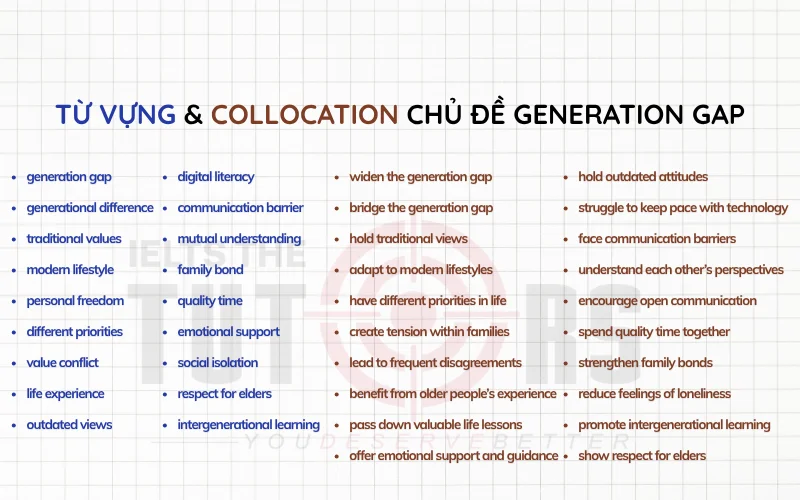
Từ vựng nên học cho IELTS Writing Task 2 topic Generation Gap
| Từ vựng | Từ loại | Ý nghĩa |
| generation gap | noun phrase | khoảng cách thế hệ |
| generational difference | noun phrase | sự khác biệt giữa các thế hệ |
| traditional values | noun phrase | các giá trị truyền thống |
| modern lifestyle | noun phrase | lối sống hiện đại |
| personal freedom | noun phrase | quyền tự do cá nhân |
| different priorities | noun phrase | những ưu tiên khác nhau |
| value conflict | noun phrase | sự xung đột về giá trị |
| life experience | noun phrase | kinh nghiệm sống |
| outdated views | noun phrase | những quan điểm lỗi thời |
| digital literacy | noun phrase | khả năng hiểu và sử dụng công nghệ số |
| communication barrier | noun phrase | rào cản giao tiếp |
| mutual understanding | noun phrase | sự thấu hiểu lẫn nhau |
| family bond | noun phrase | sự gắn kết gia đình |
| quality time | noun phrase | khoảng thời gian ý nghĩa dành cho nhau |
| emotional support | noun phrase | sự hỗ trợ về tinh thần |
| social isolation | noun phrase | sự cô lập trong xã hội |
| respect for elders | noun phrase | sự tôn trọng dành cho người lớn tuổi |
| intergenerational learning | noun phrase | sự học hỏi giữa các thế hệ |
Collocation hữu ích cho IELTS Writing Task 2 topic Generation Gap
| Collocation | Ý nghĩa |
| widen the generation gap | làm gia tăng khoảng cách thế hệ |
| bridge the generation gap | thu hẹp khoảng cách thế hệ |
| hold traditional views | giữ những quan điểm truyền thống |
| adapt to modern lifestyles | thích nghi với lối sống hiện đại |
| have different priorities in life | có những ưu tiên khác nhau trong cuộc sống |
| create tension within families | tạo ra căng thẳng trong gia đình |
| lead to frequent disagreements | dẫn đến những bất đồng thường xuyên |
| benefit from older people’s experience | học hỏi từ kinh nghiệm của người lớn tuổi |
| pass down valuable life lessons | truyền lại những bài học sống quý giá |
| offer emotional support and guidance | hỗ trợ tinh thần và đưa ra lời khuyên |
| hold outdated attitudes | giữ những quan niệm lỗi thời |
| struggle to keep pace with technology | gặp khó khăn trong việc theo kịp công nghệ |
| face communication barriers | gặp phải rào cản giao tiếp |
| understand each other’s perspectives | hiểu góc nhìn của nhau |
| encourage open communication | khuyến khích giao tiếp cởi mở |
| spend quality time together | dành thời gian ý nghĩa bên nhau |
| strengthen family bonds | củng cố sự gắn kết gia đình |
| reduce feelings of loneliness | giảm cảm giác cô đơn |
| promote intergenerational learning | thúc đẩy sự học hỏi giữa các thế hệ |
| show respect for elders | thể hiện sự kính trọng với người lớn tuổi |
Nhìn chung, IELTS Writing Task 2 topic Generation Gap sẽ trở nên dễ xử lý hơn khi bạn hiểu quan điểm, nhu cầu và trải nghiệm của cả người trẻ lẫn người lớn tuổi. Khi triển khai bài, hãy tập trung phân tích rõ nguyên nhân, hệ quả hoặc giải pháp, thay vì đưa ra những nhận định chung chung về từng thế hệ.
Hy vọng các ý tưởng, đề mẫu và từ vựng IELTS The Tutors tổng hợp trong bài sẽ giúp bạn xây dựng lập luận cân bằng, mạch lạc và tự tin hơn khi gặp đề Generation Gap Writing. Chúc bạn sớm đạt band điểm mong muốn!