


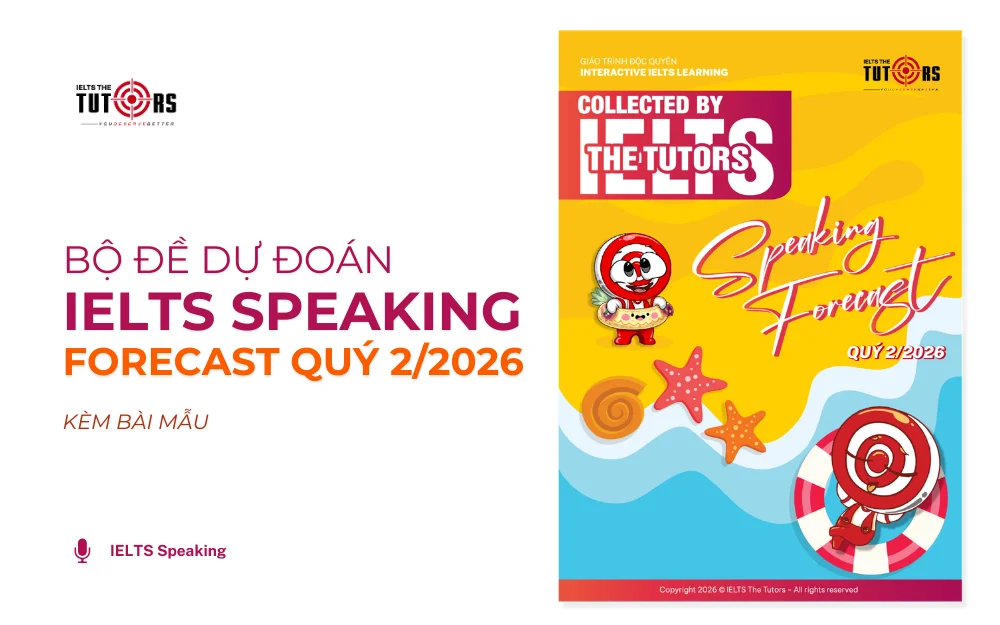
Bộ đề IELTS Speaking Forecast Quý 2/2026 được IELTS The Tutors tổng hợp và phân loại theo từng chủ đề, bám sát cấu trúc thực tế của cả 3 phần thi Speaking. Tài liệu cập nhật liên tục từ tháng 6 đến tháng 9, để bạn dễ dàng theo dõi xu hướng đề, khoanh vùng chủ đề có khả năng xuất hiện và chuẩn bị ý tưởng trả lời cho từng dạng câu hỏi cụ thể.
Giai đoạn này thường là thời điểm nhiều bạn chọn thi IELTS lần đầu hoặc thi lại để cải thiện điểm số. Nếu bạn đang tự ôn tại nhà hoặc đang trong giai đoạn nước rút, bộ forecast này sẽ giúp bạn xây dựng câu trả lời theo chủ đề, mở rộng vốn từ tự nhiên hơn và rút ngắn thời gian luyện nói. Lưu bài viết lại ngay để không bỏ lỡ các cập nhật mới trong suốt quý và chủ động hơn trong hành trình chinh phục IELTS 2026.
Xu hướng đề IELTS Speaking Quý 2/2026 có gì thay đổi so với những năm trước?
So với các bộ đề trước, IELTS Speaking Forecast Quý 2/2026 vẫn giữ lại những chủ đề quen thuộc như Hometown, Accommodation, Work, Study, nhưng cách khai thác có phần đời thường và thực tế hơn. Thay vì chỉ hỏi những câu đơn giản về sở thích hay thông tin cá nhân, đề có xu hướng xoay quanh thói quen hằng ngày, trải nghiệm cá nhân và sự thay đổi trong lối sống.
- Ở Part 1, nhiều topic như Morning time, Daily routine, Day off, Reading, Walking yêu cầu thí sinh nói rõ hơn về tần suất, sự khác biệt giữa quá khứ và hiện tại, hoặc cách một thói quen ảnh hưởng đến cuộc sống. Vì vậy, người học không nên chỉ chuẩn bị câu trả lời ngắn, mà cần có thêm lý do hoặc một chi tiết cá nhân để câu nói tự nhiên hơn.
- Với Part 2, các cue card trong quý này thiên nhiều hơn về kể chuyện và cảm xúc. Những đề như một sự kiện không vui, một lần cần dùng trí tưởng tượng, một lần khuyên ai đó hoặc cảm thấy tự hào về người thân đều đòi hỏi thí sinh biết xây dựng bối cảnh, diễn biến và cảm nhận. Đây là điểm khác khá rõ so với các đề mô tả đơn thuần kiểu “describe a person/place/object”.
- Trong Part 3, câu hỏi cũng có xu hướng mở rộng sang các vấn đề xã hội hơn, đặc biệt là công nghệ, giáo dục, môi trường, thói quen tiêu dùng và vai trò của con người trong cộng đồng. Điều này đồng nghĩa với việc thí sinh cần luyện cách đưa ra quan điểm, giải thích lý do và nêu ví dụ, thay vì chỉ trả lời theo cảm tính.
Nhìn chung, bộ đề IELTS Speaking Quý 2/2026 cho thấy xu hướng đề ngày càng gần với đời sống thật hơn, nhưng cũng đòi hỏi khả năng phát triển ý linh hoạt hơn. Vì vậy, khi ôn tập, bạn nên học theo nhóm chủ đề, chuẩn bị ý tưởng có thể tái sử dụng và luyện nói thành tiếng để phản xạ tốt hơn trong phòng thi.
Bộ đề dự đoán IELTS Speaking Part 1 quý 2 2026
| Topic | Question |
Hometown |
1. Where do you live?
2. What town or city do you live in? 3. Is there anything worth living where you live? 4. What would you like to change about where you live |
Accommodation |
1. What kind of housing/accommodation do you live in?
2. Do you plan to live there for a long time? 3. Which room does your family spend most of the time in? 4. What's the difference between where you are living now and where you lived in the past? 5. How long have you lived there? Tham khảo: Bài mẫu IELTS Speaking Part 1, 2, 3 Topic Home and Accommodation |
Work |
1. What do you do?
2. What are your responsibilities? 3. Why did you choose to do that type of work (or, that job)? 4. Is there some other kind of work you would rather do? 5. Do you enjoy your work? 6. What do you dislike about your job? Tham khảo: Bài mẫu IELTS Speaking topic Work part 1, 2, 3 |
Study |
1. Do you plan to get a job in the same field as your major?
2. Do you prefer to study in the morning or in the afternoon? 3. If you had the chance, would you change your job/major? 4. What do you like about your major? 5. What subjects are you studying? 6. What do you dislike about your school? |
Day off |
1. Do you usually have days off?
2. What do you usually do on your day off? 3. Do you prefer to spend your day o` alone or with other people? 4. How important is it to have a day off? 5. Would you like to have more days off in the future? Tham khảo: Bài mẫu IELTS Speaking Part 1 Topic Day off |
Keys |
1. Do you usually carry keys with you?
2. What keys do you usually have? 3. Have you ever lost your keys? 4. Do you think it’s important to keep keys safe? 5. Do you think keys will be replaced by technology in the future? Tham khảo: Bài mẫu IELTS Speaking Part 1 Topic Keys |
Reading |
1. Which do you prefer, reading books or watching movies?
2. Have you ever read a novel that has been adapted into a film? 3. Are your reading habits now different than before? 4. Do you often read books? When? 5. Do you read more or less now than when you were younger? 6. Do you like reading? 7. Do you prefer to read on paper or on a screen? 8. When do you need to read carefully, and when not? 9. Do you prefer scanning or detailed reading? 10. What books do you like to read? 11. What book did you read recently? 12. What did you learn from it? Tham khảo: Bài mẫu IELTS Speaking Part 1 Topic Reading Book |
Scenery |
1. Where can you enjoy beautiful views where you live?
2. What’s the best view that you have ever enjoyed? 3. Do you take photos of good views? 4. Do you book rooms that have good views when you go travelling? 5. Do you look out the window at the scenery when travelling by bus or car? 6. Do you prefer the mountains or the sea? 7. Do you like to take scenery pictures? 8. What are the most beautiful sights you have seen while travelling? Tham khảo: Bài mẫu IELTS Speaking Part 1 Topic Scenery |
Buildings |
1. Are there tall buildings near your home?
2. Do you take photos of buildings? 3. Is there a building that you would like to visit? 4. Do you prefer living in a house or an apartment? 5. What kind of buildings do you like the most? 6. Are old buildings important in your city? 7. Do you think cities should build more tall buildings? 8. What public buildings do you often visit? Tham khảo: Bài mẫu IELTS Speaking Part 1 Topic Buildings |
Childhood activities |
1. What were your favourite activities when you were a child?
2. Did you prefer to do activities alone or with a group of people when you were a child? 3. What did you enjoy doing as a child? 4. Did you enjoy your childhood? 5. Did you have any hobbies when you were a child? 6. Did your parents encourage you to take part in activities? 7. What outdoor activities did you often do as a child? 8. Do you think children today have the same activities as in the past? Tham khảo: Bài mẫu IELTS Speaking Part 1 Topic Childhood activities |
Morning time |
1. Do you get up early in the morning?
2. Do you have the same morning routine every day? 3. Do you usually eat breakfast at home? 4. Are there any differences between what you do in the morning now and what you did in the past? 5. Do you like getting up early in the morning? 6. What do you usually do in the morning? 7. What did you do in the morning when you were little? Why? 8. Do you spend your mornings doing the same things on both weekends and weekdays? Why? 9. What is your morning routine? Tham khảo: Bài mẫu IELTS Speaking Part 1 Topic Morning time |
Gifts |
1. Have you ever sent handmade gifts to others?
2. How to choose a gift? 3. Can you share an experience of giving a special gift to someone 4. Do you like giving gifts/presents? [Why/Why not?] 5. When do you usually give gifts to others? [Why/Why not?] 6. Do you think choosing expensive gifts/presents is a good way to express feelings towards somebody? [Why/Why not?] 7. Have you ever received a great gift? 8. Do you think you are good at choosing gifts? 9. What gift have you received recently? 10. What kind of gifts are popular in your country? Tham khảo: Bài mẫu IELTS Speaking Part 1 Topic Gifts |
Pets and animals |
1. Do you have any pets?
2. What kind of animals do you like? 3. Did you have any pets when you were a child? 4. Do you think pets are important? 5. Are there many animals in your country? Tham khảo: Bài mẫu IELTS Speaking Part 1 Topic Pet and animals |
Stages in life |
1. How do people remember each stage of their lives?
2. At what age do you think people are the happiest? 3. Do you enjoy being the age you are now? 4. What did you often do with your friends in your childhood? 5. Do you have any plans for the next five years? 6. What do you think is the most important thing at the moment? Tham khảo: Bài mẫu IELTS Speaking Part 1 Topic Stages in lifes |
Daily routine |
1. Do you often go to bed late or early?
2. What part of your day do you like best? 3. Do you think it is important to have a daily routine for your study? 4. Have you ever changed your routine? 5. What is your daily study routine? 6. How do you organise your study time? 7. Do you ever change your plans? 8. Do you often stay up late? Tham khảo: Bài mẫu IELTS Speaking Part 1 Topic Daily routine |
Dreams |
1. Can you remember the dreams you had?
2. Do you share your dreams with others? 3. Do you think dreams have special meanings? 4. Do you want to make your dreams come true? 5. Do you think dreams will affect life? 6. Do you like hearing other people's dreams? Tham khảo: Bài mẫu IELTS Speaking Part 1 Topic Dreams |
Food |
1. What is your favorite food?
2. What kind of food did you like when you were young? 3. Do you eat different foods at different times of the year? 4. Has your favourite food changed since you were a child? 5. What kinds of food do you particularly like? 6. What kinds of food are most popular in your country? 7. Is there any food you don't like? Tham khảo: Bài mẫu IELTS Speaking Topic Food and Drink part 1, 2, 3 |
Views |
1. Do you like taking pictures of different views?
2. Do you prefer views in urban areas or rural areas? 3. Do you prefer views in your own country or in other countries? Tham khảo: Bài mẫu IELTS Speaking Part 1 Topic Views |
Hobbies |
1. Do you have the same hobbies as your family members?
2. Do you have a hobby that you've had since childhood? 3. Did you have any hobbies when you were a child? 4. Do you have any hobbies? Tham khảo: Bài mẫu IELTS Speaking Topic Hobbies part 1, 2, 3 |
Typing |
1. Do you prefer typing or handwriting?
2. Do you type on a desktop or laptop keyboard every day? 3. When did you learn how to type on a keyboard? 4. How do you improve your typing? Tham khảo: Bài mẫu IELTS Speaking Part 1 Topic Typing |
Sports team |
1. Have you ever been part of a sports team?
2. Are team sports popular in your culture? 3. Do you like watching team games? Why? 4. What are the differences between team sports and individual sports? Tham khảo: Bài mẫu IELTS Speaking Topic Sports part 1, 2, 3 |
Walking |
1 Do you walk a lot?
2. Did you often go outside to have a walk when you were a child? 3. Why do people like to walk in parks? 4. Where would you like to take a long walk if you had the chance? 5. Where did you go for a walk lately? Tham khảo: Bài mẫu IELTS Speaking Part 1 Topic Walking |
Bộ đề dự đoán IELTS Speaking Part 2 + 3 quý 2 2026
Events/ Occasion

Describe a story you read recently
You should say:
- what the story was
- where and when you read it
- what it was about
and explain why you think it was interesting.
Part 3
1. Why do most children like listening to stories before bedtime?
2. Is a good storyline important for a movie?
3. Why do children like hearing the same bedtime story?
Describe a bicycle/motorcycle/car trip you would like to go
You should say:
- where you would like to go
- who you would go with
- what you would do during the trip
and explain why you would like to go on this trip.
Part 3
1. Which form of vehicle is more popular in your country, bikes, cars or motorcycles?
2. Do you think air pollution comes mostly from mobile vehicles?
3. Do you think people need to change the way of transportation drastically to protect the environment?
4. How are the transportation systems in urban areas and rural areas different?
Describe a music event that you didn't enjoy
You should say:
- what the event was
- when and where it happened
- who you went with
and explain why you did not enjoy it.
Part 3
1. What kind of music events do people like today?
2. Why are music festivals becoming more popular nowadays?
3. What problems can happen at large music events?
4. Do you think live music events are better than listening to music online?
Describe a time you needed to use your imagination
You should say:
- when it happened
- what the situation was
- how you used your imagination
and explain how you felt about it.
Part 3
1. Is imagination important to children?
2. What subjects are helpful for children’s imagination?
3. What kinds of jobs require imagination?
4. Do you think imagination is essential for scientists?
5. Which requires more imagination: reading or watching cartoons?
6. What games require children to use imagination?
7. What games can develop imagination?
8. Should young children use and develop imagination?
9. How can teachers encourage children to use imagination?
10. What's the relationship between creativity and imagination?
11. Do you think adults can have lots of imagination?
Describe a time when you encouraged someone to do something that he/she didn't want to do
You should say:
- who the person was
- what he or she did not want to do
- how you encouraged them
and explain how you felt about it.
Part 3
1. How could employers motivate their staff?
2. Do you think money is the most important motivating factor at work?
3. Is the role of a leader important in a group?
4. How could leaders encourage their employees?
5. Is it a good thing that a leader likes taking risks?
6. There are more male than female world leaders. Do you think this will change in the future?
7. When making decisions, should a leader discuss them with team members?
8. Why do many people want to be leaders?
9. Why are some people afraid of becoming a leader?
10. How do people become leaders?
11. Can everyone become a leader?
12. What are the qualities of a good leader?
13. When should parents encourage their children?
14. Should parents reward their children when they help others?
15. What kind of encouragement should parents give?
16. Do you think some people are better at persuading others?
Describe a time when you gave advice to others
You should say:
- who you gave advice to
- what the situation was
- what advice you gave
and explain how you felt about it.
Part 3
1. Is it good to ask for advice from strangers online?
2. What are the problems if you ask too many people for advice?
3. What are the personalities of people whose job is to give advice to others?
4. Do you think parents should give their children advice?
5. Should teachers give students advice?
6. Do you think it is necessary for us to listen to friends’ advice?
7. How to give young people and old people advice?
8. What are the areas in which people are more or less willing to accept advice?
9. Have you ever received any advice from professional people, like a doctor, a lawyer, or a teacher?
10. Should people prepare before giving advice?
11. Why do some people like to ask others for advice on almost everything?
12. In general, what kind of person is most suitable for giving advice to others?
Describe a time when you felt proud of a family member
You should say:
- when it happened
- who the person is
- what the person did
and explain why you felt proud of him/her.
Part 3
1. On what occasions would adults be proud of themselves?
2. Is it good to reward children too often? Why?
3. Should parents reward children? Why and how?
Describe an occasion when many people were smiling
You should say:
- when it happened
- who you were with
- what happened
and explain why most people were smiling.
Part 3
1. Do people smile more when they are younger or older?
2. Do women smile more than men? Why?
3. Do you think people who like to smile are more friendly?
Describe an occasion when you were not allowed to use your mobile phone
You should say:
- when it was
- where it was
- why you were not allowed to use your mobile phone
and how you felt about it.
Part 3
1. Do you think it is necessary to have laws on the use of mobile phones?
2. Is it a waste of time to take pictures with mobile phones?
3. What positive and negative impacts do mobile phones have on friendship?
4. How do young and old people use mobile phones differently?
Objects/ Possessions
Describe an item on which you spent more than expected
You should say:
- what it is
- how much you spent on it
- why you bought it
and explain why you think you spent more than expected.
Part 3
1. Do you often buy more than you expected?
2. What do you think young people spend most of their money on?
3. Do you think it is important to save money? Why?
4. Do people buy things they don't need?
5. Is it good and necessary to teach children to save money?
Describe something that you can’t live without (not a computer/phone)
You should say:
- what it is
- how long you have had it
- how you use it
and explain why you can’t live without it.
Part 3
1. What are some things that people often rely on in their daily lives?
2. How do material possessions affect our happiness?
3. Do you think people today are too dependent on technology?
4. How can people maintain a balance between material needs and emotional well-being?
Describe your perfect job
You should say:
- what it is
- where you heard about it from
- what you need to learn to get the job
and explain why you think it is your perfect job.
Part 3
1. What jobs do children want to do when they grow up?
2. What should people consider when choosing jobs?
3. Is salary the main reason people choose a certain job?
4. What kind of job can be called a ‘dream job'?
5. Do people's ideal jobs change as they grow up?
6. How can people find a perfect job?
7. What factors should people take into account when choosing a job?
8. Which is more important when choosing a job, high salary or interest?
Describe a piece of technology (not a phone) that you would like to own
You should say:
- what it is
- how much it costs
- what you will use it for
and explain why you would like to own it.
Part 3
1. What are the differences between the technology of the past and that of today?
2. What technology do young people like to use?
3. What are the differences between online and face-to-face communication?
4. Do you think technology has changed the way people communicate?
5. What negative effects does technology have on people's relationships?
6. What are the differences between making friends in real life and online?
Describe an important old thing that your family has kept for a long time
You should say:
- what it is
- how long your family has had it
- why it is important to your family
and explain what it means to you.
Part 3
1. Why do you think it is important to preserve family heirlooms?
2. How do cultural backgrounds influence the types of heirlooms people keep?
3. What role do objects from the past play in modern society?
4 .Do you think younger generations value old items as much as older generations?
Describe a program or app on your computer or phone
You should say:
- what the story is about
- where it originates from
- what the main characters are
and explain why you find it interesting.
Part 3
1. What are the differences between old and young people when using apps?
2. Why do some people not like using apps?
3. What apps are popular in your country? Why?
4. Should parents limit their children's use of computer programs and computer games? Why and how?
5. Do you think young people are more and more reliant on these programs?
6. What are the drawbacks of having too many apps?
Describe a movie you watched recently that you felt disappointed about
You should say:
- what it is
- what it is about
- why you decided to watch it
and explain why you felt disappointed about it.
Part 3
1. Do you believe movie reviews?
2. What are the different types of films in your country?
3. Are historical films popular in your country? Why?
4. Why are Japanese animated films so popular?
Places

Describe a foreign country you would like to stay or work for a short period of time
You should say:
- which country it is
- where you got to know this country
- what you will do there
why you will stay or work there just for a short period of time.
Part 3
1. Why do people sometimes go to other cities or other countries to travel?
2. What jobs can people do abroad for a short period of time?
3. Is it good that now people have an opportunity to work abroad?
Describe your favorite place in your house where you can relax
You should say:
- where it is
- what it is like
- what you enjoy doing there
and explain why you feel relaxed at this place.
Part 3
1. Why is it difficult for some people to relax?
2. What are the benefits of doing exercise?
3. Do people in your country exercise after work?
4. What is the place where people spend most of their time at home?
5. Do you think there should be classes for training young people and children how to relax?
6. Which is more important, mental relaxation or physical relaxation?
Describe a quiet place you like to go
You should say:
- where it is
- how you knew it
- how often you go there
- what you do there
and explain how you feel about the place.
Part 3
1. How do people express happiness in your culture?
2. How do people spend their leisure time in your country?
3. How does technology affect the way people spend their leisure time?
4. Do you think only old people have time for leisure?
Describe a shopping mall
You should say:
- what its name is
- where it is
- how often you visit it
and what you usually buy at the mall.
Part 3
1. Why do people buy things they don't need?
2. Do you think that people buy a lot of things that they don't need?
People

Describe a famous person you would like to meet
You should say:
- who he/she is
- how you knew him/her
- how/where you would like to meet him/her
and explain why you would like to meet him/ her.
Part 3
1. Do you want to be a famous person?
2. Is it easy to become famous in your country?
3. Do people become famous because of their talent?
4. What can children do with their fame?
5. What can today's children do to become famous?
6. What are the advantages and disadvantages of being a famous child?
Describe a person who encouraged you to protect nature
You should say:
- who he/she is
- how he/she encouraged you
- what he/she encouraged you to do
and explain how you feel about this person.
Part 3
1. How can parents teach their children to protect nature?
2. Should schools teach children to get close to nature?
3. Do you think there should be laws to protect nature?
Describe one of your friends who learned something new (not from a teacher)
You should say:
- who he/she is
- what he/she learned
- why he/she learned this
and explain whether it would be easier to learn from a teacher.
Part 3
1. Is it necessary to keep learning after graduating from school?
2. Should teachers make learning in their classes fun?
3. Do you think there are too many subjects for students to learn?
4. Is it better to focus on a few subjects or to learn many subjects?
5. Do you think enterprises should provide training for their employees?
6. Do you think it is good for older adults to continue learning?
7. Do you think learning many subjects at one time is better or learning one subject is better?
8. Do you think learning many subjects is beneficial to your work?
9. Do you think all teachers should have entertaining teaching styles?
10. Is it important for people to learn new skills all life long?
Describe a person who solved a problem in a smart way
You should say:
- who he/she is
- how/where you got to know him/her
- how long you have known each other
and explain why he/she is important to you.
Part 3
1. Do you think children are born smart or they learn to become smart?
2. How do children become smart at school?
3. Why are some people well rounded and others only good at one thing?
4. Why does modern society need talents of all kinds?
5. Are people born clever or need to learn to be clever?
6. Why are some children more intelligent than others?
7. Do you think society needs people with different types of intelligence?
Describe a person who often helps others
You should say:
- what he/she is like
- how he/she helps others
- why his/her help is beneficial
and explain why he/she helps others.
Part 3
1. How can children help their parents at home?
2. Should children be taught to help others?
3. What makes children help each other at school?
4. Should students do community service? Why?
5. Do students in your country do volunteer work?
6. Why do some people do volunteer work all over the world?
7. Should children help their parents with household chores?
8. What kind of help do people need when looking for a new job?
9. Who should people ask for help, colleagues or family members
Describe a child you know who likes drawing very much
You should say:
- how you knew him/her
- what he/she is like
- how often he/she draws
and explain why you think he/she likes drawing.
Part 3
1. Should companies employ older workers?
2. What do you think older people can contribute at work?
3. Why do governments make retirement policies?
4. When do you think is the best time to retire?
5 .Do you think people should spend more time with their grandparents?
6. Is it beneficial to live with elderly people?
Describe a person who makes plans a lot
You should say:
- who he/she is
- how you knew him/her
- what plans he/she makes
and explain how you feel about this person.
Part 3
1. Do you think it is important to plan ahead?
2. Do you think children should plan their future careers?
3. Should children ask their teachers or parents for advice when making plans?
4. What activities do we need to plan ahead?
5. Is making study plans popular among young people?
6. Do you think choosing a college major is closely related to a person’s future career?
7. In general, do you think planning is important?
8. Do you think everyone in your country makes everyday plans?
Hy vọng bộ đề dự đoán IELTS Speaking Forecast quý 2/2026 trên sẽ là nguồn tài liệu hữu ích, giúp bạn định hướng ôn tập và chuẩn bị tốt hơn cho kỳ thi IELTS sắp tới. Đừng quên theo dõi IELTS The Tutors để cập nhật thêm nhiều bộ đề mới, bài mẫu IELTS Speaking và tài liệu ôn luyện chất lượng nhé!