



Bạn đang tìm kiếm những bài mẫu IELTS Writing Task 2 đạt band 8.0+ để nâng cao kỹ năng viết của mình? Trong bài viết này, IELTS The Tutors sẽ cung cấp cho bạn một bộ tổng hợp các bài mẫu IELTS Writing Task 2 theo từng dạng bài phổ biến như Agree/Disagree, Discussion, Advantages/Disadvantages và Two-part Question. Những bài mẫu này không chỉ giúp bạn hiểu rõ cách triển khai ý tưởng, mà còn hướng dẫn bạn cách sử dụng từ vựng hiệu quả và xây dựng lập luận chặt chẽ cho bài viết của mình.
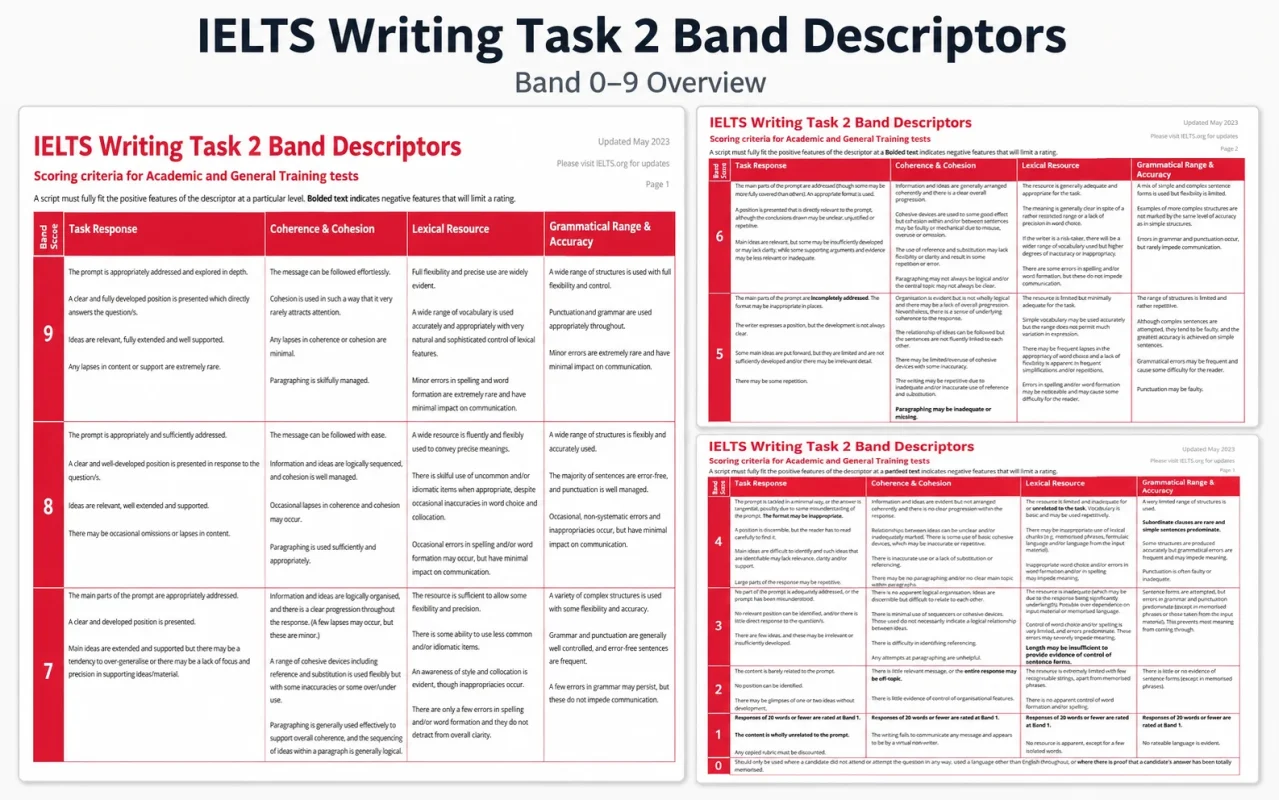
IELTS Writing Task 2 Band Descriptors
Điểm số IELTS Writing Task 2 được đánh giá dựa trên bốn tiêu chí gồm Task Response, Coherence and Cohesion, Lexical Resource và Grammatical Range and Accuracy. Mỗi tiêu chí chiếm 25% tổng điểm.
Dưới đây là bảng mô tả tiêu chí chấm điểm chính thức theo British Council dành cho phần Writing Task 2:
| Band | Yêu cầu của từng tiêu chí |
| Band 9 |
|
| Band 8 |
|
| Band 7 |
|
| Band 6 |
|
| Band 5 |
|
| Band 4 |
|
| Band 3 |
|
| Band 2 |
|
| Band 1 |
|
Bài mẫu IELTS Writing task 2 dạng bài Agree/ Disagree
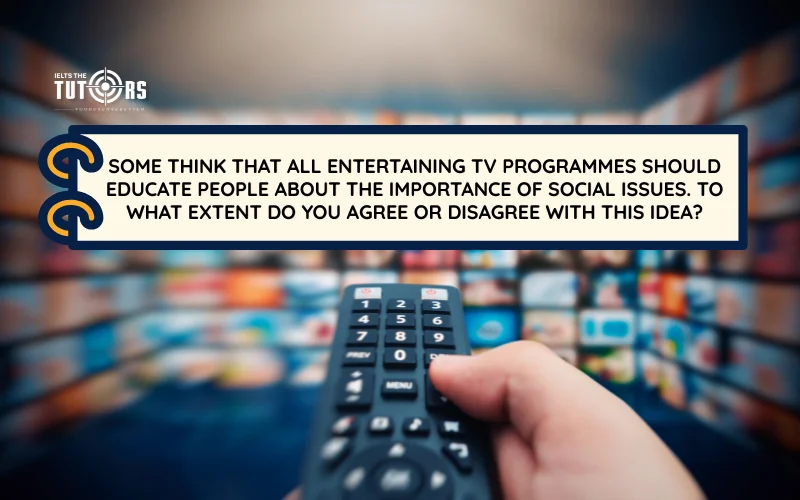
Question: Some think that all entertaining TV programmes should educate people about the importance of social issues. To what extent do you agree or disagree with this idea?
Sample:
The notion that all entertainment programmes on television should incorporate educational content about social issues has gained traction in recent years. While I acknowledge the potential benefits of such an approach, I largely disagree with making this a blanket requirement for all entertainment media.
Admittedly, weaving social messages into entertainment can be effective. Popular programmes have considerable influence over public opinion, and subtly addressing issues like environmental conservation or equality through storylines can raise awareness without feeling preachy. For instance, many successful dramas have tackled mental health stigma or discrimination, prompting meaningful conversations among viewers. This indirect approach often resonates more deeply than traditional educational content.
However, mandating that all entertainment must serve an educational purpose would be counterproductive. Firstly, entertainment exists primarily to provide relaxation and escapism. After demanding work schedules, people deserve the freedom to simply unwind with light-hearted content without constantly confronting serious societal problems. Comedy shows or talent competitions, for example, offer valuable stress relief precisely because they don't burden viewers with heavy themes.
Moreover, forcing social messages into every programme would likely diminish both entertainment quality and educational impact. Writers and producers might resort to awkward, shoehorned content that feels artificial, ultimately alienating audiences rather than engaging them. When social commentary feels contrived, viewers become cynical and tune out entirely, defeating the supposed educational purpose. Genuine artistic expression cannot flourish under such rigid constraints.
Additionally, not all entertainment formats lend themselves naturally to social commentary. Game shows, cooking competitions, or music performances have their own distinct value in celebrating human creativity and achievement. Attempting to inject social issues into these contexts would often feel forced and inappropriate.
In conclusion, while thoughtfully integrated social messages can enhance certain programmes, requiring all entertainment to be educational would undermine both viewer enjoyment and the authenticity of important social discourse. A balanced media landscape should accommodate diverse purposes.
(289 words, band 8.0+)
Tham khảo: Cách viết Agree or Disagree essay trong IELTS Writing task 2
Bài mẫu IELTS Writing task 2 dạng bài Discussion
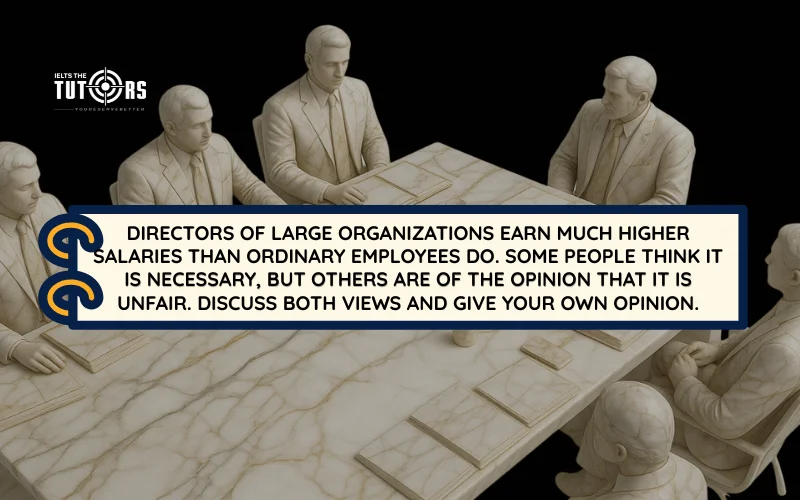
Question: Directors of large organizations earn much higher salaries than ordinary employees do. Some people think it is necessary, but others are of the opinion that it is unfair. Discuss both views and give your own opinion.
Sample:
In many large organizations, directors earn far more than ordinary employees. While some people believe this difference is necessary because senior leaders carry greater responsibilities, others argue that such a wide pay gap is unfair. This essay will discuss both views before explaining why I believe higher salaries for directors are justified, provided that they remain reasonable.
On the one hand, directors deserve higher pay because their decisions can determine the future of an entire organization. They are responsible for setting long-term strategies, managing major financial risks, and dealing with serious problems that may affect thousands of employees. In addition, large companies must offer competitive salaries to attract and retain experienced leaders with strong management skills. Without suitable financial rewards, talented executives may choose to work for rival firms.
On the other hand, extremely high salaries can be seen as unfair. The success of a company depends not only on its directors but also on the daily efforts of ordinary workers. Employees in production, sales, customer service, and administration all make important contributions. If executives earn dozens of times more than the rest of the workforce, staff may feel undervalued and lose motivation. This can damage workplace morale and reduce productivity.
In my opinion, directors should receive higher salaries because they face greater pressure and have a stronger influence on business performance. However, the difference should not be excessive. Companies should also ensure that ordinary employees are paid fairly and rewarded for their contribution.
In conclusion, although high executive salaries may appear unfair, they are often necessary to reflect the demands of leadership. Nevertheless, organizations should maintain a balanced and transparent pay system.
(273 words, band 8.0+)
Xem thêm: Discussion Essay IELTS Writing task 2: Cách viết & Bài mẫu
Bài mẫu IELTS Writing task 2 dạng bài Advantages/ Disadvantages
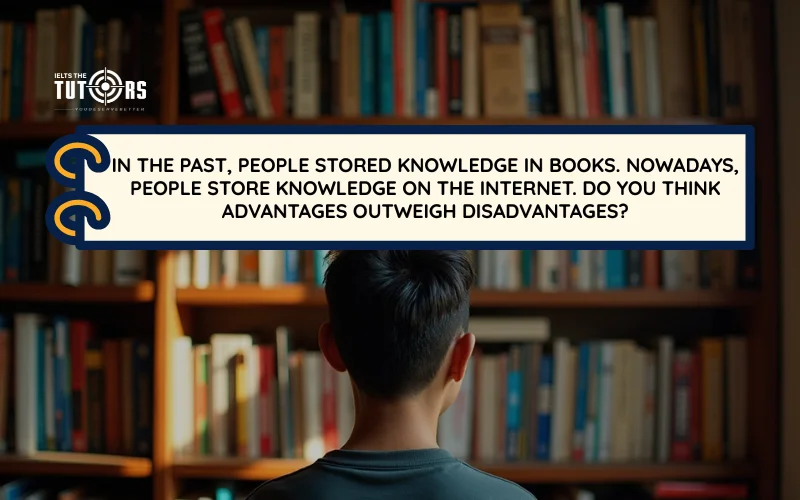
Question: In the past, people stored knowledge in books. Nowadays, people store knowledge on the internet. Do you think advantages outweigh disadvantages?
Sample:
The shift from physical books to digital repositories has fundamentally transformed how humanity preserves and accesses knowledge. While this transition presents certain drawbacks, I believe the advantages considerably outweigh the disadvantages.
The primary benefit of internet-based knowledge storage is unprecedented accessibility. Information that once required visiting libraries or purchasing expensive books is now available instantly to anyone with an internet connection. Students in remote areas can access the same resources as those in major cities, democratizing education globally. Furthermore, search functionality allows users to locate specific information within seconds, whereas finding relevant passages in physical books could take hours of manual searching.
Another significant advantage is the dynamic nature of online content. Unlike printed books, which become outdated once published, digital knowledge can be continuously updated to reflect new discoveries and changing circumstances. Wikipedia entries, for instance, are regularly revised by experts worldwide, ensuring readers receive current information. This real-time updating capacity is particularly crucial in rapidly evolving fields like medicine or technology.
However, internet-based storage does carry notable risks. Digital information is vulnerable to cyberattacks, technical failures, or deliberate censorship by authorities. Unlike books, which can survive for centuries, digital data might disappear if servers crash or companies cease operations. Additionally, the ease of online publishing means misinformation spreads rapidly, making it challenging for ordinary users to distinguish credible sources from unreliable ones.
Despite these concerns, the benefits remain superior. The internet's collaborative nature actually helps combat misinformation through peer review and fact-checking mechanisms. Moreover, regular backups and distributed storage systems have made digital preservation increasingly reliable. Cloud technology ensures multiple copies exist across different locations, arguably making information more resilient than single physical copies.
In conclusion, while digital knowledge storage isn't without flaws, its accessibility, updatability, and efficiency make it a substantially better system than relying solely on printed books for preserving human knowledge.
(285 words, band 8.0+)
Xem thêm: Cách viết Advantages and Disadvantages Essay trong IELTS Writing task 2
Bài mẫu IELTS Writing task 2 dạng bài Two-part question
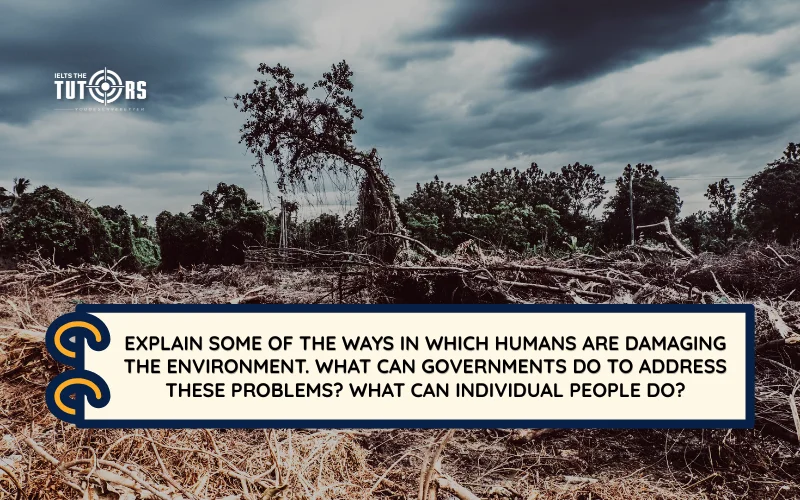
Question: Explain some of the ways in which humans are damaging the environment. What can governments do to address these problems? What can individual people do?
Sample:
Environmental degradation has become one of the most pressing concerns of our time, with human activities playing a central role in this crisis. This essay will examine the primary ways people harm the environment and propose solutions at both governmental and individual levels.
Human beings damage the environment through various means, with industrial pollution being perhaps the most significant. Factories discharge toxic chemicals into rivers and release harmful emissions into the atmosphere, contributing to air and water contamination. Additionally, deforestation for agriculture and urban expansion destroys vital ecosystems, leading to biodiversity loss and climate disruption. The overuse of plastic products and inadequate waste management further exacerbate the problem, with millions of tonnes of non-biodegradable materials ending up in oceans annually.
Governments can tackle these issues through comprehensive policy measures. Firstly, they should implement stricter environmental regulations, imposing substantial fines on companies that violate pollution standards. Investment in renewable energy infrastructure is equally crucial, as transitioning away from fossil fuels would dramatically reduce carbon emissions. Furthermore, authorities could incentivize green practices through tax breaks for eco-friendly businesses and subsidies for electric vehicles, making sustainable choices more economically attractive.
On an individual level, people can contribute meaningfully to environmental protection. Adopting a more conscious consumption pattern—such as reducing meat intake, buying locally-sourced products, and avoiding single-use plastics-can collectively make a substantial difference. Citizens should also prioritize public transport or cycling over private cars whenever feasible. Moreover, participating in community initiatives like tree-planting programmes or beach clean-ups demonstrates personal commitment to environmental stewardship.
In conclusion, while human activities have undeniably inflicted severe damage on our planet, collaborative efforts between governments and individuals can reverse this trend. Only through sustained commitment at all levels of society can we hope to preserve the environment for future generations.
(283 words, band 8.0+)
Tham khảo: Cách viết Two-part Question trong IELTS Writing Task 2
Mẹo cải thiện band IELTS Writing task 2 hiệu quả
Khi đọc các bài mẫu IELTS Writing Task 2, bạn không nên học thuộc từng câu chữ mà nên nhìn vào cách bài viết phân tích đề, triển khai luận điểm, dùng ví dụ và kiểm soát ngôn ngữ. Dưới đây là một số mẹo IELTS The Tutors gợi ý để bạn tham khảo bài mẫu đúng cách và cải thiện chất lượng bài viết của mình.
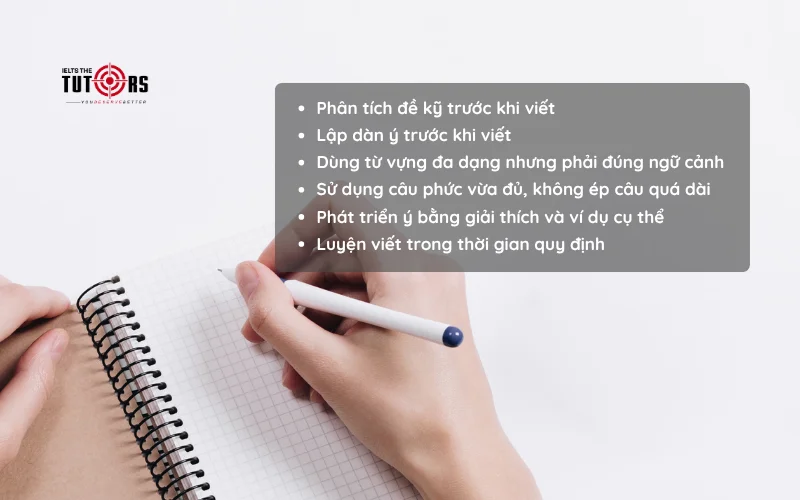
Phân tích đề kỹ trước khi viết
Một lỗi khá phổ biến trong IELTS Writing Task 2 mà nhiều bạn mắc phải đó là bắt tay vào viết quá nhanh khi chưa hiểu rõ yêu cầu đề bài. Trước khi viết, bạn nên dành vài phút để xác định dạng bài, gạch chân từ khóa chính và xem đề có bao nhiêu phần cần trả lời.
Ví dụ, với câu hỏi “To what extent do you agree or disagree?”, nhiệm vụ chính của bạn là đưa ra quan điểm rõ ràng và bảo vệ quan điểm đó trong suốt bài viết. Đây không phải dạng bài yêu cầu thảo luận hai quan điểm một cách trung lập.
Khi đọc một bài sample answer của Writing Task 2, hãy chú ý xem bài mẫu đã trả lời đúng trọng tâm đề chưa. Một bài viết có từ vựng hay nhưng lệch yêu cầu đề bài vẫn khó đạt điểm cao ở tiêu chí Task Response.
Lập dàn ý trước khi viết
Một bài viết tốt thường không bắt đầu từ câu chữ, mà bắt đầu từ dàn ý. Nếu không có dàn ý, bạn rất dễ viết lan man, lặp ý hoặc chuyển đoạn thiếu logic.
Khi đọc sample answer, bạn nên thử tách bài mẫu thành dàn ý ngắn. Cách này giúp bạn hiểu cấu trúc tư duy phía sau bài viết, thay vì chỉ chú ý đến câu văn bề mặt.

Dùng từ vựng đa dạng nhưng phải đúng ngữ cảnh
Từ vựng là một phần quan trọng trong IELTS Writing Task 2, nhưng điều đó không có nghĩa là bạn phải dùng thật nhiều từ khó. Một bài viết tốt cần từ vựng chính xác, tự nhiên và phù hợp với chủ đề.
Ví dụ, thay vì lặp lại important, bạn có thể dùng crucial, significant hoặc essential nếu ngữ cảnh phù hợp. Tương tự, với các vấn đề xã hội, bạn có thể dùng các cụm như tackle problems, address issues hoặc raise awareness.
Tuy nhiên, không nên thay từ một cách máy móc. Chẳng hạn, solve problems vẫn là một cụm đúng và tự nhiên trong nhiều trường hợp. Điều quan trọng là bạn biết khi nào nên dùng từ đơn giản, khi nào nên dùng collocation học thuật hơn để câu văn có sắc thái phù hợp.
Khi đọc các bài Writing IELTS Task 2 mẫu, hãy tập thói quen ghi lại các cụm từ theo chủ đề như Education, Environment, Technology hoặc Health. Học theo cụm sẽ hiệu quả hơn nhiều so với việc học từng từ riêng lẻ.
Sử dụng câu phức vừa đủ, không ép câu quá dài
Để cải thiện tiêu chí Grammatical Range and Accuracy, bạn nên biết cách dùng nhiều kiểu cấu trúc câu khác nhau. Tuy nhiên, câu phức không có nghĩa là câu càng dài càng tốt. Một câu quá dài, nhiều mệnh đề nhưng khó hiểu vẫn có thể làm giảm chất lượng bài viết.
Một số cấu trúc hữu ích gồm:
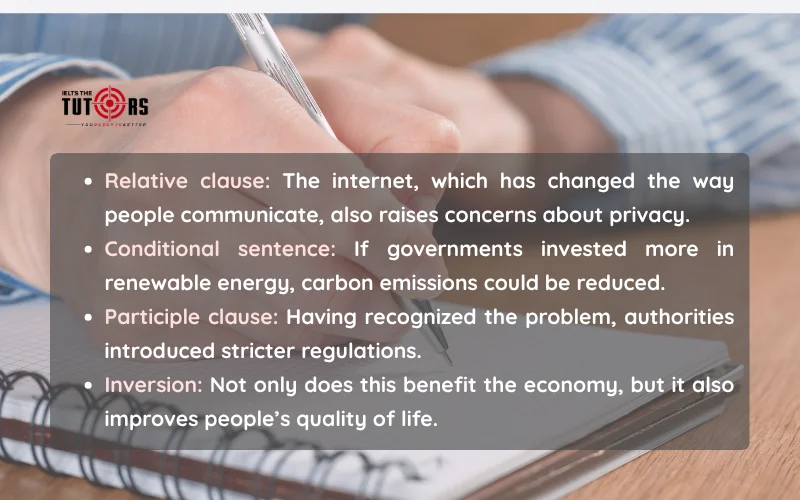
Khi phân tích một IELTS Writing Task 2 sample answer, bạn nên chú ý cách bài mẫu kết hợp câu đơn, câu ghép và câu phức. Một bài viết tự nhiên thường có sự cân bằng, chứ không phải câu nào cũng dài và nặng cấu trúc.
Phát triển ý bằng giải thích và ví dụ cụ thể
Nhiều bài viết mất điểm ở Task Response không phải vì thiếu ý, mà vì ý chưa được phát triển đủ. Một câu như “Pollution is a serious problem that affects many people” đúng, nhưng vẫn còn quá chung chung nếu không có giải thích hoặc ví dụ đi kèm.
Bạn có thể triển khai một ý theo hướng: Main idea → Explanation → Example → Result. Ví dụ:
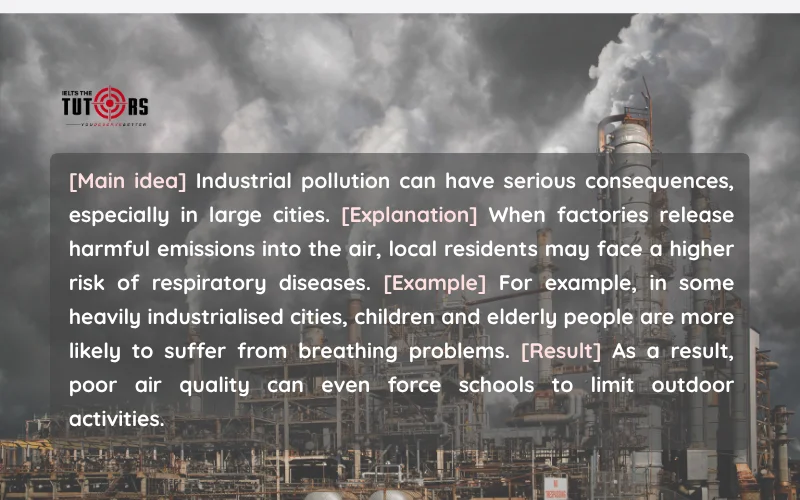
Cách viết này rõ hơn vì người đọc thấy được nguyên nhân, tác động và ví dụ cụ thể. Khi học từ các bài mẫu IELTS Writing Task 2, bạn nên quan sát cách mỗi đoạn thân bài phát triển từ câu chủ đề đến phần giải thích, thay vì chỉ học phần mở bài hoặc kết bài.
Luyện viết trong thời gian quy định
IELTS Writing Task 2 không chỉ kiểm tra khả năng viết tiếng Anh, mà còn kiểm tra cách bạn quản lý thời gian. Một bài viết tốt nhưng không hoàn thành trong 40 phút vẫn sẽ gây bất lợi trong phòng thi.
Bạn có thể chia thời gian luyện tập như sau:
- 3-5 phút: phân tích đề và lập dàn ý
- Khoảng 30 phút: viết bài hoàn chỉnh
- 3-5 phút cuối: kiểm tra lỗi ngữ pháp, chính tả và cách dùng từ
Sau khi viết xong, hãy tự đối chiếu bài của mình với một bài mẫu IELTS Writing task 2 cùng chủ đề. Cách làm này giúp bạn nhận ra mình còn thiếu gì: ý tưởng chưa rõ, ví dụ chưa đủ cụ thể, từ vựng còn lặp hay cấu trúc câu chưa đa dạng.
Nếu có thể, bạn nên nhờ giáo viên hoặc người có kinh nghiệm chấm bài theo 4 tiêu chí Writing mà IELTS The Tutors đã nêu trên. Các feedback cụ thể sẽ giúp bạn tiến bộ nhanh hơn so với việc chỉ đọc bài mẫu mà không sửa lại bài viết của mình.
Kết luận
Nhìn chung, luyện tập kỹ năng viết thông qua các bài mẫu IELTS Writing Task 2 không chỉ đơn thuần là ghi nhớ nội dung, mà còn tham khảo cách người viết trả lời đề bài, triển khai luận điểm, sử dụng ví dụ minh họa và kiểm soát ngôn ngữ một cách linh hoạt. Từ đó, bạn có thêm kinh nghiệm thực chiến để có thể phát triển phong cách viết riêng cho mình.
Hy vọng rằng bộ bài mẫu IELTS Writing Task 2 này sẽ là nguồn tài liệu hữu ích cho bạn trong quá trình luyện viết tại nhà. Đừng quên theo dõi IELTS The Tutors để cập nhật thêm nhiều bài mẫu, từ vựng và hướng dẫn chi tiết hơn về IELTS Writing nhé!